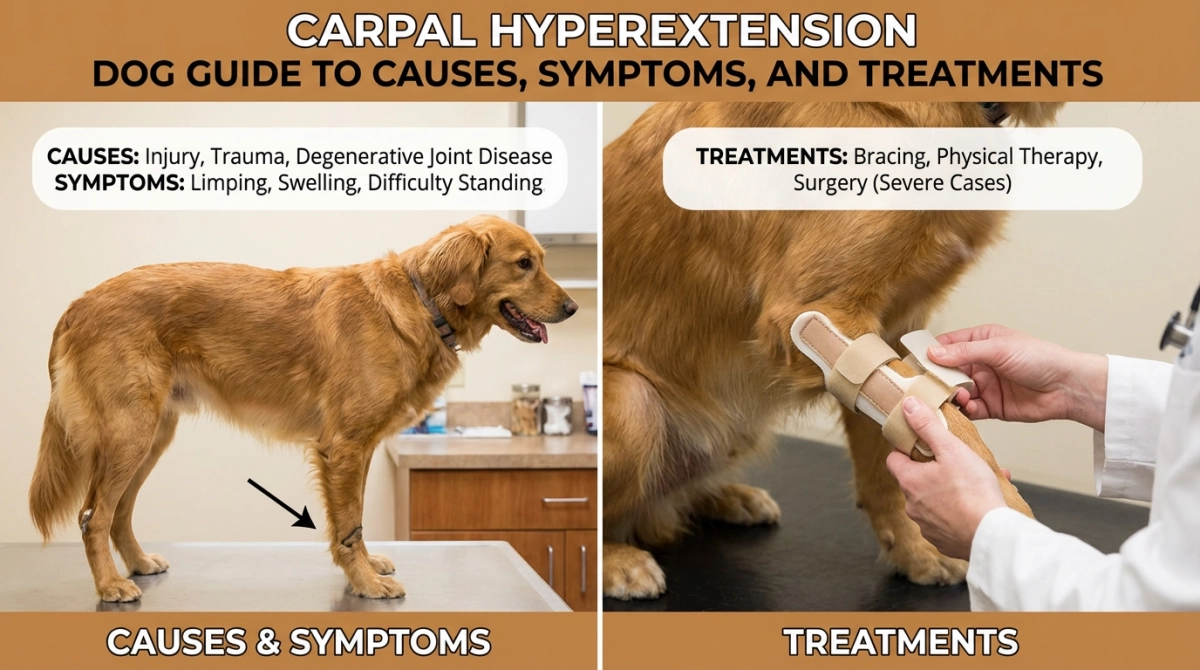
Carpal hyperextension dog means your dog's wrist joint is weak and bends down. This problem is also called palmar carpal breakdown or dog wrist instability. It happens when the parts that hold the joint get hurt. Your dog may limp, feel pain, or stand in a strange way. The table below shows how this problem changes how your dog moves and feels:
| Impact Area |
Description |
|---|---|
| Mobility |
Dogs may limp, walk in a strange way, and have joint pain. |
| Quality of Life |
Dogs may not want to move, play less, and enjoy life less. |
| Treatment Benefits |
Special devices can help dogs walk better and feel safer. |
If you see signs of wrist instability, take your dog to the vet soon. This helps your dog stay happy and active.
Key Takeaways
-
Carpal hyperextension makes your dog's wrist weak. It can cause pain and limping. Finding it early helps your dog get better faster.
-
The main causes are injuries from falls or jumps. Older dogs can get it from weak ligaments as they age.
-
Look for signs like a wrist that drops down. Swelling and not wanting to use the leg are also signs. If you see these, take your dog to the vet.
-
Treatments include rest and splints for mild cases. Surgery may be needed for serious cases. Always do what your vet tells you for the best results.
-
To stop it from coming back, keep your dog at a good weight. Do not let your dog jump from high places. Use dog braces if your vet says to.
Carpal Anatomy and Function
Your dog's wrist is called the carpus. It is made of small bones and joints in the front leg. These bones work together like a hinge. This lets your dog walk, run, and jump. Some parts help keep the carpus strong and stable.
-
Extensor Carpi Radialis keeps the joint steady when your dog moves the wrist.
-
Extensor Digitorum Communis helps the carpus during quick actions.
-
Extensor Digitorum Lateralis helps absorb shocks.
-
Flexor Carpi Ulnaris stops the wrist from bending too much.
Ligaments and palmar fibrocartilage are also important. They hold the bones together tightly. These parts stop the paw from sinking when your dog stands. This setup keeps the wrist safe and strong. It helps prevent problems like carpal hyperextension in dogs.
How Carpal Hyperextension Develops
Carpal hyperextension starts when the wrist support gets hurt. Your dog's wrist may drop closer to the ground. This means the ligaments and fibrocartilage cannot hold the joint well. The injury can cause pain and make your dog limp.
Here is a table that shows what changes inside the wrist during carpal hyperextension:
| Change Description |
Details |
|---|---|
| Alteration of carpus anatomy |
The carpus drops down, showing a change in shape. |
| Decrease in standing angle of the joint |
The normal angle can drop from 140°–180° to as low as 90°. |
When carpal hyperextension happens, the wrist loses its normal shape and strength. Your dog may have trouble walking or standing. Damage to ligaments causes pain and limping. If you see these signs, your dog should visit the veterinarian.
Causes and Risk Factors for Carpal Hyperextension Dog
Carpal hyperextension in dogs can happen for many reasons. It is important to know what can make your dog get this problem. Some causes happen fast, while others take a long time. If you learn about these risks, you can help keep your dog’s joints safe and let them stay active.
Traumatic Injuries
Trauma is the main reason for carpal hyperextension. If your dog jumps from high places or slips, the wrist ligaments can stretch or tear. This makes the wrist weak and hurts your dog. You may see your dog limp or not want to use the leg. Some common accidents are:
-
Falling from high places
-
Landing badly after jumping
-
Hitting something while playing
These injuries often hurt the ligaments. If your dog suddenly limps or has swelling, go to the vet soon.
Chronic and Degenerative Changes
Some dogs get carpal hyperextension slowly. As dogs get older, their ligaments can get weak. This makes the wrist less strong. Older and big dogs may show signs because their ligaments wear out. Diseases like immune-mediated arthritis can also hurt the joint and cause pain. Problems like diabetes or Cushing’s disease can make ligaments too flexible and raise the risk.
Note: Puppies can get carpal hyperextension if their ligaments do not grow strong. Bad nutrition or too much rest while growing can cause problems.
Breed and Activity Risks
Some breeds have a bigger chance of carpal hyperextension. Big dogs and active dogs, like Collies, put more stress on their wrists. Dogs that run, jump, or play hard can hurt their wrists more. If your dog is in a high-risk group, watch for early signs of wrist problems.
Here is a table that shows the main causes of carpal hyperextension in dogs:
| Cause |
Description |
|---|---|
| Trauma |
The main cause; falls or jumps can break bones or hurt ligaments. |
| Abnormal development |
Weak ligaments in puppies, often from bad food or too much rest. |
| Degeneration of ligaments |
Ligaments wear out with age, especially in big older dogs. |
| Inflammatory conditions |
Diseases like immune-mediated arthritis can hurt many joints and cause hyperextension. |
| Endocrine conditions |
Diabetes or Cushing’s disease can make ligaments too loose and raise the risk. |
If you know the causes of carpal hyperextension, you can find problems early. Acting fast can stop pain and help your dog move well.
Symptoms of Carpal Hyperextension
Visible Signs and Posture Changes
You can spot carpal hyperextension by watching how your dog stands and moves. The most common symptoms include changes in the way your dog holds its front leg and paw. You may notice the wrist looks lower to the ground, almost flat, which gives a plantigrade or dropped appearance. This happens because the carpus bends more than normal. Your dog may show these early signs:
-
Limping or lameness in the front leg.
-
Swelling around the wrist joint.
-
A stiff or unusual walk.
-
The paw sinks toward the ground when your dog stands or walks.
-
The wrist looks bent or forms an L-shape.
These symptoms of carpal hyperextension can make your dog look uncomfortable or unsteady. You may also see your dog refuse to put weight on the affected leg.
Lameness and Pain
Carpal hyperextension in dogs often causes pain and swelling. Your dog may favor one leg and avoid using the sore limb. Some dogs whimper or guard the leg if you touch it. The joint may feel warm or look bigger than normal. Here is a table that shows common symptoms:
| Symptoms |
|---|
| Joint instability |
| Swelling of the forelimb |
| Favoring of one leg |
You may see your dog struggle to walk, run, or play. These symptoms can get worse after exercise or activity.
Severity Grading
You can judge the severity of carpal hyperextension by how much the wrist collapses and how your dog acts. Mild cases may show only a slight limp or small changes in posture. Moderate cases show clear wrist sinking and more pain. Severe cases show a dropped wrist, strong lameness, and refusal to bear weight. Severe symptoms often need surgery for the best outcome.
Tip: If you see any of these symptoms, contact your veterinarian. Early care can help your dog recover and stay active.
Diagnosis of Carpal Hyperextension in Dogs
Veterinary Examination
The vet watches your dog walk and stand. They look for wrist problems, swelling, and pain. The vet gently moves the wrist to check its strength. They look for signs like a dropped wrist or plantigrade stance. You should tell the vet about any accidents or changes in activity. The vet decides how bad the injury is by seeing how much the wrist drops and how your dog reacts.
Tip: Finding the problem early helps stop more damage. It also gives your dog a better chance to heal.
Imaging and Tests
Imaging helps the vet confirm carpal hyperextension and plan treatment. The vet uses different tools to see the wrist and its support parts. Here are the main ways vets check the wrist:
-
Radiography: This fast test helps the vet find broken bones, dislocations, and bone tumors. Radiographs show where the bones are and the wrist angle.
-
Computed Tomography (CT): CT scans give clear pictures of bones. The vet uses CT to spot early bone changes and see the joint in 3D.
-
Magnetic Resonance Imaging (MRI): MRI is best for soft tissue injuries. It shows ligament tears, joint swelling, and other problems that cause carpal hyperextension.
The vet may use stress views during radiography to see how much the wrist drops when pressed. These tests help the vet choose if your dog needs a splint, cast, or surgery. A good diagnosis helps the vet pick the best treatment for your dog.
| Imaging Technique |
What It Shows |
When It Helps Most |
|---|---|---|
| Radiography |
Bone position, fractures |
Quick checks, bone injuries |
| CT |
Detailed bone structure |
Early bone changes, 3D images |
| MRI |
Soft tissue, ligaments |
Complex or soft tissue injuries |
Treatment for Carpal Hyperextension
Conservative Management
You might ask if your dog can get better without surgery. Conservative management means using rest, splints, or casts to help the wrist. This works best for mild cases when the wrist is still a little stable and the ligament damage is not too bad. The vet may tell you to keep your dog resting and use a splint or cast to hold the wrist steady. You will need to take your dog to the vet often for checkups and to change the splint or cast every few weeks.
Note: Conservative management does not work well for most dogs with carpal hyperextension. Many dogs keep losing wrist stability, which causes more pain and joint problems. If your dog does not get better after a few weeks, the vet may suggest surgery for better results.
Surgical Options
If your dog has moderate or severe carpal hyperextension, surgery is usually the best way to help. The main surgery for carpal hyperextension dog is called carpal arthrodesis. This surgery joins the wrist bones together with plates and screws. Your dog will be asleep during the surgery. Sometimes, the vet may suggest a custom brace instead of surgery to support the wrist.
Here is a table that compares the main surgical options and their results:
| Treatment Option |
Description |
Outcomes |
|---|---|---|
| Surgical Carpal Arthrodesis |
Joins the wrist bones with plates and screws; needs anesthesia. |
55% failure rate from infection; long recovery and possible pain. |
| Custom Bracing |
Makes a special brace to support the wrist. |
Helps dogs move normally and may give better long-term comfort. |
Surgery helps the wrist stay strong and lets your dog walk better. Problems can happen after surgery. The most common issues are infection, screws getting loose, and small fractures. The table below shows how often these problems happen:
| Complication Type |
Incidence Rate |
|---|---|
| Surgical site infection |
4/13 (31%) |
| Screw loosening |
1/13 (7.7%) |
| Minor complication (metacarpal fracture) |
1/13 (7.7%) |
The vet will watch your dog closely after surgery to find problems early. You may need to follow special instructions to keep the wrist clean and safe.
Recovery and Prognosis
After treatment, your dog needs time to heal. Most dogs wear a hard cast for 8 to 12 weeks while the wrist bones join together. You should visit the vet every 2 to 4 weeks for bandage changes and checkups. During recovery, your dog must rest and not jump or run.
Tip: You can help your dog heal by keeping them calm and doing what the vet says. Look for swelling, pain, or changes in how your dog walks.
How well your dog recovers depends on many things. The table below shows what can affect your dog’s healing and future wrist strength:
| Factor Influencing Prognosis |
Description |
|---|---|
| Implant Removal Rate |
36.5% after PCA |
| Surgical Plate Angle |
Lower angle linked to higher IR |
| Interval Between Diagnosis and Surgery |
Waiting longer increases IR |
| Postoperative Infections |
More infections mean higher IR |
| Additional Postoperative Antibiotic Therapy |
Linked to IR |
If your dog gets treatment quickly and you follow the vet’s advice, most dogs get good wrist strength and comfort. Some dogs may need to have implants removed or get extra antibiotics if they get infections. Keep watching for signs of carpal hyperextension or wrist problems as your dog starts moving more.
Carpal hyperextension in dogs is a serious problem, but with the right care, your dog can feel better. Surgery and custom braces give strong support to the wrist, especially when the ligaments are badly hurt. Always talk to your vet about the best treatment and follow their advice for recovery.
Owner Guidance and Prevention
When to See a Vet
You should watch your dog closely if you suspect carpal hyperextension. Early action helps your dog recover faster and prevents long-term problems. Seek veterinary attention if you notice any of these signs:
-
Swelling around the wrist or soft tissue
-
Pain or discomfort when your dog moves or stands
-
A dropped or unstable wrist joint
-
Limping or refusing to put weight on the leg
-
Abnormal range of motion in the wrist
A veterinarian will check your dog’s wrist and may use imaging to find the cause. Early detection of carpal hyperextension leads to better results.
Home Care and Activity Restriction
Home care plays a big role in your dog’s recovery. You need to keep your dog calm and limit activity. Use a leash for walks and stop your dog from jumping or running. Your veterinarian may recommend a custom brace. A brace supports the wrist, spreads weight evenly, and helps your dog move with less pain. The brace can be made in two to three weeks by molding your dog’s limb. Follow your vet’s instructions for splint or cast care and attend all checkups.
Tip: Keep your dog’s recovery area safe and free from slippery surfaces. This helps prevent new injuries.
Preventing Recurrence
You can help prevent carpal hyperextension from coming back. Take these steps to protect your dog’s joints:
-
Do not let your dog jump off high places
-
Keep your dog at a healthy weight
-
Make sure athletic dogs stay fit and well-conditioned
-
Use a custom brace after surgery if your vet suggests it
A simple brace design can help your dog move normally and lower the risk of injury. Good weight management and safe exercise routines support strong joints. Carpal hyperextension in dogs can be managed well with early care and smart prevention.
You are important for your dog's health. If you notice limping, wrist swelling, or a strange walk, your dog needs help soon. Quick action helps your dog heal better. Rest or surgery may help your dog get stronger. Listen to your vet and watch how your dog is doing. Look out for new problems or changes.
-
Finding problems early helps your dog get better
-
The vet needs to check and use pictures to find the cause
-
Surgery and good care after help your dog feel good for a long time
FAQ
What causes carpal hyperextension in dogs?
You often see carpal hyperextension after a fall, jump, or sudden twist. Older dogs may develop it as their ligaments weaken. Some breeds and active dogs face higher risks.
How can I tell if my dog has carpal hyperextension?
Look for limping, swelling, or a dropped wrist. Your dog may avoid putting weight on the leg. The paw may look flat on the ground.
Can carpal hyperextension heal without surgery?
Mild cases sometimes improve with rest and a splint or cast. Most moderate or severe cases need surgery for long-term stability and comfort.
0 Comments