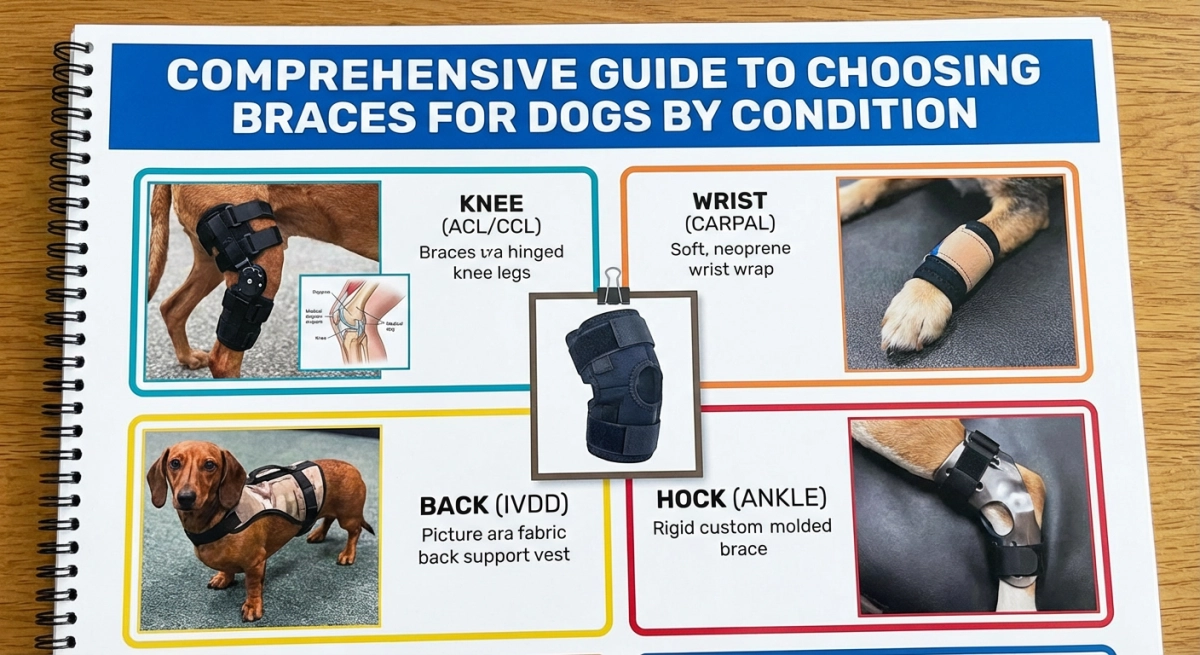
Choosing the right support for your dog is important. It can help your dog feel better every day. You want your dog to move easily and stay comfortable. Braces for dogs come in different types. Each type helps with a certain problem. Here are some common choices you may find:
| Type of Brace |
Purpose/Benefit |
|---|---|
| Hinged Braces |
For active dogs, allowing natural movement. |
| Custom Stifle and Hock Braces |
For post-surgery recovery. |
| Braces for Large or Aging Breeds |
For preventative support to enhance quality of life. |
| Neck and Shoulder Braces |
For orthopedic stabilization. |
Braces give extra help, but they do not cure problems. Always talk to your vet before you try something new.
Key Takeaways
-
Picking the right brace can help your dog feel better and move easier. Talk to your vet to choose the best brace for your dog's problem.
-
Braces help weak or hurt joints. They let dogs walk with less pain. Many owners see their dogs become happier and play more after using a brace.
-
The brace must fit well to work right. Measure your dog with care. Check the brace often to stop skin problems and keep your dog comfy.
-
There are different braces for different problems, like knee or hip issues. Knowing what your dog needs helps you pick the best brace.
-
Braces are not a replacement for vet care. Always work with your vet to watch your dog's progress and change the brace if needed.
Why Braces for Dogs Matter
Supporting Mobility and Comfort
You want your dog to move with ease and feel comfortable every day. Braces for dogs help by giving extra support to weak or injured joints. When you use the right brace, your dog can walk, run, or play with less pain. Many owners notice their pets seem happier and more active after wearing a brace.
-
Braces provide support to sore limbs and help reduce pain.
-
They make walking and standing easier for dogs with joint problems.
-
Braces can help dogs with arthritis or knee injuries feel more stable.
Some dogs cannot have surgery. For these dogs, knee braces can improve mobility and reduce discomfort. Many dogs using knee braces show less limping and move almost as well as those who had surgery.
Preventing Further Injury
You want to keep your dog safe from more harm. Braces for dogs do more than just help with pain. They also protect joints from getting worse. When a joint is weak, it can move in ways that cause new injuries. A brace keeps the joint steady and helps your dog use the leg the right way.
| Study Reference |
Findings |
Sample Size |
Duration |
|---|---|---|---|
| Rosen et al. (2022) |
Better weight-bearing with custom stifle orthoses |
12 |
12 months |
| Carr (2016) |
Improved pressure distribution after 90 days |
small |
90 days |
| Muršec et al. (2025) |
Better gait and weight distribution after 32 days |
2 |
32 days |
Braces help spread your dog’s weight more evenly. This lowers the risk of hurting other parts of the leg.
Enhancing Recovery
You want your dog to heal well after an injury or surgery. Braces can make recovery smoother and more comfortable. Many owners see their dogs move better and limp less after using a brace.
-
Most dogs show better mobility and comfort with a brace.
-
Dogs often have less lameness and more balanced walking.
-
Owners report their pets seem happier and more confident.
Sometimes, dogs may get skin irritation or the brace may slip. You can avoid most problems by checking the fit and working with your vet. Good fitting and regular checks help your dog get the most benefit from a brace.
Tip: Always talk to your vet before starting a new brace. The right fit and support make a big difference in your dog’s comfort and safety.
Types of Braces for Dogs by Condition
Knee Braces
Knee braces help your dog when knee injuries slow them down. You might see your dog limp or avoid putting weight on one leg. Stifle braces support the knee joint and help with problems like torn CCL or ACL, luxating patella, or general knee weakness. These braces for dogs keep the knee steady, so your dog can walk and play with less pain. Some knee braces cover one knee, while others support both knees at once. Hinged knee braces give extra help for serious injuries.
Tip: If your dog has trouble with stairs or jumps, a knee brace can make daily life easier.
Hip Braces
Hip braces give gentle compression and support around your dog’s hips. If your dog has hip dysplasia or weak hips, this type of brace can help them move more comfortably. The brace holds the hips in place and reduces swelling. Many hip braces use soft panels that hug the body, making it easier for your dog to walk or stand. You can use hip braces for dogs as part of a bigger plan, including exercise and joint care.
Hock Braces
Hock braces support the lower back leg, right above the paw. Dogs with weak or injured hocks often drag their feet or wobble when they walk. A hock brace keeps the joint steady and stops painful movements. It also helps your dog heal after surgery or injury. Here’s a quick look at what hock braces do:
| Function |
Description |
|---|---|
| Joint Stabilization |
Keeps the hock joint steady and prevents too much movement |
| Pain Reduction |
Supports weak or injured areas to reduce discomfort |
| 3-Point Force System |
Balances forces to stop the joint from collapsing |
| Recovery Aid |
Helps healing after surgery or as a non-surgical option |
Elbow Braces
Elbow braces help dogs with front leg problems. If your dog has elbow dysplasia, arthritis, or swelling from lying on hard surfaces, an elbow brace can make a big difference. These braces for dogs cushion the joint and limit painful movement. They also help with healing after injuries or surgery.
Wrist Braces
Wrist braces, also called carpal braces, support the lower front leg. Dogs with weak wrists or injuries may stumble or have trouble standing. A wrist brace keeps the joint straight and helps your dog walk with confidence. It is a good choice for dogs with mild weakness or after a small injury.
Multi-Joint Braces
Some dogs need more than one joint supported. Multi-joint braces cover several areas at once, like the knee and hock or the whole limb. These braces for dogs work well for pets with complex injuries or long-term joint problems. They offer broad support and help your dog move safely every day.
Choosing Braces for Dogs by Condition
Arthritis
If your dog has arthritis, you want to help them move with less pain. Braces for dogs with arthritis usually focus on the knees. These braces give extra support and help your dog walk more evenly. When you use a knee brace, your dog can put more weight on the sore leg and feel steadier. Many owners notice their dogs walk better and seem happier after using a knee brace.
Here’s a quick look at how knee braces can help with arthritis:
| Benefit |
What You’ll Notice |
|---|---|
| Better weight-bearing |
Your dog stands and walks more evenly |
| Improved gait |
Steps look smoother and more balanced |
| Less pain |
Your dog may play or move more often |
Tip: Make sure the brace fits well. Check your dog’s skin for any redness or rubbing, especially in the first few days.
Hip Dysplasia
Hip dysplasia can make walking hard for your dog. You might see your dog sway or have trouble getting up. Hip braces for dogs give gentle support around the hips and lower back. These braces help keep the hips in place and make movement easier.
When you pick a hip brace, keep these tips in mind:
-
Talk to your vet before you buy a brace.
-
Think about how much support your dog needs. Some dogs need a soft brace for mild pain. Others need a custom brace for more serious problems.
-
Choose a brace that fits your dog’s size and shape. Adjustable straps can help you get a snug fit.
-
Look for breathable materials. Your dog will feel cooler and more comfortable.
Note: A good hip brace should let your dog walk and move naturally. If your dog seems stiff or uncomfortable, try adjusting the fit.
Ligament Injuries
Dogs with ligament injuries, like a torn CCL, often limp or avoid using one leg. Braces for dogs with ligament injuries usually focus on the knee, also called the stifle. A custom knee brace holds the joint steady and helps your dog walk with less pain. These braces work best for dogs who cannot have surgery or need extra support during recovery.
You should always check the fit of the brace. If you see any skin irritation or slipping, adjust the straps or talk to your vet. Remember, braces help with movement, but they do not fix a full ligament tear.
Callout: If your dog has a complete ligament rupture, ask your vet if surgery is needed. Braces can help, but they are not a cure for every injury.
Carpal and Wrist Issues
Wrist problems can make your dog stumble or drag a paw. Carpal braces for dogs support the lower front leg and keep the wrist straight. These braces are great for mild injuries or after a sprain.
Here’s how to pick the right wrist brace:
-
Place the brace just above your dog’s wrist, about 1-2 cm above the paw.
-
Use the included support stay to adjust how firm the brace feels. Start with mild support and increase if needed.
-
Measure your dog’s leg at the wrist to find the right size. Use a sizing chart to match the measurement.
-
Check your dog’s skin every few hours at first. Look for any redness or rubbing.
-
Wash the brace in cold or lukewarm water to keep it clean.
Tip: A well-fitted wrist brace should not slip or twist. If it does, try a different size or adjust the straps.
Elbow and Shoulder Support
Some dogs have trouble with their elbows or shoulders. You might see your dog limp or avoid using a front leg. Braces for dogs with elbow or shoulder problems give gentle support and help your dog move with less pain. These braces can help with conditions like elbow dysplasia, OCD, or general joint instability.
You can use an elbow brace to cushion the joint and limit painful movement. Shoulder braces help keep the leg in the right position and prevent further injury.
-
Elbow braces reduce pressure and make walking easier.
-
Shoulder braces help with pain and keep the joint steady.
-
Both types can help your dog recover after an injury.
Note: Always check the fit and comfort of the brace. If your dog seems bothered, try adjusting the straps or ask your vet for advice.
Choosing the right brace can make a big difference in your dog’s daily life. Take your time, measure carefully, and always check with your vet if you have questions.
Fit, Comfort, and Materials
Importance of Proper Fit
Getting the right fit for your dog's brace makes a huge difference. If the brace fits well, your dog will feel more comfortable and get better support. You want to measure your dog carefully before you choose a brace. Here are the main steps:
-
Wrap a tape around the widest part of your dog’s chest, just behind the front legs.
-
Measure from the base of the rear paw up to the top of the hip.
-
Measure around the thigh, halfway between the knee and groin.
Custom-made braces give the best fit because they match your dog’s exact shape. They help your dog move naturally and feel less stress on sore joints. Always check the type of injury, your dog’s activity level, and the kind of brace you need. Adjustable straps and padding can make the brace even more comfortable.
Material and Padding Choices
You want your dog to wear the brace every day, so comfort matters. Most braces for dogs use soft, breathable neoprene. This material keeps your dog cool and helps reduce moisture. Padding in the right spots stops rubbing and keeps pressure off sensitive areas. Some braces use medical-grade plastic for extra support. These braces often have hinges, so your dog can still move easily.
Here’s a quick look at common materials:
| Material |
Benefit |
|---|---|
| Neoprene |
Breathable, soft, reduces moisture |
| Medical-grade plastic |
Strong support, keeps shape |
| Washable fabrics |
Easy to clean, good for daily use |
| Well-placed padding |
Stops chafing, adds comfort |
Choose a brace that matches your dog’s needs and daily routine.
Preventing Skin Issues
You want your dog’s skin to stay healthy under the brace. Always check for redness, rubbing, or sores, especially in the first few days. Make sure the brace is snug but not too tight. Take the brace off for short breaks and clean it often. If you see any skin problems, adjust the fit or ask your vet for advice.
Tip: Start with short wear times and slowly increase them. This helps your dog get used to the brace and keeps the skin safe.
Measuring and Fitting Braces
How to Measure Your Dog
Getting the right measurements is the first step to making sure your dog’s brace fits well. You want your dog to feel comfortable and get the best support possible. Here’s how you can measure your dog for a brace:
-
Wrap a soft tape around the upper part of your dog’s thigh, about one inch below where the leg meets the body.
-
Find the center of your dog’s knee joint and measure around this spot.
-
Measure from the knee down to the hock joint. This tells you how tall the brace should be.
-
Measure halfway between the hock and the paw for the lower leg circumference.
-
Write down your dog’s weight and breed. Some braces fit certain breeds better.
Tip: Take each measurement twice to make sure you get the same number. A little extra care here helps your dog stay happy and active.
Using Sizing Charts
Sizing charts help you pick the right brace for your dog. You’ll see charts with measurements and weight ranges. Some braces use custom molds or 3D scans for a perfect fit. Here’s what matters most when you use a sizing chart:
| Factor |
Importance |
|---|---|
| Accurate casting or 3D scanning |
Essential for a custom fit |
| Owner compliance |
Critical for daily wear and monitoring |
| Integration with physiotherapy |
Supports overall treatment effectiveness |
| Veterinary oversight |
Necessary for adjustments and progress checks |
| Long-term success |
Depends on the above factors for meaningful improvements in mobility and comfort |
If you’re not sure, ask your vet or the brace provider for help. They can guide you to the best choice for your dog.
Ensuring a Secure Fit
You want your dog’s brace to stay in place and feel good all day. Here’s how you can make sure the fit is just right:
-
Watch a tutorial video if one is available. Seeing the steps can make things easier.
-
Slide your dog’s leg into the brace. Start by tightening the bottom strap. Check for any wrinkles or pinching.
-
Secure the middle and top straps. Make sure you can fit one or two fingers between the brace and your dog’s skin near the groin fold.
-
Choose the right brace by measuring carefully or using a casting kit if needed. A brace that’s too loose won’t help, and one that’s too tight can cause problems.
-
For the first fitting, bend your dog’s knee to a 90-degree angle and line up the brace hinge with the knee joint. Adjust the straps so the brace stays put but doesn’t cut off circulation.
-
Start with short wear times and slowly increase them. Check your dog’s skin often, especially in the first few days.
Braces for dogs work best when you follow these steps and keep an eye on your dog’s comfort. If you notice any problems, talk to your vet for advice.
Matching Braces to Your Dog’s Lifestyle
Activity Level Considerations
You know your dog best. Some dogs love to run, jump, and play all day. Others prefer a slow walk or a nap on the couch. When you pick a brace, think about how active your dog is. Here’s what you should keep in mind:
-
If your dog is very active, a hinged knee brace gives the best support and lets your dog move naturally.
-
If your dog likes to relax more, a standard brace often works well and feels comfortable.
You want your dog to enjoy life, so match the brace to their energy level.
Indoor vs. Outdoor Use
Dogs go everywhere with you. Some spend most of their time inside, while others love the outdoors. Weather and ground conditions can change how a brace works. You might wonder if a brace can handle snow, rain, or mud. Here’s what one owner shared:
In February, we got a lot of snow and cold weather. Which is a perfect scenario to see how well the brace performs under such conditions. The brace has surprise delivered excellent results during the winter. And over the past five months, Annie’s quality of life has significantly improved thanks to the Posh Dog Knee Brace.
You want a brace that works well both inside and outside. Always check the fit after your dog plays outdoors.
Durability and Maintenance
You want a brace that lasts and stays clean. Braces for dogs use materials like neoprene, fabric, leather, plastic, and metal. Neoprene feels soft but can hold bacteria if you don’t clean it often. Braces made from strong, breathable materials last longer and keep your dog’s skin healthy. You should wash most braces by hand and let them air dry. Some mesh or nylon braces can go in the washing machine, but they might not last as long. Use gentle soap and skip the brush to keep the brace in good shape.
Tip: Clean the brace often to keep your dog comfortable and safe.
Veterinary Consultation and Safety
When to Consult Your Vet
You want the best care for your dog. Before you choose braces for dogs, talk to your veterinarian. Vets have special training that goes beyond what you find online. They can give you an accurate diagnosis and spot problems you might miss. Your vet will recommend the right brace based on your dog’s injury or condition. They know which type works best and can help you avoid mistakes. If you notice limping, swelling, or your dog avoids play, call your vet. They can guide you through the next steps and answer your questions.
Tip: A good conversation with your vet helps you make smart choices for your dog’s health.
Monitoring for Issues
After you start using a brace, keep an eye on your dog. Watch for changes in how your dog moves or acts. Here are signs you should look for:
-
Limping or favoring one leg.
-
Swelling near the joints.
-
Trouble getting up or sitting down.
-
Less activity or avoiding play.
-
Whining or whimpering.
-
Loss of muscle in the affected leg.
If you see any of these signs, check the brace fit and talk to your vet. Skin irritation, friction wounds, and brace slippage can happen, especially in the first few weeks. You can prevent these problems by making sure the brace fits well and by checking your dog’s skin often.
Safe Introduction and Use
You want your dog to feel comfortable and safe. Start with short wear times and slowly increase them. This helps your dog get used to the brace. Always check for redness or swelling. Clean the brace often and make sure it stays dry. Here’s a table with key safety tips from veterinary experts:
| Safety Consideration |
Description |
|---|---|
| Proper Fitting |
Custom-fit braces help spread pressure evenly and keep joints aligned. |
| Gradual Introduction |
Begin with short sessions and add more time each day. |
| Regular Monitoring |
Check for skin problems, swelling, or slipping every day. |
| Veterinary Oversight |
Keep your vet involved for advice and adjustments. |
| Comprehensive Rehabilitation Plan |
Use the brace along with exercise, hydrotherapy, and weight control for the best results. |
You can work with your vet and orthotic specialists to adjust the brace as needed. They will teach you how to care for the brace and watch for problems. With the right support, your dog can move better and feel happier.
Choosing the right brace for your dog makes a real difference. You want to focus on your dog’s condition, fit, and comfort. When you do this, you help your dog move better and feel happier. Here’s what matters most:
-
Custom-fit braces support healing and improve comfort.
-
Good braces can boost mobility and reduce pain.
-
Always check with your vet before picking a brace.
Remember, braces help your dog, but they don’t replace expert care. Use this guide and your vet’s advice to give your dog the best support possible.
FAQ
How do I know if my dog needs a brace?
You might notice limping, stiffness, or trouble standing. Your dog may avoid play or seem uncomfortable. If you see these signs, ask your vet about braces. They can help you decide what’s best.
Can my dog wear a brace all day?
Most dogs start with short wear times. You can slowly increase the time as your dog gets used to it. Always check your dog’s skin and comfort. Take breaks to let your dog rest.
How do I clean my dog’s brace?
You can wash most braces by hand with mild soap and cool water. Let the brace air dry. Avoid using harsh cleaners or a brush. Clean the brace often to keep it fresh and safe.
Will my dog still be able to run and play?
Many dogs move better with a brace. You may see your dog walk, run, or play more comfortably. Always watch your dog and adjust activities as needed. Ask your vet for advice on safe exercise.
0 Comments