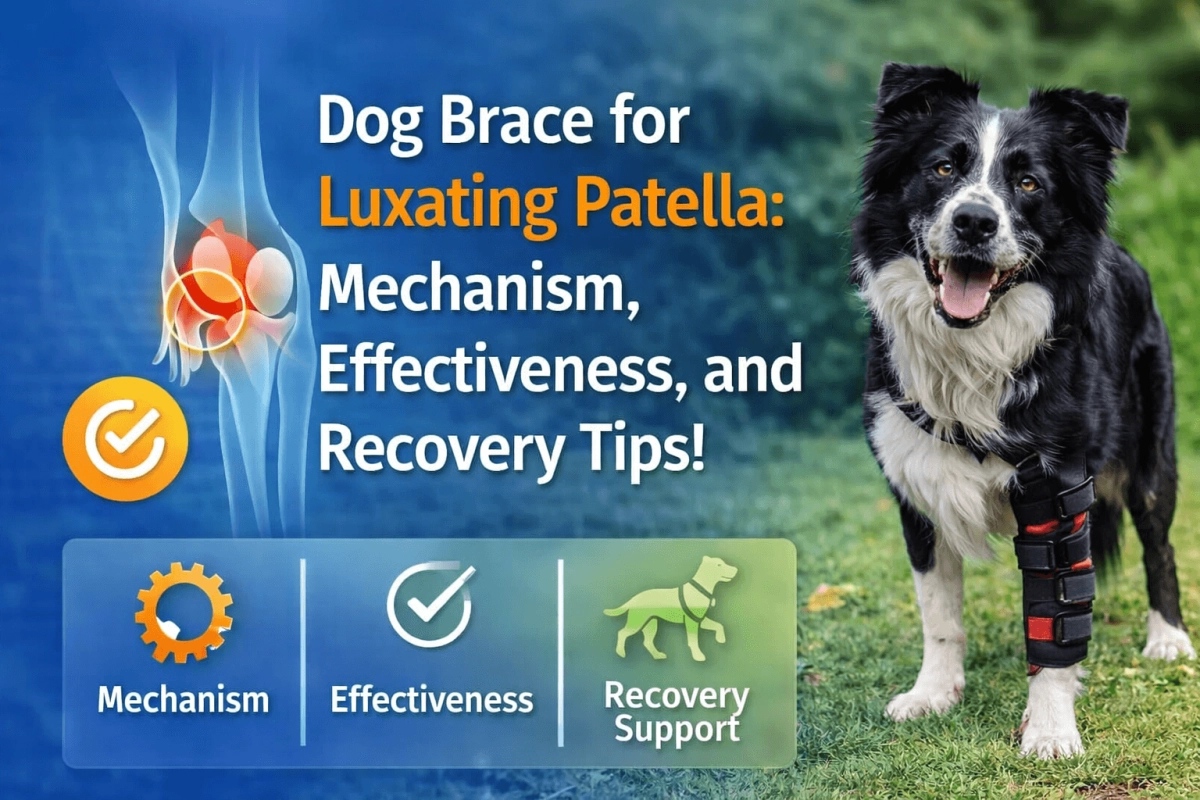
If you have noticed your dog limping or skipping during walks, you might wonder if a dog brace for luxating patella could make a difference. Luxating patella means your dog’s kneecap sometimes slips out of place, making movement painful or awkward. This problem shows up in about 1.3% of dogs each year, so you are not alone if you face it:
-
Many dogs visit the vet for this issue every year.
-
The condition affects dogs of all sizes, but small breeds see it more often.
You want your dog to feel comfortable and stay active. Always talk with your veterinarian to find the best plan for your dog.
Key Takeaways
-
A dog brace for luxating patella gives support and helps your dog feel steady. It lets your dog move with less pain and more confidence.
-
Braces are best for dogs with mild or moderate luxating patella. You should always talk to your veterinarian to find the best treatment.
-
Start by letting your dog wear the brace for 30 to 60 minutes. Slowly add more time so your dog can get used to it.
-
Watch your dog closely to see how they are doing. Look for any signs of pain or changes in how they walk. Tell your vet if you notice anything different.
-
Use the brace along with gentle exercises and changes in daily habits. This will help your dog recover and stay healthy.
Can a Dog Brace for Luxating Patella Help?
When Bracing Is Appropriate
You might wonder if a luxating patella dog brace is right for your pet. The answer depends on the grade of your dog’s knee problem. Vets use a grading system from I to IV. Grades I and II are mild to moderate. In these cases, the kneecap slips out but often goes back in place on its own. A dog brace for luxating patella can help here. It gives extra support and helps retrain the soft tissues around the knee.
You may see signs a dog may need a leg brace, like skipping steps, limping, or licking the knee. If your dog shows these signs, a dog brace for luxating patella can make daily walks easier and less painful. Many owners notice their dogs become more playful and active after using dog leg braces. Some even say their dogs stop licking their knees as much.
Note: A dog brace for luxating patella is not a cure for severe cases. If your dog has Grade III or IV luxation, where the kneecap stays out most or all of the time, you should talk to your vet about surgery.
Which Dogs Benefit Most
Dog leg braces work best for dogs with mild or early-stage luxating patella. Small breeds often need a knee brace for dogs, but larger dogs can benefit too. If your dog is older or has problems in more than one joint, a dog brace for luxating patella can help keep them moving without surgery. Braces also help before or after surgery, giving extra stability while your dog heals.
Here are some dogs that benefit most from dog leg braces:
-
Dogs with Grades I–II luxating patella
-
Dogs not ready for surgery
-
Senior dogs or those with other joint issues
-
Dogs needing extra support during rehab
A knee brace for small dogs or larger breeds can improve comfort, reduce pain, and help your dog enjoy walks again.
What Is Luxating Patella in Dogs?
Causes and Anatomy
When you hear the term luxating patella, it means your dog’s kneecap moves out of its normal spot. This happens because the groove in the thigh bone is too shallow or the bones and muscles around the knee do not line up well. Sometimes, the patellar ligament attaches in the wrong place, pulling the kneecap off track. Over time, this can wear down the groove even more.
Many small and toy breeds have a higher risk. Take a look at some breeds that often face this problem:
| Breed |
Risk Level |
|---|---|
| Yorkshire Terriers |
Higher risk |
| Poodles |
Higher risk |
| Chihuahuas |
Higher risk |
| Bulldogs |
Nearly triple the risk |
| French Bulldogs |
Odds ratio of 5.4 |
| Cavalier King Charles Spaniel |
Develop by 4-6 months |
| Boston Terrier |
Predisposed |
| Bichon Frise |
Genetic predisposition |
| Pomeranian |
Predisposed |
You might notice this issue more in these breeds, but any dog can develop it. Muscle imbalances, abnormal limb alignment, and even hip or bone shape can all play a part.
Symptoms and Grading
Dogs with a luxating kneecap show different signs, depending on how often the patella slips out. Some dogs only skip a step now and then. Others limp or hold up a back leg. The grading system helps you and your vet understand how serious the problem is:
| Grade |
Description |
Symptoms |
|---|---|---|
| 1 |
Mild, kneecap pops out but goes back on its own |
Mild signs, sometimes no limp |
| 2 |
Kneecap slips out more often, but can return to place |
Intermittent limping, skipping steps |
| 3 |
Kneecap out most of the time, can be pushed back in |
Consistent limp, some bone changes |
| 4 |
Kneecap always out, cannot be pushed back in |
Severe limp, leg may look bent or twisted |
If you see your dog skipping, limping, or holding up a leg, you might be looking at a luxating problem. Early signs can be easy to miss, so keep an eye on your dog’s movement and talk to your vet if you notice changes.
How Dog Brace for Luxating Patella Works
Mechanical Support and Stability
When your dog wears a brace for luxating patella, you give their knee extra help. The brace acts like a gentle hand, holding the knee steady so the kneecap does not slip out of place as easily. This support lets your dog walk, climb stairs, or rest without feeling unstable. You may notice your dog feels more confident and less likely to limp or skip steps.
Here’s a quick look at how a dog knee brace provides mechanical support and stability:
| Feature |
Description |
|---|---|
| Joint Stabilization |
Prevents harmful sliding or twisting by reinforcing the knee with natural motion control. |
| Muscle-Powered Fit |
Utilizes the contraction of the dog's muscles to activate and secure the brace naturally. |
| Balanced Support |
Distributes weight properly across all limbs, reducing compensatory strain. |
| Comfort for Daily Life |
Allows for walking, resting, and climbing without restriction or pressure points. |
You want your dog to move without pain. A brace helps by controlling the way the knee bends and turns. It does not fix bone problems, but it can make daily life much easier for your dog.
Compression and Proprioception
A good brace does more than just hold the knee. It also gives gentle compression around the joint. This light pressure helps your dog feel where their leg is in space, which is called proprioception. When your dog knows where their leg is, they can walk more naturally and avoid sudden slips.
-
Compression helps the knee feel stable.
-
Your dog learns to use the leg better, which can speed up recovery.
-
The brace prevents the lower leg from sliding forward, which protects the knee.
Studies show that joint stabilizers and compression garments can improve joint stability and proprioception. Take a look at what researchers found:
| Study |
Findings |
|---|---|
| Bottoni et al. (2013) |
Joint stabilizers enhance proprioception. |
| Fu et al. (2013) |
Compression garments improve joint stability. |
| Birmingham et al. (1998) |
Physiological mechanisms support proprioceptive enhancement. |
| Herrington et al. (2005) |
Evidence of proprioception improvement with braces. |
You may see your dog walk with more confidence after using a brace. They may even start to put more weight on the leg that used to bother them.
Functional Alignment
Dog knee braces work by helping your dog’s leg stay in a better position. The brace supports the limb and keeps the thigh bone and shin bone lined up. This alignment lowers the risk of other injuries, like tears in the cruciate ligament.
-
The brace supports the limb during movement.
-
It helps keep the femur and tibia in line.
-
Good alignment protects your dog from further injury.
Remember, a brace does not change the shape of your dog’s bones. It helps manage symptoms and keeps your dog active and comfortable. You give your dog the best chance to heal and enjoy life when you combine a brace with other care steps.
Dog Brace Effectiveness and Limitations
Expected Outcomes
When you use a dog leg brace for luxating patella, you hope your dog feels better. Many owners see their dogs stand taller and walk with more confidence in a few weeks. Dog leg braces help by making skipping less common. They also give better stability and less pain during walks. Your dog might start using the injured leg more.
Here’s what studies show about how braces help:
| Metric |
Without Brace |
With Brace (4 weeks) |
Improvement % |
|---|---|---|---|
| Weight Bearing on Injured Leg |
42 % body weight |
57 % body weight |
+35 % |
| Stride Length Balance |
0.72 (L/R ratio) |
0.91 (L/R ratio) |
+26 % |
| Pain Response Score (VAS 1–10) |
7.3 |
3.9 |
–46 % |
A recent review found almost half of dogs using braces for knee problems could move almost normally after six months. With the right support, your dog can feel better and enjoy daily life.
When Surgery Is Needed
A dog brace helps with symptoms but does not fix serious bone problems. If your dog’s kneecap stays out most of the time or your dog is always in pain, surgery may be needed. Your vet will suggest surgery if your dog’s life gets worse or if other care does not help.
Tip: Always ask your vet to check your dog’s condition. Braces work best for mild or moderate cases. Surgery is needed for severe luxation or if pain does not get better.
Factors Affecting Results
Many things affect how well a brace works. The type of brace matters. Rigid braces hold the kneecap tightly. Flexible braces let the knee move a little but still give support.
| Type of Brace |
Description |
Considerations |
|---|---|---|
| Rigid Braces |
Hold the patella firmly in place, preventing movement. |
Custom fit required, can be expensive. |
| Flexible Braces |
Allow limited movement while providing support to the knee cap. |
Generally less expensive. |
Other things matter too, like how well the brace fits, how bad your dog’s problem is, and your plan for care. You help your dog by making sure the brace is worn right and by giving good exercise. Braces help the joint and stop more damage. For best results, use braces with weight control and exercises.
-
Type of brace used
-
Fit of the brace
-
Severity of the condition
-
Support from your veterinarian
Dog knee braces keep the joint steady and lower strain. If you use them the right way, your dog can stay active and feel good.
Recovery Support with Dog Knee Brace
Safe Usage Tips
You want your dog to feel comfortable and safe while wearing a knee brace. Start slow. Let your dog wear the brace for 30–60 minutes, two to five times a day. Add more time each day as your dog gets used to it. Always take the brace off at night and during crate time unless your vet says otherwise. Check your dog’s skin every time you put on or take off the brace. Look for redness, rubbing, or sores. Keep the fur under the brace clean and dry. Trim any long hair that might bunch up. Clean the brace as the manufacturer suggests. If you see swelling, more limping, or your dog tries to chew the brace, stop using it and call your vet.
Checklist for Safe Use:
-
Gradually increase wear time.
-
Remove brace at night and during rest.
-
Inspect skin twice daily.
-
Keep fur and brace clean.
-
Watch for signs of discomfort.
Activity and Lifestyle Changes
Your dog needs a safe space for recovery. Place rugs or mats on slippery floors to prevent falls. Block off stairs and keep your dog from jumping on furniture. Set up a cozy bed in a quiet spot. Make sure food, water, and toys are easy to reach. These changes help your dog rest and heal without extra stress on the knee.
Strengthening and Rehab
Gentle exercise helps your dog build strength during recovery. Try short, slow leash walks. Ask your dog to sit and stand five to ten times in a row. Use low broomsticks or poles for your dog to step over. Walk up a small ramp or gentle hill to work the thigh muscles. If your dog feels good, try a short army crawl. These activities support a successful recovery and help your dog move with confidence.
Monitoring Progress
Keep an eye on your dog’s progress. Check for any rubbing or redness under the brace. Make sure your dog can move the knee without pain. Watch for changes in how your dog walks or stands. If your dog limps more or seems uncomfortable, talk to your vet. Tracking these signs helps you and your vet adjust the plan for the best recovery from leg surgery.
Dr. James Cook, a veterinary orthopedic specialist, says, “Joint stability is the single most important factor in reducing pain and degeneration following cruciate injury.” Using a brace gives your dog extra support when surgery is not an option.
A dog knee brace can play a big role in ongoing recovery. It helps your dog stay active, supports healing, and gives you peace of mind as you work toward a successful recovery.
Dog braces for luxating patella help your dog move with less pain and more confidence. You get support, better mobility, and a lower risk of further injury. Remember, braces work best as part of a full plan. Always talk with your veterinarian before starting any new treatment. For the best results, combine a brace with rehab, weight control, and regular check-ins. You give your dog the best chance for a happy, active life.
FAQ
How long should my dog wear a knee brace each day?
Start with 30–60 minutes, two to five times daily. Slowly increase the time as your dog gets used to it. Always check your dog’s skin and comfort. Remove the brace at night unless your vet says otherwise.
Can a dog knee brace replace surgery?
A brace helps manage mild or moderate cases. It does not fix severe bone problems. If your dog has a Grade III or IV luxation, your vet may recommend surgery for the best results.
Will my dog feel pain while wearing the brace?
Most dogs feel less pain with a brace. You may see your dog walk easier and skip less. If your dog seems uncomfortable or tries to chew the brace, stop using it and call your vet.
How do I clean and care for the brace?
Tip: Wipe the brace with a damp cloth after each use. Let it air dry. Check for dirt or hair buildup. Follow the manufacturer’s cleaning instructions to keep the brace in good shape.
Can my dog play and run with the brace on?
Keep activity gentle at first. Short leash walks work best. Avoid jumping, running, or rough play until your vet says it’s safe. The brace supports healing, so slow and steady wins the race!
0 Comments