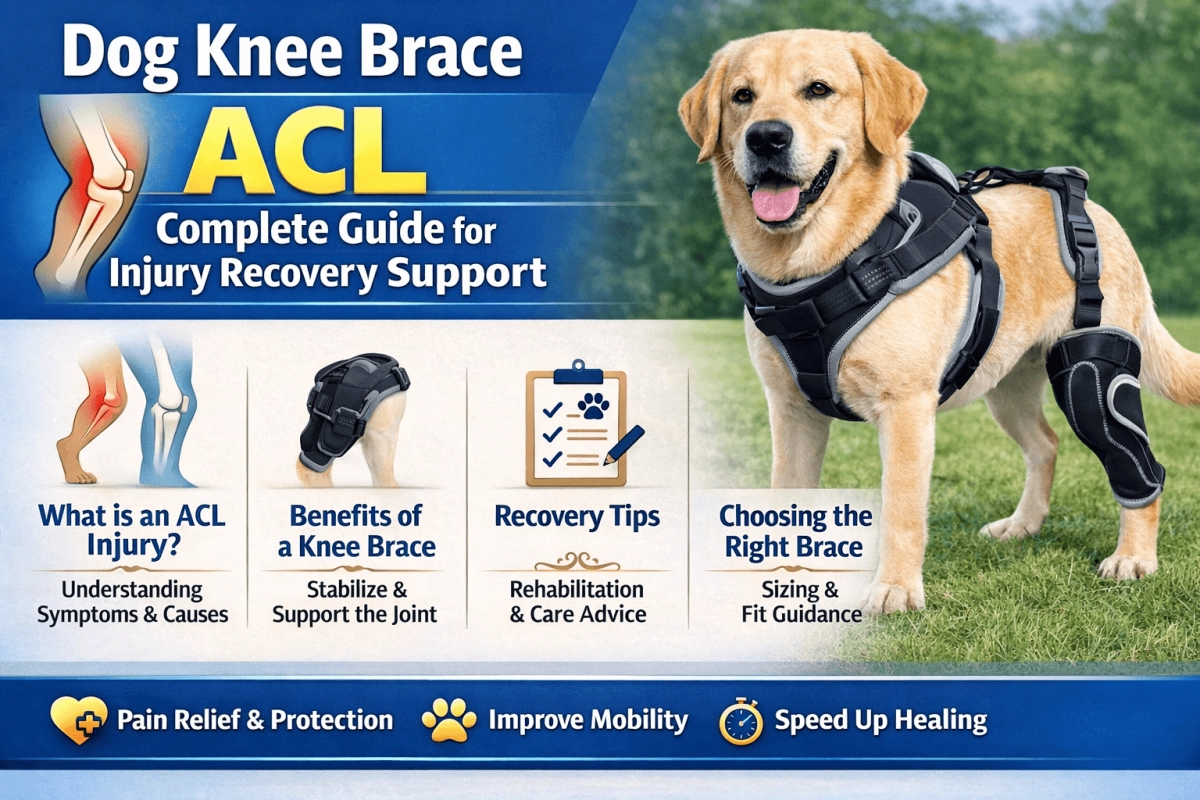
Dog knee injuries happen more than any other orthopedic problem in dogs. If your dog has a torn ACL (also called CCL), you might wonder if a brace can help. You’re not alone—many pet owners ask this question. A dog knee brace for ACL can support your dog’s recovery, especially when you want to avoid surgery or use rehab. Here’s what you should know:
-
About 63% of dogs treated without surgery do well after one year.
-
Most owners notice their dogs move better when braces fit right and are used as directed.
You should always talk with your vet about the best plan for your dog.
Key Takeaways
-
A dog knee brace helps dogs heal from ACL injuries. It is good for dogs that cannot get surgery. - Always talk to your vet before using a brace. This makes sure it fits right and is safe for your dog. - Watch your dog’s comfort and skin under the brace. This helps stop irritation or sores from happening. - Keeping your dog at a healthy weight is very important. It can help your dog get better faster. - Use the brace with gentle exercise and rehab. This gives your dog the best chance to heal well.
Understanding Dog ACL (CCL) Injuries
What Is the ACL (CCL) in Dogs?
You might hear your vet talk about the ACL or CCL. In dogs, the cranial cruciate ligament (CCL) is the same as the ACL in people. This ligament connects the thigh bone (femur) to the shin bone (tibia) inside your dog’s knee. The main job of the CCL is to keep the knee stable. It stops the tibia from sliding forward and helps control rotation and extension. Unlike humans, dogs put weight on their CCL all the time because of how they stand and walk.
Causes and Risk Factors
Many things can lead to a CCL injury. Some dogs hurt their knee suddenly, like when they jump or twist while playing. Most of the time, though, the ligament wears out slowly. Age, breed, and body shape play a big role. Overweight dogs, or those with poor muscle tone, face a higher risk. Some breeds get CCL injuries more often than others.
| Breed/Size |
Risk Factor |
|---|---|
| Large breed dogs |
Higher risk for CCL injuries |
| Labrador Retrievers |
Prone to CCL injuries |
| Rottweilers |
Increased risk noted |
| German Shepherds |
Higher genetic predisposition |
| Golden Retrievers |
More prone to injuries |
Other risk factors include being spayed or neutered at a young age, having a steep tibial slope, or certain immune problems.
Common Symptoms
You may notice your dog limping or not wanting to put weight on one back leg. Sometimes, the limp comes and goes. Dogs with a CCL injury might sit with one leg out, have trouble getting up, or lose muscle in the thigh. You might even hear a clicking sound from the knee if the meniscus is hurt. Swelling, pain, and stiffness are also common.
How Vets Diagnose ACL Injuries
Your vet will start with a hands-on exam. They check for looseness in the knee and watch how your dog walks. Sometimes, they use sedation to make your dog comfortable during the exam. X-rays help rule out other problems and show swelling or arthritis. For a clear answer, your vet might suggest advanced tests like MRI or arthroscopy. These tests can spot partial or full tears and check for meniscus damage. Getting the right diagnosis helps you and your vet choose the best treatment, like surgery, rehab, or a dog acl brace.
Dog Knee Brace ACL: Role in Recovery
How a Knee Brace Works
A dog knee brace acts like a gentle helper for your dog's injured knee. You strap it around your dog's leg, and it gives the joint extra support. This support helps your dog walk with less pain and more confidence.
-
The brace keeps the knee stable during movement.
-
It limits motions that could make the injury worse, but still lets your dog move naturally.
-
The brace applies gentle pressure, which can ease pain and help your dog feel more comfortable.
-
It helps stop the shin bone from sliding forward, which is called tibial thrust. This is important because it lets the knee heal and form scar tissue, just like after surgery.
You can think of a dog knee brace acl as a tool that helps your dog get around while the body works on healing.
When to Use a Brace
You might wonder if a brace is right for your dog. Vets often suggest a dog knee brace acl for certain situations:
-
Your dog has a mild or moderate CCL injury and surgery is not needed right away.
-
Your dog is older, small, or has health problems that make surgery risky.
-
You want to try a non-surgical option to help your dog heal.
-
Your dog needs extra support during rehab after surgery.
-
Your dog cannot have surgery, but you still want to help them move better.
A brace can help reduce pain and swelling. It also helps keep the knee steady, which may slow down arthritis. Not every dog will do well with a brace, so you should always talk with your vet before starting.
Tip: A dog knee brace acl works best when you use it as part of a full recovery plan. This means you should also focus on weight control, pain management, and gentle exercise.
Benefits and Limitations
Dog knee braces have some great benefits, but they also have limits. Here’s a quick look:
| Pros |
Cons |
|---|---|
| Non-invasive and surgery-free |
Need the right fit and regular checks |
| Can adjust for different injuries |
Not always enough for severe injuries |
| Useful for rehab and prevention |
Some dogs need time to get used to wearing |
| Often cost less than surgery |
May not fully replace surgery in tough cases |
A dog knee brace acl gives your dog support without surgery. It can help with pain and make walking easier. Many owners like that braces are adjustable and can be used for different types of injuries.
But braces are not magic. They do not fix the torn ligament. They work best for smaller dogs, older dogs, or those who cannot have surgery. Some dogs need time to get used to wearing a brace. You must check the fit often to avoid rubbing or sores.
Veterinary surgeons say that surgery is still the best way to fix a torn CCL, especially for big or active dogs. Braces can help as a temporary solution or for dogs who cannot have surgery. If you use a brace alone, your dog may need more time to recover, and arthritis can still develop.
Remember: Always use a brace under your vet’s guidance. The right fit, regular checks, and a full recovery plan make the biggest difference for your dog.
Treatment Options for Dog ACL Injuries
Surgical Management
Surgery is often used to treat ACL injuries in dogs. It is common for big or active dogs, or if the tear is complete. Your vet may talk about different surgeries. Each surgery has its own good points and best uses. Here are some main choices:
| Surgical Technique |
Description |
Reported Success Rate |
Notes |
|---|---|---|---|
| Lateral Extracapsular Suture |
Uses nylon line to stabilize the knee |
~85% |
Great for dogs under 30 pounds |
| Tightrope |
Uses a strong synthetic suture |
N/A |
Newer, outcomes can vary |
| SwiveLock |
Uses a bone anchor for support |
N/A |
Still being studied |
| TPLO (Tibial Plateau Leveling Osteotomy) |
Changes the angle of the knee joint |
N/A |
Popular for large or active dogs |
| CBLO (CORA Based Leveling Osteotomy) |
Alters joint biomechanics |
N/A |
Similar to TPLO |
| TTO (Triple Tibial Osteotomy) |
Changes joint dynamics |
N/A |
Focuses on the tibial plateau |
| Closing Wedge Osteotomy |
Cuts and reshapes the bone |
N/A |
Aims for joint stability |
Most dogs feel better after surgery. Your vet will help you choose the best one for your dog’s size, age, and health.
Conservative (Non-Surgical) Management
Some dogs do not need surgery. Non-surgical care is called conservative management. This is a good choice for older or smaller dogs, or those with other health issues. This plan usually includes:
-
Rest and less activity (no running or jumping)
-
Keeping your dog at a healthy weight
-
Physical therapy to make muscles stronger
-
Joint supplements for extra help
-
Medicine to control pain and swelling
-
Using a dog knee brace acl for more support
Many dogs get better with this plan, especially if started early. Rehab and a brace can help your dog walk and feel less pain.
Where Braces Fit In
You may wonder how a brace helps your dog heal. Braces keep the knee steady and stop bad movements. They are good for:
-
Dogs with small tears or mild knee problems
-
Dogs who cannot have surgery
-
Dogs who need more support after surgery
A dog knee brace acl can help your dog feel safer and more comfortable. Braces do not take the place of surgery for every dog, but they are important in many recovery plans. Always ask your vet if a brace is right for your dog.
Tip: The best results happen when you use a brace, control weight, do rehab, and see your vet often.
Choosing a Dog Knee Brace
Types of Braces
You have several options when picking a knee brace for your dog. Each type offers different support and works best for certain injuries. Here’s a quick look at the main types:
| Type of Brace |
Design Features |
Intended Use |
|---|---|---|
| Soft Neoprene Wraps |
Soft, stretchy material; sometimes with support stays |
Mild injuries like sprains or strains |
| Thermoformed Semi-Rigid/Rigid |
Medical-grade plastic; may include hinges |
More severe injuries like CCL tears |
| Single Knee Braces |
Stabilizes one leg |
Localized injuries such as a torn CCL or ACL |
| Double Dog Knee Braces |
Supports both knees at once |
Dogs with pain or arthritis in both knees |
| Hinged Knee Braces |
Hinges allow natural movement, prevent overextension |
Active dogs recovering from surgery or major injuries |
You might choose a single knee brace for a torn ligament in one leg, or a double brace if your dog has trouble in both knees. Hinged braces work well for dogs who need to stay active during recovery.
Key Features and Fit
When you shop for a dog knee brace acl, focus on these important features:
-
Proper fit and adjustability: The brace should fit snugly but not too tight.
-
Level of support: Pick a brace that matches your dog’s injury—mild, moderate, or severe.
-
Medical-grade materials: Look for breathable, comfortable materials.
-
Anti-slip design: Adjustable straps and non-slip lining help keep the brace in place.
-
Vet-approved design: Braces made with veterinary input support natural movement.
A good fit is the most important part. If the brace is too loose or too tight, it can cause rubbing, sores, or slip off. Always check the fit and ask your vet for help if you’re unsure.
Tip: A well-fitted brace helps your dog move better and recover faster.
Measuring Your Dog
Getting the right size starts with careful measuring. Here’s how you can do it at home:
-
Lay your dog on their side and gently extend the leg you want to measure.
-
Use a soft measuring tape to measure three areas:
-
Thigh length: From the groin to the knee cap.
-
Knee length: From the knee cap to the tibial tuberosity.
-
Tibia length: From the knee cap to the back of the hock.
-
-
Make sure the tape is flat and snug, but not tight.
-
Write down each measurement and double-check for accuracy.
If you need to make a mold for a custom brace, your vet may use a stockinette and casting tape to get the perfect shape. Always follow your vet’s instructions for the best results.
Using a Dog Knee Brace Safely
Fitting and Acclimation
Getting your dog used to a knee brace takes patience and a few simple steps. Start by making sure your vet has confirmed the right diagnosis and helped you pick the best brace. When you first put on the brace, line up the hinge with your dog’s knee joint. The fit should feel snug but not tight or pinching.
Here’s a step-by-step way to help your dog adjust:
-
Begin with short sessions—about 15 to 30 minutes at a time.
-
Use treats and praise to make the experience positive.
-
Gradually increase the time your dog wears the brace each day.
-
Try the brace during calm activities, like gentle walks or playtime.
-
Always remove the brace during naps or overnight.
A calm environment helps your dog relax. If your dog seems bothered, take a break and try again later.
Daily Use and Skin Care
Daily care keeps your dog comfortable and prevents problems. Check the skin under the brace twice a day for redness, rubbing, or sores. Clean and dry the fur before putting the brace on. Trim any extra fur that bunches under the straps. Wash the brace as the manufacturer suggests and replace padding if it gets worn out.
If you notice swelling, more limping, or your dog starts knuckling the paw, take the brace off and call your vet. Keeping the skin healthy is just as important as using the brace.
Tip: A quick skin check every morning and night can prevent bigger issues.
Activity Guidelines
You should use the dog knee brace acl during active times, like walks, potty breaks, or rehab exercises. Start with 30 minutes on the first day, then add 30 minutes each day. Most dogs wear the brace for 2 to 4 hours at first, then up to 6 to 12 hours as they get used to it.
Let your dog rest without the brace. If your dog has a partial tear or arthritis, your vet may suggest wearing the brace during all active hours. Watch for any signs of discomfort and adjust as needed.
Stay consistent and follow your vet’s advice for the best results.
Recovery Timeline and Home Care
Early Recovery Goals
When your dog starts recovering from an ACL injury, you want to set clear goals. The first few weeks matter most. You should focus on rest and keeping your dog calm. Strict activity restriction helps protect the knee. Most dogs need 12–16 weeks to recover, but some take up to 6 months to get back to normal. Here’s what you can do at home:
-
Give your dog a quiet space with non-slip rugs.
-
Block off stairs and use ramps for easier movement.
-
Keep your dog on a leash for potty breaks.
-
Watch your dog’s weight and feed a balanced diet.
-
Use pain relief as your vet recommends.
Tip: Cold packs help with swelling in the first days. Warm packs ease stiffness later.
Rehabilitation and Exercise
Rehab helps your dog rebuild muscle and regain strength. You can start gentle exercises after the first two weeks. Controlled leash walks and short sessions work best. Physical therapy, like hydrotherapy, can speed up recovery. Here’s a simple exercise you can try:
| Exercise |
What It Does |
|---|---|
| Weight Shifting |
Helps your dog put weight on the injured leg. |
| Improves balance and activates leg muscles. |
You can also use joint supplements and try red light therapy for comfort. Always follow your vet’s advice on when to increase activity.
Monitoring Progress and Red Flags
Keep an eye on your dog’s progress every day. Look for signs that show healing or trouble. If you notice any of these, call your vet:
-
Limping or toe-touching with one leg
-
Stiffness after getting up
-
Swelling around the knee
-
Clicking or popping sounds in the joint
-
Muscle loss in one thigh
-
Reluctance to play, jump, or climb stairs
-
Difficulty rising or sitting
Sudden changes in activity or pain mean you should get help right away. Regular check-ins with your vet keep your dog’s recovery on track.
Additional Support for Healing
Weight Management
Keeping your dog at a healthy weight makes a huge difference in recovery. Extra pounds put more stress on the injured knee and slow down healing. If your dog loses weight, you may see better results, especially if you choose a non-surgical plan. Take a look at how weight management impacts recovery:
| Treatment Group |
Successful Outcome Rate at 52 Weeks |
|---|---|
| Surgical |
75% |
| Nonsurgical (with weight loss) |
63.6% |
You can help your dog by measuring food, choosing lower-calorie treats, and asking your vet about a weight loss plan. Even a small drop in weight can help your dog move easier and feel less pain.
Pain and Inflammation Control
Managing pain and swelling helps your dog stay comfortable and active. You have several options to try at home and with your vet’s help:
-
Give NSAIDs as prescribed by your veterinarian.
-
Apply ice to the knee for 20 minutes after walks.
-
Try physical rehabilitation to build muscle and support healing.
-
Stick to leash walks only for at least three months.
-
Use joint support supplements for extra comfort.
Your vet may also recommend other medicines like amantadine or gabapentin for stubborn pain. Always follow your vet’s advice and watch for side effects.
Supplements and Nutrition
The right supplements and nutrition can boost joint health and speed up recovery. You might see these ingredients on labels or in your vet’s recommendations:
-
Omega-3 fatty acids fight inflammation and help joints move better.
-
Green-lipped mussel offers natural comfort and supports mobility.
-
Glucosamine and chondroitin protect cartilage and slow joint breakdown.
-
MSM helps reduce swelling and keeps collagen strong.
-
UC-II (undenatured collagen) targets inflammation for chronic arthritis.
-
Avocado/soybean unsaponifiables (ASUs) help shield joint tissue.
Ask your vet which supplements fit your dog’s needs. Pairing good nutrition with a knee brace and rehab gives your dog the best chance to heal and stay active.
Remember: A dog knee brace works best when you combine it with weight control, pain management, and smart nutrition. You’re giving your dog a full support system for recovery!
You have learned that ACL (CCL) injuries can slow your dog. But there are ways to help your dog feel better. A dog knee brace gives support and comfort for mild or moderate injuries. For the best results, use the brace with other recovery steps. Keep your dog at a healthy weight. Try hydrotherapy or take gentle walks. Do rehab exercises to build strength.
| Recovery Strategy |
Benefits |
|---|---|
| Weight Management |
Less stress on the knee |
| Physiotherapy |
Stronger muscles, better movement |
| Emotional Support |
More confidence for your dog |
Check the brace fit often. Talk to your vet if you notice changes. You are not alone. Your care helps your dog get back to happy walks! ��
FAQ
How long should my dog wear a knee brace each day?
Start with short sessions, like 30 minutes. Add more time each day as your dog gets used to it. Most dogs wear the brace during walks or active times. Always follow your vet’s advice.
Can a dog knee brace cure a torn ACL?
A brace does not heal the ligament. It supports your dog’s knee and helps with comfort. You should use it as part of a full recovery plan. Surgery or rehab may still be needed.
Will my dog be able to run and play with a knee brace?
Your dog can walk and do gentle activities with the brace. Avoid running or jumping at first. As your dog gets stronger, your vet may allow more activity. Safety comes first.
How do I know if the brace fits right?
Check for these signs:
-
The brace stays in place.
-
No rubbing or red spots on the skin.
-
Your dog walks comfortably.
If you see sores or slipping, adjust the fit or ask your vet for help.
0 Comments