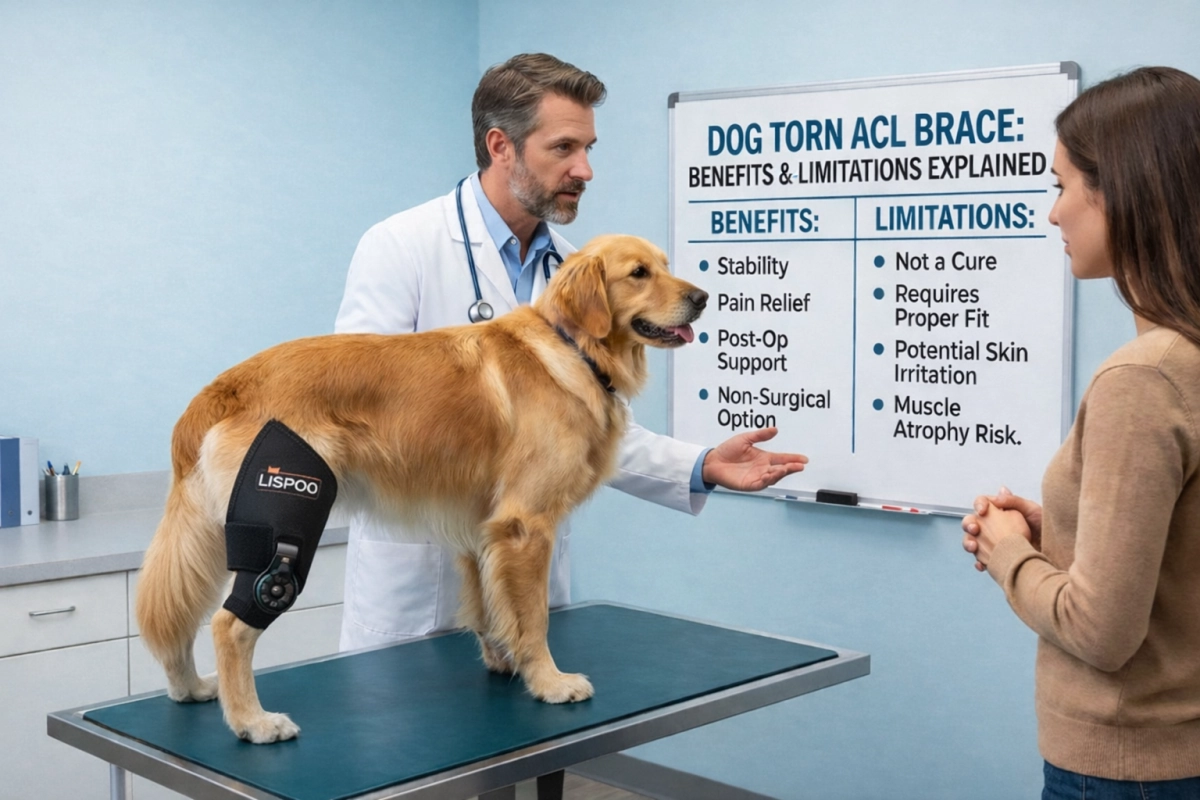
A dog torn acl brace can help your dog’s knee. It gives support after a cranial cruciate ligament injury. Many owners pick a brace because it does not need surgery. It also costs less than surgery most times. But a brace will not fix the injury. Some dogs need time to get used to wearing it. You should make sure the brace fits right. You should check it every day for your dog’s comfort.
| Benefits (Pros) |
Limitations (Cons) |
|---|---|
| Does not need surgery |
Needs to fit well and be checked often |
| Can be changed for different injuries |
May not work instead of surgery |
| Good for rehab and stopping more injury |
Some dogs need time to get used to it |
| Costs less than surgery |
Always talk to your veterinarian before you start any treatment for your dog.
Key Takeaways
-
A dog torn ACL brace helps your dog's knee feel better after it gets hurt. It gives support and eases pain so your dog can walk easier.
-
Braces do not fix the torn ligament. Surgery is usually needed for full healing, especially if your dog is very active.
-
Make sure the brace fits well to stop skin problems. Check your dog every day to see if the brace feels good and fits right.
-
Talk to your veterinarian to see if a brace is right for your dog. They will look at your dog's age, weight, and how much they move.
-
Use the brace with weight control and gentle exercise. This helps your dog heal better and keeps them from getting hurt again.
What Is a Dog Torn ACL (CCL/CrCL) Injury?
A torn ACL in a dog actually means damage to the cranial cruciate ligament (CCL or CrCL) in the knee joint. This ligament helps keep the knee stable during movement. When the CCL tears or weakens, the knee becomes unstable. You may notice your dog limping or having trouble walking. This injury can lead to pain and arthritis if not managed properly.
How CCL Injuries Happen in Dogs
A CCL injury does not always happen from a single accident. Many dogs develop problems over time. The ligament can slowly weaken because of age, weight, or genetics. Sometimes, a sudden twist while running or jumping causes a tear. Here are some common reasons why a dog might hurt its CCL:
-
Chronic weakening of the ligament from obesity or aging
-
Abnormal bone or limb shape that puts stress on the joint
-
Sudden trauma from twisting or turning quickly
-
Certain breeds have a higher risk due to genetics
-
Spaying or neutering may play a role in ligament health
The CCL has important jobs in your dog’s knee:
-
It stops the tibia from sliding forward compared to the femur
-
It limits how much the knee can extend
-
It controls how much the lower leg can rotate inside the joint
Common Signs and Diagnosis
You can spot a torn CCL by watching for changes in your dog’s movement. Look for these signs:
-
Limping or not putting weight on one back leg
-
Trouble standing up or climbing stairs
-
Stiff or awkward walking
-
Swelling around the knee
-
Standing with only the toes touching the ground
Veterinarians use special tests to check for a torn CCL. They may perform a cranial drawer test or a tibial compression test. X-rays help rule out other problems and show if arthritis has started. Early diagnosis helps your dog get the right care and support.
Dog Torn ACL Brace: What It Is and How It Works
Purpose of a Knee Brace
A knee brace helps your dog walk with less pain. It supports the stifle joint in the back leg. The brace keeps the joint steady. It stops sliding or twisting that can hurt the knee. This support helps your dog move better. It also helps stop more damage from happening.
Here is how a brace helps your dog:
| Evidence Description |
Mechanism of Support |
|---|---|
| External stabilization |
Makes your dog feel better and move easier by supporting the stifle joint. |
| Joint stabilization |
Stops sliding or twisting by keeping the knee steady while your dog moves. |
| Balanced support |
Spreads weight across all legs so one leg does not get too tired. |
Tip: A brace helps your dog’s leg rest and heal. It also protects the leg from falls. The brace helps your dog stand and walk better.
Types of Knee Braces for Dogs
There are different kinds of knee braces for dogs. Each kind helps with different injuries. Here is a table to compare them:
| Type of Knee Brace |
Design and Function |
|---|---|
| Single Knee Brace |
Supports one knee and helps with pain, good for a partial CCL injury. |
| Double Dog Knee Brace |
Supports both knees, best for dogs with injuries in both legs or who need extra help. |
| Hinged Dog Knee Brace |
Has hinges you can adjust, helps control movement after surgery and gives more stability. |
-
Single knee braces help if only one leg is hurt.
-
Double knee braces help if both knees are hurt or need extra support.
-
Hinged braces let you change how much the knee bends, which helps after surgery.
Ask your veterinarian to help you choose the best brace for your dog.
Brace Benefits for Torn ACL in Dogs
Pain Relief and Comfort
A dog torn acl brace helps your dog feel better after hurting its knee. The brace holds the joint steady and stops painful movement. Many dogs limp less and seem happier when they wear a brace. You might see your dog resting easier and getting up without much trouble.
-
A brace helps with pain and keeps the knee stable in both small and big injuries.
-
It gives support and protects the ligament from more damage.
Note: Using a brace with weight control and exercise can lower pain a lot. Many owners notice their dogs act happier and move better with a brace.
| Study Insights |
Description |
|---|---|
| Pain reduction |
Braces, weight control, and exercise together help many dogs feel less pain. |
| Quality of life |
Dogs with braces often seem happier and play more at home. |
| Breed effectiveness |
Small and medium dogs do well, and big dogs benefit if the brace fits right. |
Improved Mobility and Function
A dog torn acl brace helps your dog walk and move better. The brace keeps the knee from moving the wrong way. This lets your dog stand, walk, and play gently with less chance of getting hurt again. Many dogs feel braver and use their leg more after wearing a brace.
| Findings |
Description |
|---|---|
| Improvement in limb function |
Dogs with hinged braces got much better over 12 weeks. |
| Joint stabilization |
The brace kept the knee steady and stopped bad movement. |
| Avoidance of surgery |
Many dogs went back to normal activity without needing surgery. |
Max, a retired Labrador, wore a hinged brace for 12 weeks. He limped less and liked going on short walks again. His story shows how a brace can help your dog feel better and move more.
| Study Findings |
Impact on Mobility and Functional Outcomes |
|---|---|
| Most dogs had little or no limping by the end of the study with braces and rehab. |
This means dogs moved much better with braces. |
| Knee braces stop bad movement when the leg is not under heavy stress but may not work as well when the dog is very active. |
This shows braces help in some cases but not all. |
| Surgery like TPLO works better for big, active dogs. |
This means braces help, but surgery may be needed for best results in large dogs. |
Non-Surgical Support Option
A dog torn acl brace lets you help your dog without surgery. Some dogs cannot have surgery because they are old or sick. Others need help while waiting for surgery or getting better after it. A brace can help during these times and make your dog feel better.
Dr. James Cook, a vet surgeon, says a brace can help dogs move and feel less pain when surgery is not possible. Studies show braces lower the force that causes pain and keeps the knee from moving too much. Some dogs using braces and following a plan did as well as those who had surgery, especially in certain age and size groups.
Tip: If your dog cannot have surgery, a brace can still help with pain and let your dog stay active.
Cost and Convenience
A dog torn acl brace costs much less than surgery. Surgery for a torn acl, like TPLO, can cost about $5,000. A brace usually costs between $50 and $300. You can use a brace at home and do not need anesthesia or a long hospital stay.
-
Knee braces are easier to use and help your dog heal.
-
Owners spend less money, especially when thinking about extra costs after surgery.
You can put the brace on and take it off when you want. This makes it simple to care for your dog every day. Many owners think a brace fits their budget and daily life better than surgery.
Limitations of Dog Knee Braces
Not a Cure for Torn ACL
Some people think a knee brace will heal a torn cranial cruciate ligament. But braces do not fix the ligament. Surgery is still the best way to treat this injury, especially for big or active dogs. A brace can help your dog walk with less pain. It might let you wait longer before surgery. Braces only help with pain and movement. They do not make the ligament strong again. Orthotic devices support the joint but cannot do what surgery does. Talking with your veterinarian helps you understand what to expect for your dog’s recovery.
-
Braces do not fix the ligament.
-
Surgery is needed for full knee strength.
-
Braces help with comfort and movement, not healing.
May Not Prevent Surgery
Some owners pick a brace to avoid surgery for their dog. Sometimes, a brace helps your dog walk and feel better. But for big or very active dogs, surgery is usually best for long-term knee strength. Braces can help while your dog heals or waits for surgery. They may lower pain and help movement, but they do not fix the main problem. Most veterinarians say surgery is needed for dogs with bad knee problems or meniscal damage. Braces help some dogs, but you may still need surgery.
-
Braces might delay surgery but do not always stop it.
-
Surgery works better for active dogs.
-
Braces give support but do not fix the ligament.
Fit, Comfort, and Skin Issues
You must make sure the brace fits your dog well. If it does not fit, your dog can get skin problems like sores or red spots. Many owners see small problems like skin irritation or the brace moving out of place. Most dogs can have these issues. You should check your dog’s skin every day for redness, swelling, or rubbing. Using soft and airy materials helps stop wetness and sore spots. A good fit makes your dog more comfortable and lowers skin risks. If you see sores or pain, take off the brace and call your veterinarian.
-
Skin problems and sores can happen if the brace fits badly.
-
The brace can slip if not adjusted right.
-
Checking every day keeps your dog safe and comfy.
Limited Use in Severe Cases
Dog knee braces do not help every injury. Some bad injuries need other treatments. For example, braces do not help with posterior cruciate ligament injuries or big collateral ligament damage. Dogs with patellofemoral pain syndrome do not get better with knee braces. In these cases, braces may not give enough support and could make things worse. Your veterinarian can help you choose the right treatment for your dog’s injury.
| Type of Injury |
Limitation of Knee Brace Use |
|---|---|
| Posterior Cruciate Ligament (PCL) Injury |
Braces do not help much and are not proven to work. |
| Collateral Ligament Injury |
Some studies say braces may make injury worse. |
| Patellofemoral Pain Syndrome |
There is no proof that braces help this problem. |
Note: Always ask your veterinarian before using a brace for tough or tricky injuries. Some dogs need surgery or other care for the best results.
When Is a Dog Torn ACL Brace Appropriate?
Good Candidates for Bracing
You might wonder if a knee brace is right for your dog after a torn cranial cruciate ligament. Not every dog will benefit from a brace, but some dogs do very well with this support. Veterinarians look at several factors before recommending a brace. These include your dog's age, weight, breed, health, and how active your dog is. The table below shows what your veterinarian may consider:
| Criteria |
Description |
|---|---|
| Age |
How old your dog is |
| Weight |
How much your dog weighs |
| Breed issues |
Any breed-specific health concerns |
| Poor health |
General health and other medical problems |
| Fitness level |
How active and fit your dog is |
| Functional status |
How well your dog can walk and move |
A brace often works best for dogs that are small or medium-sized, older, or have health problems that make surgery risky. If your dog has a partial tear or mild instability, a brace can help support the joint and improve comfort. Dogs that can still walk and stand on their own usually do better with a brace.
Tip: Always ask your veterinarian to help decide if a brace is a good choice for your dog's injury.
When Braces May Not Be Enough
Sometimes, a brace does not give enough support. You need to watch for signs that your dog is not improving. If you see skin irritation, more limping, or changes in how your dog walks, the brace may not fit well or may not be helping. Braces often need several fittings and adjustments. Fitting problems can make it hard for your dog to use the brace safely.
-
Braces might only help for a short time.
-
They can delay surgery that your dog may need.
-
Waiting too long for surgery can make recovery harder.
-
Skin irritation, more limping, or a strange walk are warning signs.
-
Fitting issues can make braces less effective.
If your dog does not get better or seems worse, talk to your veterinarian. Surgery may be the best way to help your dog heal and move well again.
Comparing Knee Braces to Other Treatments
Braces vs. Surgery
You might ask if a knee brace can take the place of surgery for your dog's torn CCL. Surgery is the most trusted way to make the knee stable again and stop future problems. Most vets say surgery is best for big or active dogs. They think surgery helps dogs heal fully and have less arthritis later. Rehab experts say braces help for a short time, especially if your dog cannot have surgery right away. Braces do not fix the ligament. They cannot stop the knee from being loose if the tear is bad or if the meniscus is hurt too.
Here is a table that shows what different experts think:
| Expert Type |
Main Viewpoint |
|---|---|
| Veterinary Surgeons |
Surgery is needed for best recovery and to avoid arthritis. |
| Rehabilitation Practitioners |
Braces give temporary support but do not replace surgery, especially with meniscal tears. |
| General Veterinary Opinion |
Braces do not fix instability and may allow more joint damage over time. |
Tip: If your dog is small, older, or cannot have anesthesia, a brace may help with pain and movement. For most active dogs, surgery is the best choice.
Braces vs. Rest and Medication
You might think about using crate rest and medicine instead of a brace. Rest helps lower swelling and pain after the injury. Medicine makes your dog feel better. Rest alone does not hold the knee steady. Your dog might lose muscle and feel sad from staying in one spot. A knee brace lets your dog move safely. It keeps the joint steady and helps muscles stay strong. Many dogs are happier when they can walk with a brace.
The table below shows how rest and braces are different:
| Factor |
Crate Rest |
Dog Knee Braces |
|---|---|---|
| Cost |
Low |
Moderate |
| Movement |
Very limited |
Controlled and supported |
| Emotional Wellness |
Stressful |
Allows more freedom |
| Muscle Retention |
Muscle loss common |
Supports muscle use |
| Support to Joint |
None |
High mechanical support |
| Best For |
Short-term swelling |
CCL tears, chronic pain |
Note: Always ask your veterinarian which choice is best for your dog. A brace works best when used with rest, medicine, and rehab.
Choosing and Using a Dog Torn ACL Brace
Custom vs. Off-the-Shelf Braces
You have two main knee brace options for your dog: custom-made plastic braces and off-the-shelf braces. Custom braces fit your dog’s leg shape exactly. Off-the-shelf braces adjust to fit many dogs. Each type has strengths and weaknesses. The table below shows how they compare:
| Feature |
Custom-Fit Brace |
Off-the-Shelf Brace |
|---|---|---|
| Support Level |
Very High |
Basic to Moderate |
| Price Range |
High |
Low to Medium |
| Fit Type |
Tailored to dog's anatomy |
Adjustable |
| Ideal Use |
Complex or chronic issues |
Mild issues |
| Mobility Control |
Customizable |
Minimal |
Custom braces work best for dogs with unusual leg shapes or long-term problems. Off-the-shelf braces help with mild injuries and cost less.
Key Selection Criteria
Choosing the right dog braces means looking at several factors. Use this checklist to help you decide:
-
Consult your vet for a diagnosis and advice.
-
Think about your dog’s activity level, weight, and joint health.
-
Measure your dog carefully for a good fit.
-
Check for skin sensitivity or arthritis.
-
Look for strong, breathable materials and secure closures.
-
Review seller support, including fitting guides and exchange policies.
A knee brace for dogs works best when you match the product to your dog’s needs.
Measuring and Fitting Tips
Accurate measurement helps your dog braces work well. Follow these steps:
-
Gather three people, a tape measure, and a camera.
-
Lay your dog on their side with the leg flexed.
-
Find the groin, top of the knee, bottom of the knee, and hock.
-
Measure from the groin to the knee cap for thigh length.
-
Measure from the knee cap to the tibial tuberosity for knee length.
-
Measure from the knee cap to the back of the hock for tibia length.
-
Use a casting sock to flatten hair and make the tape visible in photos.
Take clear pictures of each measurement. Make sure the brace hinge lines up with your dog’s knee joint.
Safe Use and Monitoring
Start with short wear times for your dog knee brace. Increase time slowly over several days. Only use the brace during controlled activity, like leash walks. Check your dog’s skin every day for redness, swelling, or chafing. If you see sores, stop using the brace and call your vet.
Post-treatment care helps your dog recover. Begin with gentle movement and slowly add more exercise. Controlled leash walks keep the knee flexible and strong. Always monitor for skin problems or fit issues.
Braces should be part of a full care plan. Watch for any discomfort or changes in how your dog moves.
Medical Disclaimer:
This article is educational and does not replace veterinary diagnosis or treatment. Always consult a veterinarian for suspected cruciate injuries, medication decisions, or post-surgical bracing.
Long-Term Care and Prevention
Weight Management
You help your dog get better after an acl injury. Keeping your dog at a good weight protects the knee. Too much fat puts extra stress on the stifle. This can make a torn ccl worse. Overweight dogs with osteoarthritis feel more pain. They also have a harder time walking than healthy dogs. If your dog loses weight, you may see less limping. Your dog might move better too. Losing weight and doing physical therapy helps dogs heal faster from ccl tears. Give your dog healthy food and measure each meal. This helps stop weight gain. Ask your veterinarian for the best food plan.
Tip: Weigh your dog often. This helps you see changes and adjust food if needed.
Activity Control and Rehab
After an acl injury, you must control your dog's activity. This stops more damage. Start with short, slow leash walks. Do not let your dog run, jump, or play rough. Rehab helps your dog get stronger and steadier in the knee. There are many ways to help healing:
-
Start rehab early to lower pain and swelling.
-
Try underwater treadmill walks to build muscle safely.
-
Use gentle walks and stretches.
-
Add manual therapy, electrotherapy, and laser therapy for pain.
-
Feed low-calorie, high-protein food to help muscles and weight.
Physical therapy keeps the stifle joint steady. It also lowers the chance of another ccl tear. Work with your veterinarian or a rehab expert to make a safe exercise plan.
Monitoring for Bilateral Injury
Dogs with one acl injury can hurt the other knee too. In one study, almost 39% of dogs had both knees injured. Watch for signs of a new torn ccl. Look for limping, pain, or trouble standing. Check how your dog moves every day. If you see changes, call your veterinarian fast. Finding problems early stops more damage and keeps your dog active.
Note: Watch your dog closely and act fast. This helps protect your dog from worse knee problems.
Dog leg knee braces help support your dog. They can make pain less for mild or medium CCL injuries. Your dog might walk easier with a brace. But braces do not fix the ligament. They also do not stop arthritis from happening. You should always talk to your veterinarian. They will tell you what is wrong and how to treat it.
| Key Care Steps |
Why They Matter |
|---|---|
| Weight Management |
Less weight puts less stress on your dog's joints. |
| Activity Control |
Safe exercise keeps the knee safe from new injuries. |
| Regular Monitoring |
Checking early finds problems and helps your dog heal. |
Keep helping your dog every day. This gives your dog the best chance to get better for a long time.
FAQ
How do knee braces help a dog with an acl injury?
Knee braces give your dog’s leg support after an acl injury. You help your dog walk with less pain. The brace keeps the knee steady. This support can make daily movement easier for your dog.
Can knee braces heal a torn acl in dogs?
Knee braces do not heal a torn acl. You use them to manage pain and help your dog move. The ligament does not grow back. You should talk to your veterinarian about the best plan for your dog’s acl injury.
When should you use knee braces instead of surgery for a dog’s acl tear?
You can use knee braces if your dog cannot have surgery. Older dogs or those with health problems may do better with braces. You should ask your veterinarian if knee braces are right for your dog’s acl tear.
How do you fit knee braces for a dog with an acl injury?
You must measure your dog’s leg carefully. The brace should fit snugly but not too tight. Make sure the hinge lines up with the knee. You should check the fit every day to keep your dog safe and comfortable after an acl injury.
Can knee braces prevent a second acl injury in dogs?
Knee braces support the joint and may lower the risk of a second acl injury. You should watch your dog’s weight and control activity. These steps, along with knee braces, help protect both knees over time.
0 Comments