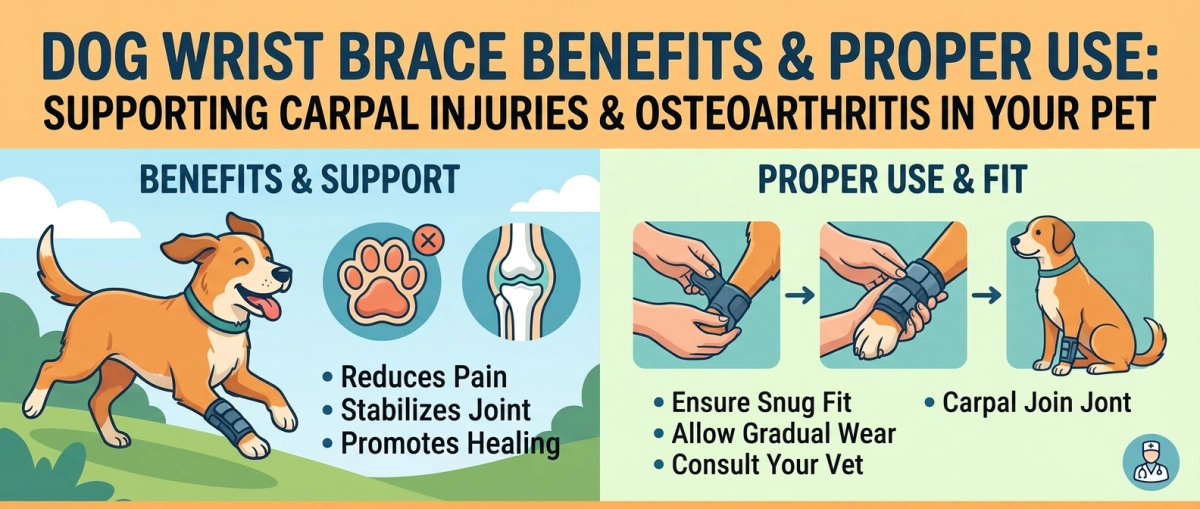
If you are asking if a dog wrist brace helps with carpal injuries or osteoarthritis, the answer is yes. It often helps a lot. A study at the University of Minnesota showed most dogs with ligament instability had better stability and limped less when wearing a brace. A good dog brace gives important benefits:
| Benefit |
Description |
|---|---|
| Stabilization |
Keeps weak wrists steady and stops too much movement. |
| Pain Reduction |
Lessens pain by stopping harmful motion. |
| Improved Mobility |
Helps your dog move around more easily. |
| Support During Healing |
Protects the wrist and helps healing after injury or surgery. |
| Conservative Management |
Gives support when surgery is not the first choice. |
A brace works best when used with your vet’s plan. Make sure the brace fits well. Check if your dog feels comfortable. Watch your dog’s skin for any problems.
Key Takeaways
-
A dog wrist brace helps keep the wrist steady. It can lower pain and help dogs move better if they have injuries or osteoarthritis.
-
You should always talk to your vet before using a brace. This makes sure the brace fits right and is good for your dog's problem.
-
Check your dog's skin often when they wear the brace. This helps stop skin problems and keeps your dog comfortable.
-
Let your dog get used to the brace slowly. Start with short times and make it longer as your dog gets used to it.
-
You can also try other care like physical therapy and weight control. These can help your dog heal and move better.
What is the dog wrist?
Carpus anatomy and function
You might hear your vet talk about your dog’s “carpus.” That’s just the fancy word for the dog’s wrist. The carpus sits between your dog’s paw and forearm. It’s a busy joint made up of two rows of small bones, strong ligaments, and a joint capsule. These parts work together to let your dog flex and extend the wrist.
The palmar side of the carpus has important structures like the flexor retinaculum and the flexor carpi radialis muscle. These help your dog move the wrist smoothly and keep it stable. One special bone, called the accessory carpal bone, acts like a lever arm. It helps your dog flex the joint and gives extra power when your dog runs or jumps.
Dogs walk on their toes, so they need a flexible and strong carpus. This joint absorbs shock every time your dog lands after a jump or sprints across the yard. If the carpus doesn’t work right, your dog can lose agility and have trouble moving.
Tip: The accessory carpal bone is easy to feel on the back of your dog’s wrist. It’s the little bump that sticks out when your dog stands.
Why carpal health matters
A healthy carpus lets your dog run, jump, and play without pain. When the wrist works well, your dog can enjoy walks and chase after toys. If the carpal joint swells or gets injured, you might notice your dog limping or slowing down. Pain and discomfort can make your dog less active and even sad.
-
The carpal joint is key for running, jumping, and walking.
-
Swelling or injury in the carpus causes pain and less movement.
-
Long-term problems can lead to permanent joint damage and lower your dog’s quality of life.
Keeping your dog’s carpus healthy means more fun and better days together.
Dog wrist brace benefits
Stabilization and motion control
When your dog struggles with a weak or injured wrist, you want to help them feel steady again. A dog wrist brace gives that extra support by holding the carpus in a safe position. This means your dog’s wrist won’t bend too far or twist in ways that cause more harm. You can see the difference when your dog stands or walks. Their steps look more confident and less shaky.
A study at the University of Minnesota Veterinary School found that most dogs with ligament instability showed better stability and less limping when they wore a brace. This shows that a dog wrist brace can really help control motion and keep your dog’s wrist from moving in painful ways. You give your dog a chance to heal and move with less risk of making the injury worse.
Note: A dog wrist brace does not replace surgery for severe injuries, but it can make a big difference for mild to moderate problems or during recovery.
Pain relief and comfort
You want your dog to feel comfortable and happy. A dog wrist brace helps by limiting painful movement and giving gentle support. When your dog’s wrist feels steady, they don’t have to worry about every step hurting. This can make a huge difference in their daily life.
-
Stabilization keeps weak or injured joints from moving too much, which reduces pain.
-
Limiting movement helps with pain relief and lets your dog rest easier.
-
Your dog can move around the house with more comfort.
-
The brace supports healing after an injury or surgery.
-
Sometimes, a brace can be a good choice if surgery is not needed right away.
A dog wrist brace can help your dog feel better and enjoy more of their favorite activities. You may notice your dog resting more peacefully or getting up with less struggle.
Improved mobility and daily activity
You want your dog to stay active and enjoy life. A dog wrist brace can help your dog walk, play, and even run short distances again. When your dog’s wrist feels supported, they can move with more confidence. This boost in canine mobility means your dog can join you for walks or playtime without as much worry about pain or injury.
In the same University of Minnesota study, most dogs with wrist problems showed better stability and less limping when they used a brace. This means your dog can get back to their daily routine and feel more like themselves. You help your dog regain their independence and improve their overall canine mobility.
Here’s how a dog wrist brace supports canine mobility:
-
Helps your dog stand up and walk with less effort.
-
Makes it easier for your dog to go outside for bathroom breaks.
-
Lets your dog enjoy gentle play and short walks.
-
Supports your dog’s confidence as they move around the house.
�� A dog wrist brace is a simple tool that can bring back joy and movement to your dog’s life. You give your dog the chance to stay active and happy, even with wrist problems.
When to use a dog wrist brace
It is important to know when your dog needs a wrist brace. This can help your dog feel better and move more easily. You want your pet to walk with less pain. Let’s talk about the main times a wrist brace helps.
Carpal injuries and sprains
Dogs can hurt their wrists by jumping or slipping. You may see swelling or limping. Sometimes, your dog’s wrist looks lower than normal. These signs mean your dog might have a sprain or carpal hyperextension.
Here are some wrist injuries that need a brace:
-
Sprains
-
Carpal hyperextension
-
Other common wrist injuries
A wrist brace gives gentle support. It keeps the joint steady. This stops the injury from getting worse. Your dog can walk with less pain. The joint gets time to heal because movement is limited.
Tip: If your dog limps or has swelling, call your vet first. Early help can stop long-term wrist problems in dogs.
Osteoarthritis support
Older dogs or those with old injuries can get osteoarthritis. You may notice your dog is stiff after naps. Your dog may not want to play. Osteoarthritis makes walking hard and can lower your dog’s happiness.
A wrist brace helps by:
-
Limiting painful motion
-
Giving warmth and gentle compression
-
Making it easier for your dog to get up and move
You help your dog stay active and enjoy walks. The brace can lower soreness after activity. It keeps your dog comfortable while resting. Extra support helps your dog join family fun.
Post-surgery and recovery
Some dogs need surgery for wrist problems. After surgery, the wrist needs protection to heal. A wrist brace is made for recovery after carpal arthrodesis or fracture repair. You want your dog’s wrist to stay safe and stable.
A wrist brace helps by:
-
Giving gentle, strong support for your dog’s front leg
-
Keeping the joint steady, which helps movement and lowers pain
-
Giving full support during therapy after injury or surgery
-
Being waterproof, so you can use it for hydrotherapy
-
Supporting the carpus while letting the paws move freely
You help your dog heal and move better. The brace lets your dog do gentle exercises and short walks safely.
Chronic instability and hyperextension
Some dogs have wrist problems that last a long time. Chronic instability or hyperextension makes walking hard. You may see your dog’s wrist drop or notice pain when moving.
A wrist brace is important for these long-term problems. Here’s how it helps:
| Indication |
Description |
|---|---|
| Stabilization of the carpal joint |
A wrist brace keeps the carpal joint steady and helps healing. |
| Pain reduction |
The brace can lower pain from chronic instability and hyperextension. |
| Support during recovery |
Gives needed support while your dog gets better and moves normally. |
Non-surgical care often uses bracing and orthotics. These tools help keep the wrist steady during healing and daily life. You help your dog stay active and move better, even with ongoing wrist problems in dogs.
�� Remember: Always ask your vet before using a brace. The right plan keeps your dog safe and happy.
Types of dog wrist braces
When you look for wrist braces for dogs, you will see a few main types. Each one works a little differently. You want to pick the right style for your dog’s needs. Here’s a quick table to help you compare:
| Type of Brace |
Description |
|---|---|
| Soft Braces |
Give gentle support and compression. Good for minor injuries or arthritis. |
| Semi-Rigid Braces |
Offer more support. Help with moderate injuries or joint problems. |
| Rigid Braces |
Hold the wrist steady. Used for serious injuries or after surgery. |
| Custom Braces |
Made just for your dog. Fit perfectly and give the best support. |
Soft compression sleeves
Soft compression sleeves feel like a gentle hug for your dog’s wrist. You might choose these if your dog has mild arthritis or a small sprain. They help by warming the joint and giving light pressure. This can make your dog feel more comfortable and less stiff. You can put them on easily, and most dogs get used to them quickly. These sleeves work best for dogs who need a little extra help but still move well.
Semi-rigid and hinged braces
Semi-rigid and hinged braces give more support than soft sleeves. You might pick these if your dog has a moderate injury or needs extra stability. Hinged braces let your dog move the wrist in a safe way. They stop the joint from bending too far. You will notice your dog walks with more confidence. These braces help control motion and protect the wrist during healing. They are a popular choice for wrist braces for dogs who need more than just light support.
Custom orthoses
Custom orthoses are special braces made just for your dog. You get these after a vet measures your dog’s leg or uses a mold. Custom braces fit perfectly and give strong support. They help dogs with unusual leg shapes or long-term problems. You might need a custom brace if your dog has a serious injury or needs help for many months. These braces cost more, but they offer the best fit and comfort.
�� Tip: Ask your vet which type of brace is right for your dog. The right choice helps your dog heal and stay active.
How to choose a dog wrist brace
Veterinary diagnosis first
Before you pick a wrist brace, always talk to your vet. Your vet will check your dog’s wrist with an exam or imaging. This step helps you know what kind of injury or problem your dog has. Your vet can also suggest the best brace type and brand. Sometimes, your vet works with an orthotic specialist to make sure the brace fits just right. You will also learn how to watch for any problems and care for the brace.
�� Tip: Your vet’s advice keeps your dog safe and helps the brace work better.
Here’s a quick look at what matters most:
| Factor |
Description |
|---|---|
| Proper Fitting |
A brace should fit well, sometimes custom-made for the best results. |
| Veterinary Oversight |
Your vet should check the fit and comfort regularly. |
| Rehabilitation Integration |
The brace should be part of a full rehab plan for the best outcome. |
Matching brace type to condition
Not every brace works for every problem. You want to match the brace to your dog’s needs. For mild sprains or arthritis, a soft sleeve may help. For more serious injuries, a semi-rigid or custom brace gives better support. Some studies show that braces covering the MCP joints (the knuckles) help more than wrist-only braces. These braces can give longer-lasting results and help your dog get back to normal faster.
-
Soft sleeves: Good for mild pain or swelling.
-
Semi-rigid/hinged braces: Better for moderate injuries or instability.
-
Custom braces: Best for odd-shaped legs or long-term use.
Sizing and fit tips
Getting the right size matters. Measure above and below your dog’s wrist and the length of the paw. The brace should feel snug but not tight. You should be able to slip two fingers under the strap. If the brace is too loose, it will not help. If it is too tight, it can hurt your dog.
Owner’s checklist for fit:
-
Measure your dog’s leg as your vet shows you.
-
Check the brace after walks for rubbing or redness.
-
Adjust straps for a secure but gentle fit.
Comfort features to look for
Your dog will wear the brace for hours, so comfort is key. Look for these features:
-
Adjustable straps for a snug fit without cutting off blood flow.
-
Breathable materials to keep the skin cool.
-
Durable design for active pets.
-
Non-slip lining to keep the brace in place.
-
Easy-to-clean fabric for simple care.
�� A comfy brace helps your dog heal and stay happy.
Proper use and care
Fitting and break-in plan
Getting your dog used to a new wrist brace takes a little time and patience. Start slow and let your pet adjust. Here’s a simple break-in schedule you can follow:
-
On day one, let your dog wear the brace for 30 minutes, two or three times.
-
On day two, increase to one hour, two or three times.
-
On day three, try two hours, two or three times.
-
On day four, go up to three hours, two or three times.
-
On day five, wear for four hours, twice a day.
-
On day six, aim for six hours.
-
On day seven, your dog can wear the brace for eight hours.
-
After the first week, you can work up to 12 hours a day, but always remove it at night.
During this week, adjust the straps and cuffs often. Watch your dog for any signs of chewing or discomfort.
Monitoring skin and comfort
You want your dog to feel good while wearing the brace. Check the skin under the brace every day, especially at first. Look for redness, rubbing, or any sores. If you see hair loss or irritation, loosen the straps or take a short break from the brace. Make sure the fit is snug but not too tight. If problems continue, talk to your vet.
�� Tip: Adjust the brace several times a day to keep your dog comfortable as their leg shape changes.
Cleaning and maintenance
A clean brace keeps your dog healthy and happy. Follow these steps for easy cleaning:
-
Soak the brace in water with a little laundry detergent for five minutes.
-
Lay it on a towel and scrub all sides with a washrag.
-
Rinse well under running water to remove soap and dirt.
-
Let the brace air-dry, or use a hairdryer on a cool setting if you need it dry fast.
Activity and rehab guidelines
Keep your dog comfortable and safe during activity. Choose a brace made from strong materials that match your pet’s energy level. Always check with your vet before starting new activities. Pain medicine and physical therapy can help your dog move better. Simple exercises, like gentle walks or range-of-motion stretches, support healing. Keeping your dog at a healthy weight also takes pressure off their joints.
Limits and red flags
When bracing is not enough
A dog wrist brace can help your pet feel better, but it does not fix every problem. Sometimes, you need more than just a brace to help your dog heal. You might notice that your dog still struggles, even with the best support. Here are some things to keep in mind:
-
Braces work best as part of a bigger treatment plan.
-
Your dog may also need pain medicine, physical therapy, or changes in diet.
-
Braces alone may not be enough for severe injuries or advanced arthritis.
-
Some problems, like complete ligament tears or unstable fractures, often need surgery.
Note: Always talk to your vet about the best plan for your dog. A brace is just one tool to help your pet feel better.
If you see that your dog is not improving, or if things get worse, do not wait. Your vet can help you decide what to do next.
Signs to call your vet
You want your dog to stay safe and comfortable. Sometimes, a wrist brace is not enough, and you need to get help right away. Watch for these warning signs:
-
Pain that does not go away or gets worse
-
Swelling that stays or gets bigger
-
Trouble putting weight on the leg
-
Signs of infection, like fever or your dog acting tired
-
Sudden trouble walking after your dog seemed to get better
If you notice any of these problems, call your vet as soon as possible. Your dog may need a new treatment plan or more tests. Quick action can help your dog heal faster and avoid bigger problems.
�� Tip: Trust your instincts. If your dog seems uncomfortable or something feels wrong, it is always better to check with your vet.
Cost and expectations
Price ranges for different braces
You might wonder how much a dog wrist brace costs. The price can change based on the type of brace you choose. Some braces are simple and cost less, while custom options cost more. Here’s a quick look at what you can expect to pay:
| Product Name |
Price Range |
|---|---|
| Dog Wrist Brace with Paw |
$745.00 |
| Carpal/Wrist Custom Dog Brace |
$799.00 – $834.00 |
Custom braces fit your dog perfectly and give strong support. These are often the best choice for dogs with special needs or long-term problems. If your dog only needs light support, you may find less expensive options, but custom braces offer the best fit and comfort.
�� Tip: Always talk to your vet before buying a brace. Your vet can help you pick the right one for your dog’s needs and budget.
What outcomes to expect
When you use a dog wrist brace, you want to know what changes to look for. A good brace can help your dog in many ways, but it is important to have realistic hopes. Here’s what you can expect:
-
Stabilization: The brace helps keep your dog’s wrist steady. This stops too much movement and lowers pain.
-
Pain reduction: Your dog may feel less pain because the brace limits harmful motion and supports the joint.
-
Improved mobility: You may notice your dog walks better and enjoys daily activities again. The brace can boost your dog’s mobility, making it easier to get up, move around, and even play.
-
Support during healing: The brace protects your dog’s wrist while it heals from injury or surgery.
-
Conservative management: Sometimes, a brace lets you manage wrist problems without surgery. This can help your dog stay active and keep their mobility for longer.
Every dog is different. Some dogs show quick improvement, while others need more time. Keep watching your dog and talk to your vet if you have questions about progress.
Complementary care options
Pain management and medication
You want your dog to feel comfortable every day. Pain management plays a big role in helping your pet recover from carpal injuries or osteoarthritis. Your vet may recommend medications that reduce pain and swelling. These can include anti-inflammatory drugs or special pain relievers. Sometimes, your dog needs medicine for a short time after an injury. Other times, long-term medication helps with chronic joint pain. Always follow your vet’s advice and watch for side effects. If your dog seems sleepy or refuses food, call your vet right away.
�� Tip: Give medicine at the same time each day. This helps your dog feel better and keeps pain under control.
Physical therapy and weight control
Physical therapy gives your dog a chance to move better and build strength. You can work with a rehab specialist or learn simple exercises at home. These activities help your dog stretch, walk, and regain range of motion. Gentle leash walks, slow stair climbs, and balance games all help your dog stay active. Physical therapy also supports healing after surgery or injury.
Keeping your dog at a healthy weight makes a big difference. Extra pounds put more stress on sore joints. You can ask your vet about the best food and portion sizes. Try using treats for training instead of snacks. Regular exercise and a balanced diet help your dog feel stronger and move with less pain.
-
Physical therapy improves strength and mobility.
-
Weight control reduces joint stress and helps your dog stay active.
Home adjustments for safety
You can make simple changes at home to help your dog move safely. Place rugs or mats on slippery floors. These give your dog better traction and prevent falls. Use ramps instead of stairs if your dog struggles to climb. Keep your dog’s nails trimmed so they don’t slip. Move furniture to create clear paths for walking. If your dog uses a wrist brace, check that it fits well before playtime.
�� Note: Small changes in your home can offer big support for your dog’s comfort and safety.
A dog wrist brace gives your pet support, comfort, and better mobility. You help your dog walk with less pain and enjoy daily life. Remember, a brace works best when your vet guides you. Keep checking your dog’s skin and watch for any changes. Set realistic goals and stay patient.
�� Always talk to your vet before starting or changing your dog’s care plan. Your vet knows what’s best for your furry friend.
FAQ
How long should my dog wear a wrist brace each day?
Start with short sessions, about 30 minutes. Slowly increase the time over a week. Most dogs wear the brace for 8–12 hours daily. Always remove it at night. Check your dog’s skin often for any redness or irritation.
Can my dog go for walks while wearing a wrist brace?
Yes! You can take your dog on short, controlled leash walks. The brace helps support the wrist during movement. Avoid running or rough play until your vet says it’s safe.
Will my dog get used to wearing a wrist brace?
Most dogs adjust within a few days. Give treats and praise to help your dog feel comfortable. If your dog seems bothered, check the fit and talk to your vet for advice.
How do I clean my dog’s wrist brace?
Hand-wash the brace with mild soap and cool water. Rinse well and let it air-dry. Clean it regularly to keep your dog’s skin healthy and the brace smelling fresh.
What if my dog’s wrist looks swollen or painful while using the brace?
If you see swelling, redness, or your dog seems in pain, stop using the brace. Call your vet right away. Your dog may need a different fit or a new treatment plan.
0 Comments