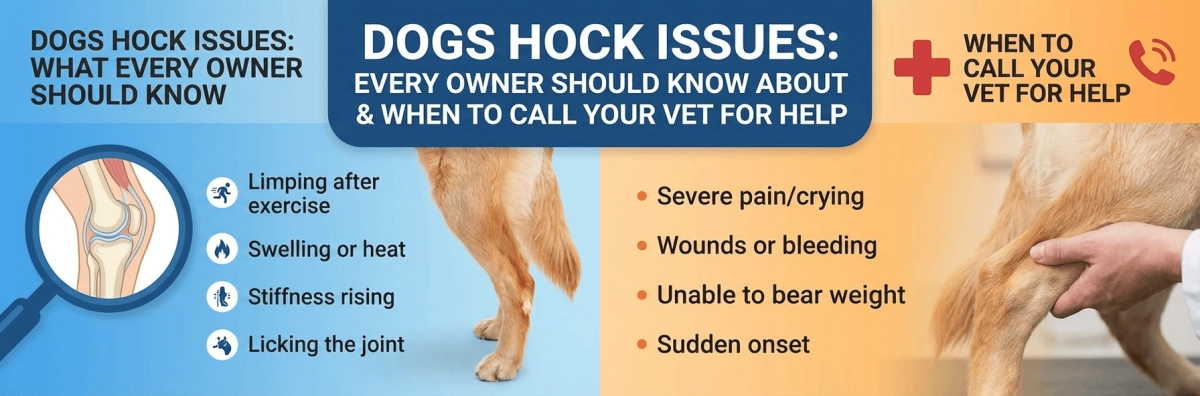
You should call your vet right away if you notice any of these warning signs in your dogs hock:
-
Limping or refusing to put weight on a leg
-
Swelling or warmth around the joint
-
Visible deformity or an open wound
-
Severe pain, especially if your dog cries out when moving
-
Symptoms that last more than 24 to 48 hours or get worse
Watch for changes in how your dog moves, acts, or reacts to touch, especially if you suspect an issue with your dogs hock. Trust your instincts if something feels wrong. Only your veterinarian can confirm what is happening with your dogs hock. Home care helps, but it cannot replace a professional diagnosis and treatment.
Key Takeaways
-
Look for signs like limping, swelling, or odd shapes. These can mean your dog needs help from a vet right away.
-
Watch how your dog moves and acts. Write down changes you see. This record helps your vet know what is happening.
-
Pick gentle activities to keep your dog moving. Try short walks with a leash and easy games. These do not hurt the hock.
-
Help your dog stay at a good weight. Too much weight puts more pressure on the hock. This makes injury more likely.
-
Take your dog to the vet often. Early visits help find hock problems sooner. Finding issues early helps your dog get better faster.
What Is the Dogs Hock?
Anatomy of the Hock Joint
You might wonder what the hock is and why it matters for your dog’s health. The hock is the joint on your dog’s hind leg that works like a human ankle. It sits between the lower leg and the paw. This joint lets your dog walk, run, and jump with ease. The hock is made up of several small bones and strong ligaments that hold everything together.
Here is a simple table to help you understand the main parts of the hock joint:
| Structure |
Description |
|---|---|
| Hock |
The joint between the tarsal bones and tibia in dogs. |
| Equivalent to |
The human ankle. |
| Bones involved |
Tarsal bones, tibia, and sometimes the fibula. |
| Ligaments |
Various ligaments connect the tarsal bones and stabilize the joint. |
The bones in the hock work together with the ligaments to keep the joint stable. When your dog moves, these parts absorb shock and help control movement. If any part of the hock gets injured, your dog may have trouble walking or standing.
Why the Hock Is Vulnerable
You need to know why the hock is at risk for injury. The hock supports your dog’s weight every time they stand, walk, or jump. It absorbs force when your dog runs or plays. Fast movements, sudden twists, or rough landings can put stress on the hock. Dogs that are active, overweight, or older may have a higher chance of hurting this joint.
Common problems happen because the hock has many small bones and ligaments. These parts can stretch, tear, or break if your dog slips or lands awkwardly. Even simple activities like climbing stairs or jumping off furniture can cause strain. Paying attention to how your dog moves helps you spot issues early and keep their hock healthy.
Common Dogs Hock Problems
Sprains and Soft-Tissue Injuries
Your dog might limp or not use one leg after a fall. This can also happen after a twist or rough play. A sprain is when a ligament gets stretched or torn. A strain is when a muscle or tendon is hurt. These injuries often happen from jumping off furniture. Running too hard or slipping on a smooth floor can also cause them. You may see swelling, mild pain, or your dog not wanting to move. Older dogs and overweight dogs get these injuries more often.
Hock Dislocation and Instability
A dislocation means the hock joint is not in the right place. This usually happens after an accident, like being hit by a car. It can also happen if your dog steps in a hole. You might notice your dog limping badly or the leg looking strange. The leg may look wobbly or bent. Your dog might not want to put weight on it. Instability makes the joint shake or give out when your dog walks.
Hock Fractures
A fracture is a broken bone in the hock. This causes sudden pain and your dog will not use the leg. These injuries happen from hard hits or falls. You may see swelling, bruising, or the leg at a weird angle. Racing dogs like Greyhounds get stress fractures more often. But any dog can break a hock bone.
Tarsal Hyperextension
Tarsal hyperextension is when the hock bends too far. The leg may look dropped or like it is falling down. This can happen from an injury, bad growth, or weak ligaments. Dogs with this problem have trouble walking. They may drag their paw on the ground.
Tip: If your dog’s hock looks lower than normal or the leg is not steady, call your vet to check it out.
Achilles Tendon Injuries
An Achilles tendon injury can make the hock drop and the toes curl. You might see swelling and your dog limping. Most dogs get better with good care. Some dogs need surgery if the tendon breaks.
Osteoarthritis of the Hock
Osteoarthritis is common in older or heavier dogs. You may see your dog stiff after resting or walking slowly. Your dog may not want to play as much. The hock can look swollen. Your dog may lick the joint or not want to climb stairs. Early neutering and breed can also raise the risk.
OCD of the Hock in Dogs
OCD happens in big dogs and giant breeds. It makes the cartilage in the hock grow wrong. You may see your dog limping all the time. The joint may swell and hurt when your dog moves. Vets use exams and X-rays to find out if your dog has OCD.
| Hock Problem |
Description |
|---|---|
| Osteochondritis Dissecans |
Loose cartilage or bone in the joint. This causes pain and irritation. |
| Stress Fractures |
Small cracks in the bone. These cause limping, mostly in active dogs. |
| Luxation or Subluxation |
The hock joint is not lined up right. This can make the joint loose or bent. |
Symptoms of Dog Hind Leg Injuries
Recognizing symptoms of dog hind leg injuries early helps you protect your dog's health. You can spot problems by watching how your dog moves, rests, and reacts to touch. Use these signs to guide your next steps and decide when to call your vet.
Limping and Lameness
Limping is often the first sign you notice. Your dog may favor one leg or refuse to put weight on it. Sometimes, the limp is mild and improves with rest. Other times, your dog will not use the leg at all. Mild limping can come from small cuts, nail injuries, or muscle strains. Severe limping may mean a fracture, ligament injury, or joint problem. Watch for these warning signs:
-
Limping that does not improve after two days
-
Refusal to bear weight
-
Sudden yelping when you touch the leg
-
Visible swelling or bleeding
Tip: Track how long the limp lasts and if it gets worse. Write down changes in a notebook or on your phone.
Here is a table to help you compare common symptoms:
| Symptom |
Presentation |
|---|---|
| Lameness |
Your dog may limp or avoid using one hind leg, especially during activity. |
| Stiffness |
Your dog may walk stiffly or have trouble getting up after rest. |
| Physical signs |
You may see swelling or muscle loss in the affected limb. |
| Performance |
Your dog may slow down or struggle with normal activities. |
| Sitting posture |
Your dog may sit with the injured leg out to the side. |
Swelling and Heat Around the Hock
Swelling around the hock means something is wrong inside the joint. You may feel heat when you touch the area. Swelling and warmth often show inflammation from injury or disease. Sometimes, infection or trauma causes the hock to puff up. Look for:
-
Puffiness or fluid-like swelling
-
The area feels warmer than the other leg
-
Your dog licks or chews the joint
Note: If you see rapid swelling or heat, call your vet. These symptoms can mean a serious problem.
Stiffness and Reduced Mobility
Dogs with hind leg injuries often move less. Stiffness is common after rest or sleep. Your dog may walk slowly or have trouble climbing stairs. You may notice:
-
Sudden lameness after activity
-
Swelling in the joint
-
Change in behavior, such as reluctance to play
Keep a daily log of your dog's movement. Write down how long it takes for your dog to loosen up after resting. This helps you spot patterns and share details with your vet.
Abnormal Posture or Gait
Abnormal posture means your dog stands or walks in a strange way. You may see your dog prancing, dragging a paw, or holding a leg out to the side. Some dogs bend their hock too much or have trouble keeping balance. Signs include:
-
Excessive flexion of the hock
-
Coordination problems
-
Muscle weakness
-
Pain when moving
Tip: Take short videos of your dog's walk. Show these to your vet for a better assessment.
Behavioral Changes and Pain Signs
Pain changes how your dog acts. You may notice your dog avoids jumping, playing, or climbing stairs. Some dogs become more aggressive or anxious. Others may rest less or struggle to get comfortable. Watch for:
-
Reluctance to move or off-load weight from a limb
-
Stiff or stilted gait
-
Avoidance of physical contact
-
Restlessness or trouble lying down
-
Changes in temperament or increased anxiety
Tip: If your dog starts licking the hock or seems irritable, write down when it happens. These details help your vet understand the symptoms.
By tracking symptoms of dog hind leg injuries, you help your vet find the cause and choose the best treatment. Early action keeps your dog comfortable and active.
When to Call Your Vet for Hock Issue
Red Flags for Immediate Attention
You should know when your dog needs urgent veterinarian attention. Some signs mean you should not wait. Call your veterinarian right away if you see:
-
Sudden, severe limping or your dog will not put weight on a leg
-
Rapid swelling or heat around the hock
-
A visible deformity or the joint looks unstable
-
An open wound, bleeding, or signs of trauma
-
Your dog cries out in pain or seems very distressed
Alert: If your dog has a history of falling, being hit by a car, or any major accident, seek help immediately.
Persistent or Worsening Symptoms
Not all problems need emergency care, but you should not ignore ongoing issues. Watch for these signs:
-
Limping or stiffness that lasts more than 24 to 48 hours
-
Swelling that does not go down
-
Your dog becomes less active or avoids normal play
-
The hock looks more swollen or your dog starts licking it more often
If you notice these symptoms getting worse, call your veterinarian for advice. Early action can prevent bigger problems.
Preparing for a Vet Visit
You can help your veterinarian by tracking your dog's symptoms. Write down when you first noticed the problem. Take short videos of your dog's walk or how the hock looks. Make a list of changes in activity, appetite, or mood. Bring this information to your appointment.
Here is a simple checklist:
| What to Track |
Why It Helps Your Vet |
|---|---|
| When symptoms started |
Shows how long the problem has lasted |
| Changes in movement |
Helps spot patterns or triggers |
| Swelling or heat |
Points to inflammation or injury |
| Behavior changes |
Gives clues about pain or discomfort |
Tip: Stay calm and follow your veterinarian’s instructions. Your quick action helps your dog get the best care for their hock.
Diagnosing Dogs Hock Problems
Physical Exam and Gait Observation
Your veterinarian will watch how your dog stands and walks. You might see limping or stiffness, but your vet looks for small changes too. During the exam, your vet gently touches the hock joint. They check for swelling, extra fluid, or ligament damage. Sometimes, your vet does special tests to check if the ligaments are strong. These steps help your vet figure out what is wrong before using other tests.
Tip: Record a short video of your dog walking. This helps your vet notice changes in how your dog moves or stands.
Here are common steps in a physical exam: - Watch your dog walk and run - Feel the hock for swelling or heat - Test the joint for stability - Check for pain when moving the leg
X-rays and Imaging
Your vet often uses X-rays to look at the bones and joints. X-rays show broken bones, arthritis, and other problems inside the hock. For some issues, like Osteochondritis Dissecans (OCD), your vet may use advanced imaging. CT scans give a close look at bone problems and help plan treatment. These pictures are important for finding cartilage problems and choosing the best care.
| Imaging Type |
What It Shows |
When Used |
|---|---|---|
| X-ray |
Bones, fractures, arthritis |
Most hock injuries |
| CT scan |
Bone detail, OCD lesions |
Complex or unclear cases |
| MRI |
Cartilage, soft tissue |
Severe or unusual injuries |
Advanced Diagnostic Tools
Sometimes, your vet needs more details. CT scans show how much bone is hurt, especially with OCD. MRI scans or arthroscopy let your vet see cartilage and soft tissue. These tools are important for a full diagnosis, especially if your dog needs surgery or has a rare problem.
Note: Advanced tests may need sedation or anesthesia to keep your dog calm and still.
You help your vet by sharing details about your dog's symptoms and changes in activity. Early and correct diagnosis means better treatment and a faster recovery.
Dogs Hock Treatment Options
If your dog has a hock problem, you need to know what to do. Mild problems can get better with home care. Sometimes, your dog will need more help, like a brace or medicine. Bad injuries might need surgery. Your veterinarian will help you pick the best treatment for your dog.
Home Care and Conservative Management
You can help your dog heal from small hock injuries at home. Rest is very important. Do not let your dog run or jump. Use a leash for walks and keep your dog on safe floors. Cold packs help with swelling in the first days. Later, your vet might tell you to use gentle heat. Trim your dog's nails and block stairs to stop falls.
Keeping your dog at a healthy weight is important. Too much weight makes the hock hurt more. Feed your dog good food and measure each meal. If your dog has a small tendon or ligament strain, your vet may say to take short walks. Slowly let your dog do more as they heal. Always listen to your veterinarian.
Tip: Write down how your dog is doing in a notebook. Track walk times, swelling, and how your dog feels after rest.
Hock Braces and Support Devices
Support devices help keep the hock steady and safe. You might use a hock brace for sprains, arthritis, or after surgery. Adjustable Hock Brace for dogs with hock instability. It has a hinge you can adjust for movement. You can use it after surgery, for pain, or during rehab. The dog brace is not made of neoprene, so it is easy to clean. It comes in many sizes for different dogs.
-
The hinge lets you change how much the hock moves.
-
Good for after surgery, pain, and rehab.
-
Made from materials that are easy to clean.
-
Comes in sizes for all kinds of dogs.
Always check your dog's skin under the brace for redness or wet spots. Take off the brace for short breaks. Never leave your dog alone with the brace on.
Medications and Pain Relief
Your veterinarian may give your dog medicine for pain and swelling. These medicines help your dog feel better and heal. Some are chewable tablets. Others are liquids or patches. Your vet will pick the best one for your dog's age, size, and health.
| Medication Name |
Form |
Usage |
|---|---|---|
| Deracoxib (Deramaxx) |
Chewable tablet |
Given once a day for pain relief |
| Firocoxib (Previcox) |
Flavored chewable tablet |
Given once a day for pain relief |
| Meloxicam (Metacam) |
Flavored tablet or liquid |
Given once a day for pain relief |
| Morphine |
Liquid, tablet/capsule |
Used for pain after surgery or bad injuries |
| Buprenorphine |
Liquid |
Used for pain from surgery, cancer, or trauma |
| Codeine |
Liquid or tablet |
Used for bad arthritis pain, cough, or surgery |
| Butorphanol |
Liquid or tablet |
Used for pain after surgery |
| Fentanyl |
Liquid or patch |
Used for short-term pain after surgery |
Never give your dog human pain medicine. Only use what your veterinarian gives you.
Rehabilitation and Physiotherapy
Rehabilitation helps your dog get strong and move better after a hock injury. Your vet or a physiotherapist may show you different ways to help. Pain control is important during rehab. Talk to your vet about anti-inflammatories and pain medicine.
Swelling needs to go down. You can use ice packs, cool wet cloths, or ice massage. Low Level Laser Therapy (LLLT) helps with swelling by making cells work better. Neuromuscular Electrical Nerve Stimulation (NMES) stops muscle loss and builds strength. Special exercises help your dog balance and move better.
-
Use pain and anti-inflammatory medicine as your vet says.
-
Put ice on the hock to help swelling.
-
Try LLLT to control swelling.
-
Use NMES to keep muscles strong.
-
Do exercises to help balance and stability.
-
Use a soft dog hock brace for support during rehab.
Always ask a professional before starting new exercises or treatments.
Surgical Options for Severe Cases
Some hock injuries need surgery to fix. Bad breaks, torn tendons, ligament tears, and loose joints often need surgery. Your veterinarian will talk about the risks and benefits. Surgery can take out loose cartilage and make the joint stable. It does not stop arthritis, but it can help your dog walk better.
Dogs who have surgery for trauma usually do well. The survival rate is 98.9% for dogs who have surgery. Dogs who do not have surgery have a lower rate of 92.2%. Surgery can mean a longer hospital stay and more cost. Risks include problems with the cut, joint infection, and arthritis in the hock. After surgery, some dogs may limp if they run a lot.
Note: Every surgery is different. Your vet will think about your dog's size, activity, how bad the injury is, and what you want. Ask questions and talk about all choices before picking surgery.
You are important in helping your dog get better. Follow your veterinarian's advice and watch your dog's progress. Quick and right treatment helps your dog get back to being happy and active.
Daily Management and Activity Planning
Low-Impact Routines
You can help your dog stay active without making their hock injury worse. Choose low-impact activities that protect the joint. Short, slow leash walks on grass or carpet work well. Avoid running, jumping, or rough play. Try gentle games like sniff walks or puzzle feeders. These activities keep your dog’s mind busy and reduce stress on the hock. Use ramps instead of stairs when possible. Place rugs or mats on slippery floors to prevent falls.
Tip: If your dog limps more after an activity, rest them and try something easier next time.
Progress Tracking and Comfort
Track your dog’s progress every day. Write down how long walks last, how much your dog limps, and if you see swelling. Use a simple chart or notebook. This helps you notice changes early. Watch for signs of pain, like licking the hock or moving less. Check the hock for heat or swelling each evening. Make sure your dog has a soft bed in a quiet spot. Keep water and food close so your dog does not need to walk far.
| What to Track |
Why It Matters |
|---|---|
| Walk duration |
Shows improvement or setbacks |
| Limping/swelling |
Signals pain or healing |
| Appetite/behavior |
Reflects comfort level |
Dos and Don’ts for Hock Care
You play a big role in your dog’s recovery. Follow these simple rules:
Do:
-
Use a leash for all walks.
-
Provide non-slip surfaces.
-
Keep your dog at a healthy weight.
-
Check the hock daily for changes.
Don’t:
-
Allow jumping on or off furniture.
-
Ignore swelling or limping.
-
Give human pain medicine.
-
Assume stiffness is just aging.
Stay alert and ask your veterinarian if you see new symptoms. Early action helps dogs heal faster and stay comfortable.
Preventing Dogs Hock Problems
Joint Health Tips
You can help your dog’s joints stay strong by focusing on daily habits. Encourage your dog to move in ways that build core muscles. Try exercises like sitting to standing on a soft ball or gentle planking on a cushion. These activities improve balance and support the hock. You can also use a trampoline for short sessions. Always supervise your dog during these exercises. Provide a soft bed and keep your home free of slippery floors. Joint supplements may help, but ask your veterinarian before starting any new product.
Tip: Massage your dog’s legs after activity. This helps blood flow and keeps muscles relaxed.
Safe Exercise and Weight Management
Choose safe activities that protect the hock. Short leash walks on grass or carpet work best. Avoid running, jumping, or rough play. Replace fetch with sniff walks or puzzle games. Keep your dog at a healthy weight. Extra pounds put stress on the hock and increase injury risk. Measure food portions and limit treats. Use ramps instead of stairs when possible. Track your dog’s weight every month.
| Activity |
Benefit |
|---|---|
| Leash walks |
Builds strength safely |
| Puzzle feeders |
Keeps mind active |
| Controlled rehab |
Improves joint motion |
Early Detection and Regular Vet Visits
Watch for changes in how your dog moves or acts. Early signs like limping, stiffness, or swelling need attention. Check the hock daily for heat or puffiness. Write down any changes in a notebook. Schedule regular vet visits to catch problems early. Your veterinarian can spot issues before they get worse. Ask about braces or stifle pads for extra support if your dog has joint instability. Follow rehab plans that focus on pain control and muscle strength.
Note: Early action keeps your dog comfortable and active for years to come.
You play a key role in your dog’s joint health. Watch for signs like limping, swelling, or changes in behavior. Call your vet if symptoms last or get worse. Learn about treatment options so you can make informed choices. Early action helps your dog recover faster and stay active. Stay alert, track changes, and work closely with your veterinarian.
Remember: Home care supports your dog, but only your vet can diagnose and treat hock problems safely.
FAQ
What signs show my dog has a hock injury?
You may see limping, swelling, or your dog refusing to put weight on a leg. Watch for changes in walking, licking the joint, or sudden pain. These signs mean you should check with your veterinarian.
Can my dog walk with a hock brace?
Yes, your dog can walk with a hock brace. The brace supports the joint and helps reduce pain. Always follow your veterinarian’s advice for fitting and using the brace.
How long does hock recovery take?
Recovery time depends on the injury. Mild sprains may heal in a few weeks. Severe injuries or surgery can take months. Track your dog’s progress and ask your veterinarian for updates.
What activities help prevent hock problems?
Choose low-impact walks, puzzle games, and gentle training. Keep your dog at a healthy weight. Use ramps instead of stairs. These steps protect the hock and support joint health.
0 Comments