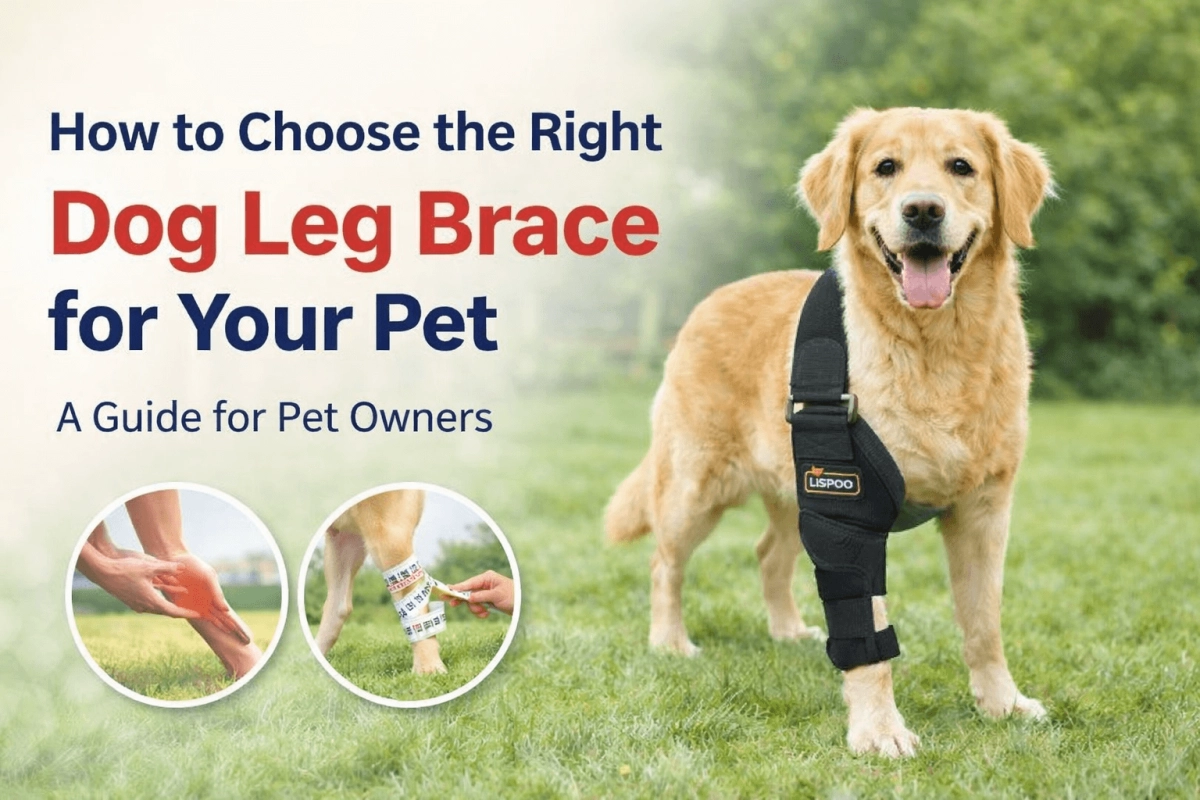
When you pick a dog leg brace, think about your dog’s needs. Some dogs need help for problems like angular limb deformity, carpal hyperextension, or arthritis. Picking the right dog leg brace can help your dog heal and feel better. You should talk to your veterinarian for advice. Choose braces made from strong and breathable materials. These help your dog stay comfy, safe, and able to move each day.
Key Takeaways
-
Watch your dog closely to see what they need. Look for any pain or injury. This helps you pick the right brace.
-
Ask your veterinarian for help. They know which dog brace is best. They make sure the brace fits your dog well.
-
Pick braces made from tough and airy materials. This keeps your dog comfy and gives support. Your dog can still move easily.
-
Measure your dog's leg very carefully before you buy a brace. A good fit stops the brace from slipping. It also keeps your dog comfortable and helps them heal.
-
Check your dog often after you put on the brace. Look for any redness or pain. Change the brace if needed so your dog stays comfortable.
Identifying Your Dog’s Needs
Assessing Injury or Condition
Before choosing a dog leg brace, it is essential to clearly understand your dog’s specific needs. This starts with carefully observing both behavioral changes and physical signs, as dogs often communicate discomfort through subtle body language rather than obvious pain.
Observe Your Dog’s Behavior and Body Language
Pay close attention to how your dog moves and behaves during daily activities. Common signs that may indicate leg injury or joint issues include:
-
Limping or favoring one leg while walking or standing
-
Hesitation or refusal to run, jump, climb stairs, or get on furniture
-
Stiffness after resting, especially in the morning or after naps
-
Excessive licking or chewing at a specific leg or joint
-
Whining, irritability, or withdrawal when touched near the affected area
-
Visible swelling, heat, or tenderness around joints such as the knee, hock, or wrist
These behaviors often suggest that your dog is experiencing discomfort and may benefit from additional leg support.
Key Factors to Evaluate Before Choosing a Brace
When assessing your dog’s condition, consider the following points carefully:
-
Severity of the injury
Mild sprains or temporary strains may only require light support, while chronic conditions such as ligament tears or arthritis often need stronger stabilization. -
Dog’s size and breed
Larger or heavier dogs usually require more durable braces with reinforced support, while smaller dogs benefit from lightweight designs that do not restrict movement. -
Activity level
Highly active dogs need braces that allow natural motion while maintaining stability, whereas less active or senior dogs may prioritize comfort and joint protection. -
Fit and measurements
Accurate leg measurements are critical. A properly fitted brace helps stabilize the injured area, reduces pain, and prevents slipping or skin irritation. -
Avoid DIY solutions
Homemade or improvised braces often fail to provide adequate support and may worsen the injury or cause additional strain. -
Professional guidance
Consulting a veterinarian or orthopedic specialist ensures the brace matches your dog’s diagnosis, recovery stage, and long-term mobility needs.
Common Dog Leg Injury Examples
Understanding typical injury scenarios can help owners better identify the right support:
-
ACL / CCL injuries – Often seen in active or larger dogs, causing limping and knee instability.
-
Joint arthritis – Common in senior dogs, leading to stiffness and reduced mobility.
-
Post-surgical recovery – Braces help stabilize the leg and support controlled movement during healing.
-
Minor sprains or strains – Temporary support can prevent further injury during recovery.
Tip: Always measure your dog’s leg carefully before purchasing a brace. The correct size improves comfort, prevents slipping, and maximizes support effectiveness.
Recognizing When a Dog Leg Brace Is Needed
You might see signs that your dog needs a leg brace. Watch for these signs:
-
Limping that comes and goes or stays all the time.
-
Walking in a strange way, like skipping or jerky steps.
-
Clicking sounds from the knee or joint.
-
The kneecap or joint looks like it slips.
-
Holding up the leg to stop pain.
-
Not wanting to jump or run.
-
Swelling or pain near the knee joint.
If you see these signs, your dog may need more support. A leg brace can help keep the joint steady, lower pain, and help your dog move better. You should talk to your veterinarian for a full check and advice.
Consulting Your Veterinarian
Why Veterinary Guidance Matters
You should always seek professional guidance before you choose a dog leg brace. A veterinarian knows how to check your dog’s injury and can help you find the best support. Each dog has a different body shape and size. Some need custom-made braces. Others may do well with standard options. Your veterinarian can tell you what works best for your pet.
A professional evaluation helps you avoid mistakes. It also makes sure the brace fits well and supports your dog’s recovery. The table below shows why consulting your veterinarian is so important:
| Factor |
Importance |
|---|---|
| Custom Fit |
Accurate casting or 3D scanning is crucial |
| Owner Compliance |
Daily wear and monitoring are essential |
| Integration with Physiotherapy |
Necessary for overall treatment effectiveness |
| Veterinary Oversight |
Required for adjustments and progress checks |
| Meaningful Improvements |
Enhances mobility and comfort without surgery |
You should prepare for your visit. Bring notes about your dog’s injury, how your dog moves, and any changes you have seen. This helps your veterinarian make the best plan for your dog.
Tip: Write down when you first noticed the problem and how it has changed over time. This information helps your veterinarian understand your dog’s needs.
Questions to Ask About Dog Leg Braces
When you consult with your veterinarian, you should ask clear questions. This helps you learn about the best options and what to expect. Here are some important questions to ask:
-
What level of support does my dog need for this injury?
-
How can we check if the brace is working?
-
Will the brace need changes as my dog heals?
-
What is the best type of brace for my dog’s condition?
-
How should the brace fit my dog?
-
What results can I expect from using this brace?
You should also ask about daily care. Find out how to put the brace on and take it off. Ask how long your dog should wear the brace each day. Your veterinarian can help you balance support and flexibility. The right brace should help your dog move without causing muscle loss.
Before your appointment, you can get ready by following these steps:
-
Learn about custom-made braces and why they may be needed for your dog.
-
Understand that a good fit is important for support and safety.
-
Read about the types of braces and what each one does.
Professional guidance helps you make the best choice for your dog. You can help your dog heal and move better with the right support.
Types of Dog Leg Braces
Dog leg braces come in many styles. You can choose from several options based on your dog’s injury and the area that needs support. The types of dog leg braces help dogs recover from sprains, strains, and ligament tears. These braces give stability and pain relief, letting your dog bear weight and move more easily.
Knee (Stifle) Braces
Knee braces are one of the most common brace types for dogs. You may need a dog knee brace if your dog has an ACL or CCL tear. These injuries can make walking painful and hard. A knee brace supports the joint and keeps it steady. It helps reduce strain and pain while your dog heals. You can use a knee brace during recovery or for long-term support if your dog has chronic knee problems.
Tip: Knee braces work best when you follow your veterinarian’s advice and check the fit often.
Hock, Carpal, and Elbow Braces
You can use hock, carpal, and elbow braces for different injuries. These canine braces help with front and back leg problems. Hock braces support the ankle area. Carpal braces help the wrist. Elbow braces protect the elbow joint. Each brace targets a specific part of the leg and helps with conditions like arthritis, sprains, or instability.
Here is a table showing what each brace treats:
| Brace Type |
Conditions Treated |
|---|---|
| Achilles tendon injuries, hock dislocation, arthritis |
|
| Wrist sprains, carpal hyperextension, arthritis |
|
| Elbow dysplasia, arthritis |
You can use these canine braces to help your dog walk better and feel less pain.
Hip Braces and Other Options
Hip braces help dogs with hip dysplasia or muscle weakness. These braces keep the hip joint stable and lower discomfort. You may see your dog move with more confidence and strength. Hip braces also help after surgery by giving extra support. Some specialized braces, like cervical or spinal supports, help dogs with back or neck problems.
-
Hip braces stabilize the joint and encourage mobility.
-
They support muscle strength and help your dog recover.
-
Other braces, like spinal supports, help dogs with chronic pain or injury.
You can find many options for dog leg brace support. Each brace is designed to improve mobility and comfort for your pet.
Choosing the Best Braces for Your Dog
Custom vs. Off-the-Shelf Braces
When you look at custom vs. off-the-shelf braces, you need to think about your dog's needs and your budget. Custom braces are made for your dog's unique leg shape. They give a proper fit and support for specific injuries. Off-the-shelf braces are ready to use and easy to buy. You can get them quickly, but they may not fit as well as custom options.
Custom braces help your dog by reducing slipping and skin sores. They improve comfort and mobility. Off-the-shelf braces can slide down and cause discomfort. You may see your dog struggle with movement if the brace does not fit well. Choosing the best braces for your dog means you must look at both options and decide what works best for your pet.
Here is a table that shows the differences between custom and off-the-shelf braces:
| Feature |
Custom Dog Leg Braces |
Off-the-Shelf Dog Leg Braces |
|---|---|---|
| Fit |
Tailored to dog's unique anatomy |
Pre-made, may not fit perfectly |
| Comfort |
Enhanced comfort, reduces skin irritation |
Risk of discomfort due to improper fit |
| Support |
Targeted support for specific needs |
Less effective support for severe conditions |
| Cost |
Generally more expensive |
More cost-effective for minor injuries |
| Accessibility |
Requires time for fitting |
Quick and easy to obtain |
You should also think about long-term outcomes and cost. Custom braces cost more, but they give better fit and stability. Off-the-shelf braces cost less, but they may not help as much with serious injuries.
| Type of Brace |
Cost |
Long-term Outcomes |
|---|---|---|
| Custom Braces |
More expensive |
Better fit, long-term comfort, stability during movement |
| Off-the-shelf Braces |
More affordable |
May lack support and effectiveness compared to custom braces |
If your dog has a minor injury, an off-the-shelf brace may work. For long-term problems or special needs, a custom brace gives a well-fitted brace and better results.
Tip: Ask your veterinarian which type of dog leg brace is best for your dog's condition. A proper fit and type can make a big difference in recovery.
Fit, Comfort, and Adjustability
Fit is the most important part of choosing a brace. A well-fitted brace keeps your dog's leg steady and helps with healing. You need to check the fit often, especially if your dog grows or changes weight. A brace that fits well does not slip or rub against the skin.
Comfort comes from soft padding and smooth edges. Your dog should feel good wearing the brace all day. Breathable materials help prevent skin irritation and keep your dog cool. Durable materials make sure the brace lasts and gives strong support.
Adjustable straps let you change the fit as needed. You can tighten or loosen the brace to match your dog's leg size. This helps if your dog is still growing or if swelling goes down. High-quality materials give long-lasting support and help prevent new injuries.
Here is a table that shows what features help with comfort and adjustability:
| Feature |
Contribution to Comfort and Adjustability |
|---|---|
| Durable Materials |
Ensure the brace withstands wear and provides consistent support. |
| Breathable Materials |
Prevent skin irritation and maintain hygiene, crucial for comfort. |
| Adjustable Straps |
Allow the brace to fit growing dogs, ensuring proper support. |
| High-Quality Materials |
Provide long-lasting support and prevent further injuries. |
You should look for these features when you choose a dog leg brace. A well-fitted brace with soft padding and adjustable straps helps your dog move naturally. Your dog will feel safe and comfortable every day.
Note: Always check the fit of the brace after you put it on. Watch your dog walk and play. If you see slipping or rubbing, adjust the straps or ask your veterinarian for help.
Choosing the best braces for your dog means you must focus on fit, comfort, and adjustability. You help your dog heal and stay active with the right support.
Measuring and Fitting a Dog Leg Brace
How to Measure Your Dog’s Leg
Measuring for a perfect fit is the first step to helping your dog move comfortably. You want to make sure every measurement is accurate. Follow this step-by-step guide to measuring your dog:
-
Gather all the items you need, such as a soft measuring tape, gloves, and a stockinette.
-
Lay your dog on their side. Keep the opposite leg flat on the ground.
-
Position the leg you want to measure with the hip, knee, and hock flexed.
-
Cover your dog’s leg with a stockinette to protect their fur and skin.
-
Use the cloth measuring tape. Keep it taut and flat against the leg.
-
Measure the thigh length, knee length, and tibia length. Take clear pictures of each measurement.
-
Enter the measurements into the provided fields. Double-check that they match the images.
You should always measure twice to avoid mistakes. Never guess or round numbers. Using a soft measuring tape gives you better results than a stiff ruler. Measuring while your dog is standing helps you get the most accurate fit.
Tip: Good lighting helps you see the leg clearly and take better pictures for reference.
Ensuring a Secure and Comfortable Fit
A secure and comfortable fit helps your dog heal and stay active. You need to properly fit a dog leg brace by checking the brace after you put it on. Make sure the brace does not slip or rub against the skin. Soft padding and adjustable straps add comfort and keep the brace in place.
Here is a table showing common fitting errors and how to avoid them:
| Common Mistakes |
Description |
|---|---|
| Measuring Too Loosely |
Keep the tape snug but not tight. |
| Inaccurate Positioning |
Measure the leg while your dog is standing. |
| Not Double-Checking |
Always take each measurement twice for accuracy. |
You should never guess measurements or use a stiff ruler. Always check the fit after you put the brace on. Watch your dog walk and play. If you see slipping or discomfort, adjust the straps or ask your veterinarian for help.
Measuring and fitting are key steps to making sure your dog gets the support they need. When you follow these steps, you help your dog feel safe and comfortable every day.
Cost, Insurance, and Maintenance
Price Ranges and Budget Considerations
You want to know how much a dog leg brace costs before you buy one. Prices can change based on the type of brace and how much support your dog needs. Here are the main price ranges:
-
Simple dog knee braces cost between $30 and $150. These give light support and work well for mild injuries.
-
Hinged knee braces range from $150 to $500. These have rigid parts or hinges for better stability.
-
Custom dog knee braces can cost $500 to $1,200 or more. These fit your dog’s leg exactly and give the best support.
You should think about your budget and your dog’s needs. A custom brace may cost more, but it can help your dog move better and heal faster. Talk to your veterinarian to find out which brace is best for your dog’s recovery.
Insurance and Payment Options
Paying for a dog leg brace can feel hard, but you have options. Some companies offer payment plans or credit cards for pet care. You can look at this table to see common choices:
| Financing Option |
Features |
|---|---|
| All Pet Credit Card |
6 & 12 months of no interest payments |
| PayPal Credit |
N/A |
| Affirm |
Up to 6 months 0% interest for those who qualify; no late fees or annual fees |
You can ask your provider if they accept these payment methods. Some pet insurance plans may cover part of the cost, so check your policy or call your insurance company.
Cleaning and Caring for the Brace
Keeping your dog’s brace clean helps prevent skin problems and keeps your dog healthy. You should follow these steps:
-
Clean the brace often to stop bacteria from growing.
-
Wipe the brace with a damp cloth to remove dirt and hair.
-
Wash the brace as the instructions say, especially if it has fabric parts.
A clean brace lasts longer and works better. You help your dog stay comfortable and safe when you care for the brace the right way.
Daily Use and Troubleshooting
Putting On and Removing the Brace
You want your dog to feel safe and calm when you use a dog leg brace. Start by creating a quiet space. Let your dog sniff and investigate the brace before you put it on. Work with a veterinary rehabilitation therapist or certified orthotist to make sure the fit is correct. Follow these steps for safe application:
-
Place your dog in a quiet area.
-
Allow your dog to explore the brace.
-
Slide the brace onto the leg, checking the fit at each step.
-
Secure the straps, making sure they are snug but not tight.
-
Take your dog for a short, easy walk to help them adjust.
-
Begin with half an hour of wear on the first day.
-
Increase the time by half an hour each day for 7-10 days.
If you notice skin irritation, remove the brace and let your dog rest for a full day. Always check the fit before and after each use.
Tip: Gradually acclimate your dog to the brace. This helps prevent discomfort and supports recovery.
Monitoring Comfort and Mobility
You need to watch your dog closely to make sure the fit stays secure and comfortable. Look for these signs:
-
The brace does not slip or rotate during movement.
-
Your dog walks smoothly and shows no pain.
-
The fit does not cause rubbing or skin irritation.
-
Stability improves when your dog moves.
Inspect the skin around the brace for redness or swelling. Check the fit to ensure it is not too tight or loose. Notice if your dog bears more weight on the affected leg or shows more confidence. If you see limping or reluctance to walk, adjust the fit or consult your veterinarian.
Note: Consistent monitoring helps you catch problems early and keeps your dog comfortable.
Addressing Common Issues
Most problems with a dog leg brace happen in the first few weeks. Skin irritation, brace slippage, and mechanical issues are common. You can solve these by adjusting the fit or giving your dog rest periods. Proper fit and regular checks help prevent skin sores and intolerance.
-
Skin irritation: Remove the brace and let the skin heal. Adjust the fit before using it again.
-
Brace slippage: Tighten the straps and check the fit at the correct anatomical points.
-
Mechanical failures: Inspect the brace often and replace worn parts.
Ongoing supervision from your veterinarian ensures the fit remains correct and supports recovery. Gradual introduction and careful fitting lead to better outcomes.
Tip: Most complications are minor and resolve with simple adjustments or short breaks from wearing the brace.
Picking the right dog leg brace takes a few key steps. First, you need to know what kind of injury your dog has. Next, measure your dog’s leg so the brace fits well. Choose materials that are soft and let air through. Make sure you can adjust the brace for daily use. Always ask your veterinarian for help and advice.
Research shows a good-fitting brace helps dogs walk better and heal faster:
| Study Reference |
Findings |
|---|---|
| Rosen et al., 2022 |
All dogs could put more weight on their legs |
| Carr, 2016 |
Dogs used their legs better after 90 days |
| Muršec et al., 2025 |
Dogs walked more evenly in case reports |
The right brace lets your dog move easier and feel happy again.
FAQ
How long should my dog wear a leg brace each day?
You should start with short periods, like 30 minutes. Increase the time slowly each day. Watch your dog for signs of discomfort. Ask your veterinarian for a schedule that fits your dog’s needs.
Can my dog walk and play with a leg brace on?
Yes, your dog can walk and play while wearing a leg brace. The brace supports movement and helps prevent further injury. Always supervise your dog during activity and check the brace for a secure fit.
How do I clean my dog’s leg brace?
Remove the brace and wipe it with a damp cloth. Use mild soap if needed. Let the brace air dry before putting it back on your dog. Clean the brace often to keep it fresh and safe.
Will a leg brace help my dog’s recovery after surgery?
A leg brace can support your dog’s joint and help with recovery after surgery. It keeps the leg stable and reduces pain. Always follow your veterinarian’s advice for the best results.
What should I do if the brace causes skin irritation?
Take off the brace and check your dog’s skin. Give your dog a break from wearing the brace. Adjust the straps for a better fit. If irritation continues, contact your veterinarian for help.
0 Comments