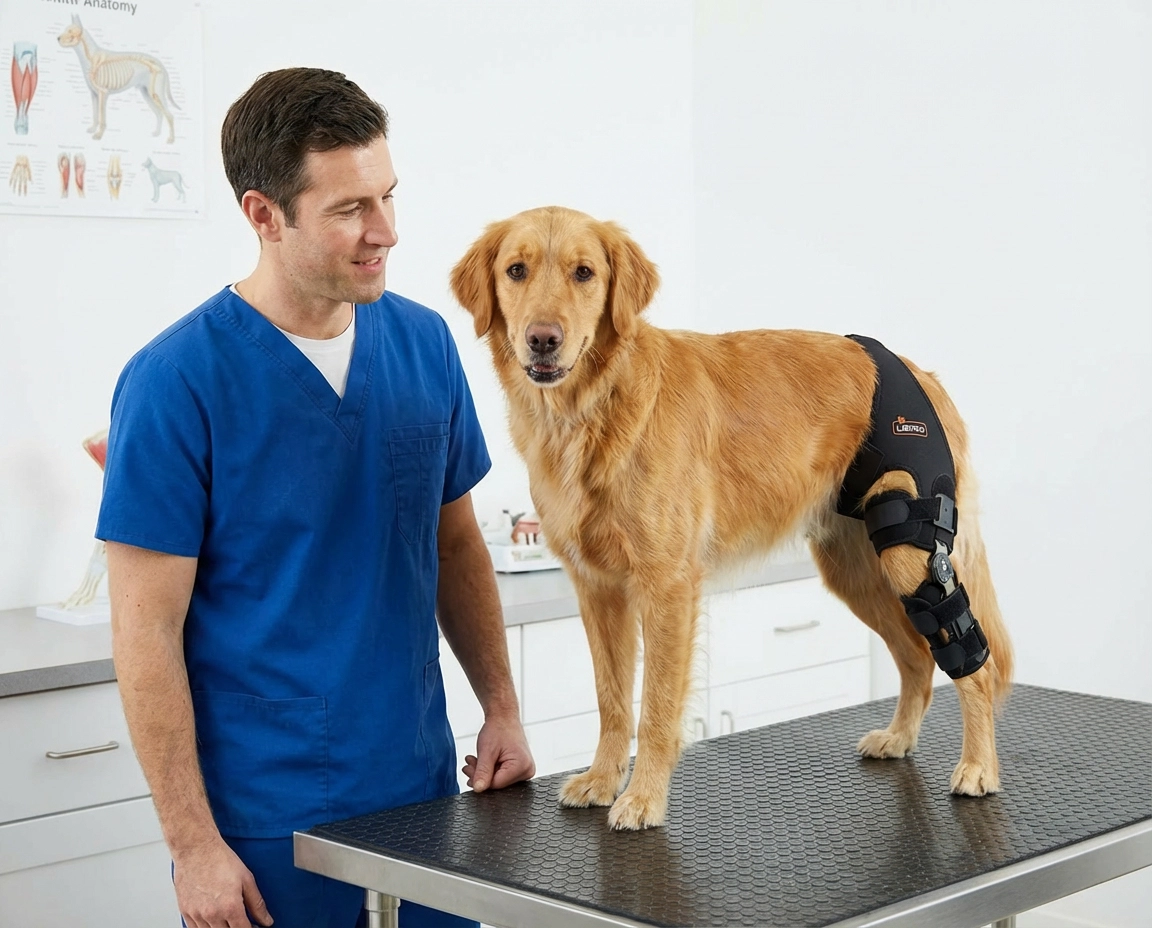
A brace for canine ACL tear supports your dog's knee so your dog can walk with less pain. You give your dog a chance to heal without too much stress on the joint. You will see your dog move more comfortably when you use the brace the right way. Always talk to your veterinarian before you start or change any treatment.
Key Takeaways
-
A brace for canine ACL tear helps your dog walk better. It gives support and makes walking less painful. Your dog can feel more confident with it on. Custom-fitted braces are very important for healing. They give more comfort and stability than store-bought braces. Using a brace can stop more injuries from happening. It keeps the knee from moving in bad ways while healing. You should visit your veterinarian often to check the brace. This makes sure it fits right and your dog heals well. Watch your dog's skin for any redness or sores. Slowly let your dog wear the brace longer each day. This helps your dog get used to it easily.
How a Brace for Canine ACL Tear Supports Healing
Joint Stabilization and Pain Relief
When your dog wears a brace for canine ACL tear, the knee gets more support. The brace keeps the knee in a safer spot. This helps take pressure off hurt tissues. Your dog can stand and walk with less pain. You might see your dog use the leg more and walk with more confidence.
Many dogs feel better and use their legs more. For example, Maya is a beagle with a partial tear. She stopped limping and walked for 20 minutes after six weeks of using a brace and doing rehab. Jax is a terrier with a knee problem. He played more and had less pain after wearing a hinged brace.
You can notice changes in how your dog walks. Veterinary studies show dogs with custom stifle braces put over 5% more weight on the sore leg. Another study found steadier joint movement after using a brace. This means you help your dog heal better.
Systematic reviews show dogs with knee braces often need less pain medicine and walk better. These studies show braces can support the knee and help your dog feel better while healing.
Limiting Harmful Knee Movements
A brace for canine ACL tear does more than support the knee. It also stops movements that could make the injury worse. The brace controls how much the knee can twist or stretch. This keeps the joint from sliding or turning too much.
Braces—especially hinged knee braces—stop too much rotation or stretching. This safe movement keeps the injury from getting worse and lets your dog heal slowly.
You help your dog avoid quick slips or twists that hurt more. By keeping the knee steady, you give it time to heal and lower the chance of more damage.
Promoting Safe Mobility
You want your dog to move safely while healing. The brace for canine ACL tear lets your dog walk, stand, and play gently without hurting the knee. Dogs with braces often balance better and use both legs more.
Here is a table showing how braces help dogs move better:
| Study/Source |
Findings |
|---|---|
| Rosen et al. (2022) |
Dogs with custom knee braces put more weight on the leg and moved better for 12 months. |
| Carr (2016) |
Dogs with knee braces had better pressure and balance after 90 days. |
| Muršec et al. (2025) |
Two dogs had better balance and weight use after 32 days of bracing. |
You help your dog do daily things and protect the other leg. Bracing, along with weight control and gentle exercise, gives your dog more support to heal. You help your dog get comfort and move better while keeping the joint safe.
Understanding ACL Tears in Dogs
What Is the Canine CCL?
You may hear your veterinarian talk about the cranial cruciate ligaments in your dog's knee. These ligaments play a key role in keeping your dog's knee stable.
-
The cranial cruciate ligament (CCL) stops the tibia from sliding forward compared to the femur.
-
It limits too much movement and twisting in the knee.
-
The CCL helps your dog walk, run, and jump without the knee giving out.
When the CCL tear, your dog's knee loses stability. You may notice your dog limping or avoiding putting weight on the leg.
Common Causes and Symptoms
Many things can lead to a CCL tear. Some causes happen slowly, while others are sudden.
-
Age can weaken the ligament over time.
-
The angle of the tibial plateau in your dog's knee can increase stress.
-
Sex and weight also play a part.
-
Past surgeries may affect ligament strength.
Other causes include trauma from accidents, jumping from high places, or doing activities that push your dog beyond its limits. Most tears happen because the ligament wears down over time, not just from one injury.
You can spot symptoms by watching your dog's movement.
| Symptom |
Description |
Severity |
|---|---|---|
| Intermittent Limping |
Limping after play or rest |
Mild to Moderate |
| Difficulty Rising |
Trouble getting up |
Moderate |
| "Toe-Touching" Stance |
Only the toe touches the ground |
Moderate to Severe |
| Audible "Click" or "Pop" |
Clicking sound in the knee |
Moderate to Severe |
| Constant Lameness |
No weight on the leg |
Severe |
If you see these signs, talk to your veterinarian. Early action helps your dog recover faster.
When to Consider a Dog Knee Brace
You may wonder when dog acl knee braces are a good choice.
-
Your veterinarian may suggest a brace if your dog is older or has health problems that make surgery risky.
-
A dog knee brace supports healing when surgery is not possible.
-
Custom braces limit harmful movements and help your dog stay active during recovery.
Some dogs use braces after surgery for extra support. Braces help manage strain and protect the joint while your dog heals. Your veterinarian will help you decide if a brace is right for your dog's needs.
Custom Dog Knee Braces: Mechanism and Fit
Importance of Custom Fit
You want the best support for your dog’s healing knee. Custom dog knee braces give your dog a brace made just for their leg shape and size. This custom fit means the brace stays in place and gives steady support. When you use a brace that fits well, your dog feels more comfortable and can move better.
Here is a table showing the differences between custom-fitted and off-the-shelf braces:
| Feature |
Custom-Fitted Braces |
Off-the-Shelf Braces |
|---|---|---|
| Fit |
Individualized design for specific leg structure |
Generalized fit, may not suit all dogs |
| Support |
Enhanced stability, limits slippage |
May lead to discomfort or inadequate support |
| Effectiveness |
Higher effectiveness for recovery and comfort |
Potentially less effective for complex conditions |
| Cost |
Generally more expensive |
Usually more affordable |
Custom dog knee braces use molds or measurements to match your dog’s leg. This approach gives the highest level of support and reduces the risk of the dog brace slipping or causing discomfort.
Hinge Alignment and Stability
The hinge in custom dog knee braces lines up with your dog’s knee joint. This alignment is important. It lets your dog walk with a normal stride while keeping the knee stable. The brace limits the forward motion of the tibia and supports the whole joint without adding much weight. You help your dog avoid abnormal movement and pain, but your dog can still move the knee safely.
Custom dog knee braces support the injured limb, reduce tibial thrust, and prevent the tibia from sliding forward. This support lowers the risk of more joint damage and helps protect against osteoarthritis.
Fitting and Wear Schedule
You need to follow a careful schedule when your dog starts using a dog knee brace. Start with short sessions, about 30 minutes on the first day. Each day, increase the time by about 30 minutes to 1 hour. After the first week, add about 25% more time every few days. For the first 1–2 weeks, use the brace only during short, leashed walks. This helps your dog get used to the brace.
Check your dog’s skin every day for irritation or pressure spots. Watch how your dog walks. If you see limping or swelling, contact your veterinarian. Regular follow-up visits help make sure the brace fits well and works as it should. Your veterinarian may adjust the brace to keep your dog comfortable and safe.
Tip: Always check for skin changes and make sure the brace stays in the right position. Good care and regular checks help your dog heal better with custom dog knee braces.
Recovery Benefits and Owner Checklist
Pain Reduction and Improved Limb Use
A brace for canine acl tear helps your dog feel less pain. The brace supports the hurt knee, so moving is easier. Your dog can stand, walk, and play with more confidence. Many dogs use their leg better and feel less pain while healing. You may see your dog put more weight on the sore leg and move more naturally.
-
Custom braces keep the injured area steady.
-
They help lower pain and make healing easier.
-
Braces stop more damage and help after surgery.
-
Dog acl knee braces keep the leg lined up and steady, so your dog uses it better.
Preserving Muscle and Joint Health
You want your dog to keep strong muscles and healthy joints while healing. A good brace for canine acl tear lets your dog move in a safe way. This helps stop muscle loss and keeps the joint moving well. The brace supports the muscles and ligaments, so there is less pain and swelling.
| Benefit |
Description |
|---|---|
| External Stabilization |
Holds the knee steady and stops more injury. |
| Controlled Movement |
Lets your dog move safely to help healing. |
| Pain and Inflammation Reduction |
Lowers pain and helps your dog get better. |
| Muscle and Ligament Support |
Stops muscle loss and keeps ligaments strong. |
Protecting the Opposite Leg
Dogs often put more weight on the other leg after an ACL tear. This can cause new injuries. Almost 40% of dogs with one torn ACL may hurt the other leg too. Using a brace helps your dog balance weight and lowers the risk of hurting the other leg. You protect both legs and help your dog move safely.
Tip: Watch how your dog walks and ask your veterinarian how to keep the healthy leg safe.
Owner Checklist for Success
Do these things to help your dog heal with a brace for canine acl tear:
-
Ask your veterinarian for the right diagnosis and plan.
-
Pick a brace that fits your dog’s leg well.
-
Let your dog get used to the brace slowly.
-
Check for pain or skin problems.
-
Keep your dog at a healthy weight to help the joints.
-
Try home exercises like sit-to-stand, weight shifting, and gentle stretches.
-
Take your dog to the veterinarian often to check progress.
-
Get more help if you see swelling, limping, or new problems.
Note: Taking good care and seeing your veterinarian often helps your dog get the most from dog acl knee braces.
Using a knee brace for ACL tears helps your dog heal. It also keeps the joint healthy. Many dogs walk better and do normal things after 12 weeks. Studies show these results:
| Study Focus |
Findings |
|---|---|
| Custom orthotics for dogs with CCL injuries |
Dogs moved better and many did not need surgery. |
| Double knee braces |
Dogs balanced weight, had less pain, and protected the other leg. |
| Non-surgical treatments |
Dogs felt less pain and had a better life, especially smaller dogs. |
You need to work with your veterinarian. Regular visits check if the brace fits and your dog feels good. Changes to the brace help your dog heal safely. With time and care, your dog can feel better and move more. If you want a brace, ask your veterinarian for advice and a full check.
FAQ
How long should my dog wear the brace each day?
Start with 30–60 minutes, two or three times daily. Increase time slowly as your dog gets used to the brace. Your veterinarian will guide you on the best schedule for your dog.
Can my dog play or run while wearing the brace?
You should let your dog walk and do gentle activities. Avoid running, jumping, or rough play. Safe movement helps healing. Ask your veterinarian before changing your dog’s activity level.
How do I check for skin problems under the brace?
Check your dog’s skin every day. Look for redness, swelling, or sores. Use a soft sleeve if needed. If you see any problems, contact your veterinarian right away.
Will my dog need surgery if I use a brace?
Some dogs heal well with a brace and rehab. Others may still need surgery. Your veterinarian will help you decide what is best for your dog’s health.
0 Comments