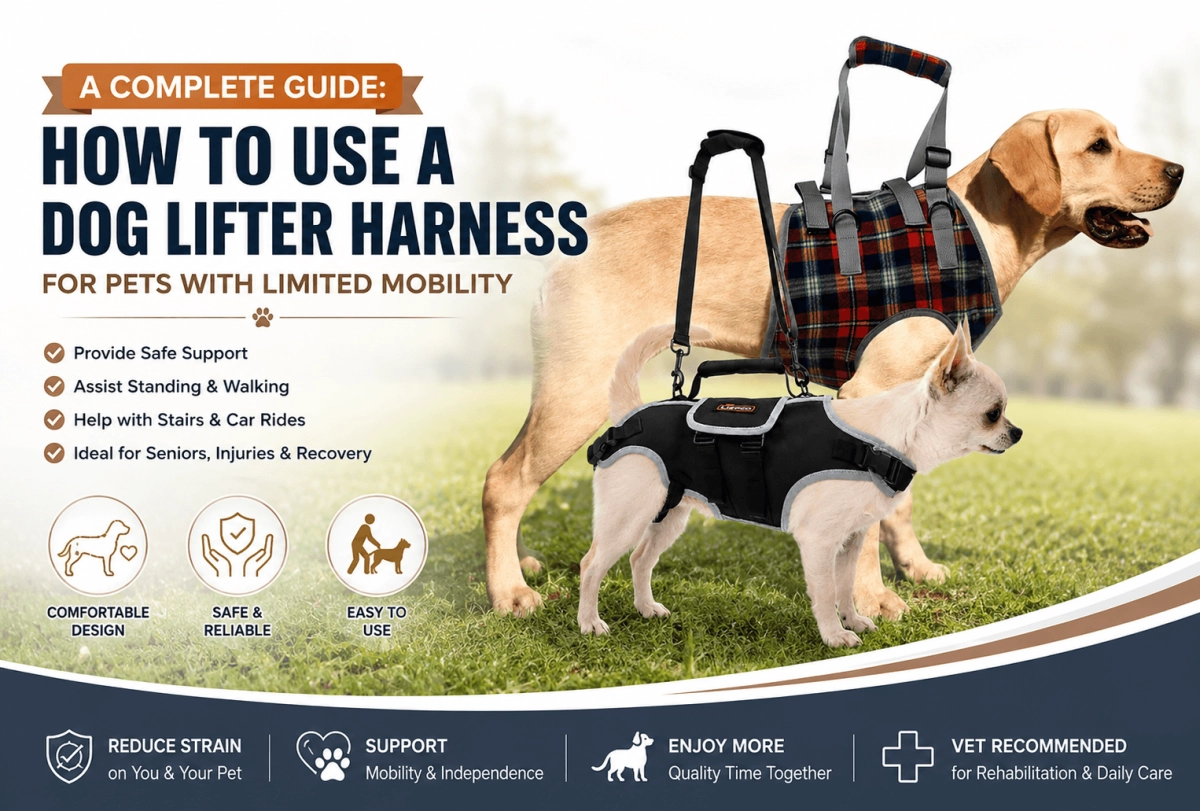
For many pet parents, watching a beloved dog struggle to stand, climb stairs, or walk outside can be heartbreaking. Whether your dog is aging, recovering from surgery, dealing with weak hind legs, or living with mobility challenges, everyday routines can suddenly become difficult—for both you and your pet.
A dog lifting harness is designed to make those moments easier. It helps provide gentle support when your dog needs help getting up, walking, entering the car, going up steps, or taking short outdoor breaks. Instead of lifting your dog awkwardly by the belly or legs, the harness helps distribute support more safely and comfortably.
Many owners notice that once their dog feels more stable, daily movement becomes less stressful. One pet parent shared:
“Before using a lifter harness, my senior dog hesitated every time we went outside. After using it, I could support him more easily, and he seemed more confident walking again.”
Another customer mentioned:
“It made bathroom breaks and getting into the car much easier. I felt like I could help my dog without hurting my back or making him uncomfortable.”
This guide will walk you through how to use a dog lifter harness correctly, when it can be helpful, what to pay attention to during use, and how to make your dog feel more secure and comfortable every step of the way. For disabled pets, senior dogs, or dogs in recovery, the right support can make daily life feel a little easier, safer, and more hopeful.
| Harness Type |
Benefits |
|---|---|
| Front and Hind Leg |
Helps your dog walk and climb stairs with less pain. |
| Full-Body Harness |
Supports your dog after surgery or during rehabilitation. |
Safety matters most. Always ask your veterinarian for advice before choosing a harness.
Key Takeaways
-
A Dog Lifter Harness helps hold your pet’s body. It lets them walk and go up stairs. It also helps them get better after surgery.
-
Pick the right harness for your dog’s needs. Some harnesses help the front, rear, or the whole body.
-
Always talk to your veterinarian before you pick a harness. This makes sure it is good for your dog’s health.
-
Make sure the harness fits well so it does not hurt. Use the two-finger rule to check if it is snug but not too tight.
-
Watch your dog when they wear the harness. Take it off when your dog rests to stop skin problems.
Dog Lifter Harness Basics
What Is a Dog Lifter Harness
You may ask how a Dog Lifter Harness is different. This tool helps you hold up your dog’s body if they cannot move well. It is good for older dogs, dogs healing from surgery, or dogs with sore joints. The harness goes around your dog’s chest and belly. It has handles so you can help your dog stand, walk, or go up stairs.
Here are some features you might see in a Dog Lifter Harness:
| Feature |
Description |
|---|---|
| Material |
Made from 42% rayon and 58% nylon |
| Design |
Soft, flexible, and easy to use |
| Positioning |
Works vertically or horizontally |
| Hip Lift |
Lifts from under the sternum and pelvis |
| Weight Distribution |
Spreads weight evenly for easier lifting |
| Adjustment |
10 different adjustment points for comfort |
| Safety Features |
Reflective strips for low light visibility |
| Comfort |
Extra padding and removable protection shield |
| Maintenance |
Machine washable for easy cleaning |
These harnesses are made for comfort, safety, and support. They are also simple to clean and easy to change for your dog.
How It Supports Disabled Pets
A Dog Lifter Harness helps your pet without hurting them. You put the harness on your dog’s body. It holds up important spots like the chest and belly. This way, you can lift your dog safely. You can also help them walk or get into a car.
Here are ways the harness helps your dog each day:
-
Gives strong support to the right parts of your dog’s body.
-
Lets you lift your dog without pain.
-
Helps your dog walk, go up stairs, or get into cars.
Your pet gets more freedom and keeps their pride. Many owners say their dogs seem happier and braver with this help. The harness does more than help your dog move. It also helps your dog feel safe and cared for.
Identifying Pets That Need Mobility Support
Common Conditions That May Affect Your Dog’s Mobility
You may wonder whether your dog really needs mobility support. Many dogs begin to struggle with movement because of age, injury, surgery, or long-term health conditions. Some dogs only need temporary help, while others may need daily support to stand, walk, climb stairs, or get in and out of the car.
Common conditions that may lead to mobility challenges include:
-
Recovery after back, hip, knee, or leg surgery
-
Weak muscles caused by injury, aging, or joint disease
-
Osteoarthritis, which may make dogs stiff, slow, or hesitant to move
-
Intervertebral Disc Disease, also known as IVDD
-
Degenerative myelopathy, which can cause hind leg weakness and poor coordination
-
Amputation or living with three legs
-
Cancer or other illnesses that make walking difficult
-
Temporary injuries from slipping, falling, or accidents
-
Large or heavy dogs that need extra help during recovery or old age
Arthritis can cause dogs to have trouble getting up, walk more slowly, hesitate before using stairs, shift weight away from painful joints, or become reluctant to jump onto furniture. These signs may appear gradually, so many owners do not notice them at first.
Degenerative myelopathy may also start subtly, often with difficulty rising, hind limb weakness, poor coordination, muscle loss, or scuffed toenails on the back paws.
How to Observe Your Dog’s Daily Behavior
A dog cannot tell you, “My legs feel weak” or “My joints hurt,” so pet parents need to watch small changes in daily routines. The best way to identify mobility problems is to observe your dog in normal home and outdoor situations.
1. Watch how your dog gets up
Pay attention when your dog rises from lying down. A dog that needs mobility support may push up slowly, pause halfway, slide on the floor, or need several attempts before standing.
Example:
Your dog used to jump up when you picked up the leash, but now they take several seconds to stand or look like they are “thinking about it” before moving.
2. Observe walking on smooth floors
Tile, hardwood, and laminate floors often reveal weakness or balance problems. If your dog slips, spreads their legs wide, walks carefully, or avoids certain rooms, they may need extra support.
Example:
Your dog walks normally on carpet but becomes nervous or unstable on the kitchen floor.
3. Check stair and step behavior
Stairs are one of the clearest ways to notice mobility changes. Dogs with weak back legs, joint pain, or poor balance may hesitate at the bottom of stairs, move one step at a time, or refuse stairs completely.
Example:
Your dog used to run upstairs at night, but now waits for you or avoids going upstairs unless helped.
4. Watch car and furniture movement
Dogs that need support may struggle to jump into the car, climb onto a sofa, or step down from a raised surface. This can be especially common in senior dogs, large dogs, and dogs recovering from surgery.
Example:
Your dog puts their front paws on the car seat but cannot push their back legs up without help.
5. Look for changes after walks
Some dogs seem fine at the start of a walk but become stiff, sore, or tired afterward. Watch for slower walking, limping, dragging paws, heavy panting, or lying down sooner than usual.
Example:
Your dog can walk for five minutes, but after returning home, they struggle to lie down or get up again.
Specific Signs Your Dog May Need a Lifter Harness
Your dog may benefit from a dog lifter harness if you notice one or more of these signs:
-
Difficulty standing up from lying down
-
Slipping or losing balance on smooth floors
-
Hesitating before using stairs
-
Dragging the back legs or scuffing the rear toenails
-
Walking with a wobbly or uneven gait
-
Needing help getting into the car
-
Getting tired quickly during short walks
-
Avoiding play, walks, stairs, or favorite activities
-
Standing with weight shifted away from one leg
-
Looking stiff after resting or sleeping
-
Crying, trembling, or showing discomfort when moving
-
Having trouble squatting during bathroom breaks
A dog lifter harness can make these daily movements safer and easier. It gives you a better way to support your dog’s body instead of lifting them by the belly, legs, or collar.
Choosing Dog Lifter Harness
Types and Features
You have many choices when picking a harness for your dog. Each type helps with different needs. Some harnesses support the front legs, others help the back legs, and some cover the whole body. You can see the main types and their features in the table below:
| Type of Harness |
Description |
|---|---|
| Supports the chest, great for dogs with weak or paralyzed front legs. |
|
| Supports hind legs, perfect for dogs with back leg weakness or paralysis. |
|
| Balances support for both front and back legs, ideal for overall body weakness or recovery. |
|
| Everyday Vest |
Works for daily walks and gives extra support. |
Some harnesses offer modular and customizable features. You can add straps, pouches, or even wheels as your dog's needs change. Adjustable straps help you fit the harness to your dog's body. Removable padding lets you change the comfort level. Modular add-ons, like GPS tracker pockets or ID panels, make the harness more useful.
Tip: Choose a harness that fits your dog's current needs but can adapt as your dog grows or recovers.
Sizing and Fit
Getting the right size matters for your dog's safety and comfort. You need to measure your dog before buying a harness. Here’s how you can do it:
-
Wrap a soft tape measure around the widest part of your dog's chest, just behind the front legs.
-
Measure the neck at the thickest part, right above the shoulders.
-
Record your dog's weight to help pick the right strength and size.
-
Check the manufacturer's sizing chart for the best fit.
You want the harness to be snug but not tight. You should be able to fit two fingers between the straps and your dog's body. Adjustable straps let you change the fit as your dog gains or loses weight. Always watch how the harness fits when your dog moves. If you see signs of tightness or discomfort, adjust the straps or try a different size.
-
Start with the girth measurement, which is the widest part of your dog's chest.
-
Make sure the tape measure is snug but not too tight, especially if your dog has thick fur.
-
Measure the neck circumference where the harness will sit.
-
Use weight as a secondary measurement to guide sizing if needed.
Note: Regularly check the harness fit. Dogs change shape as they age or heal, so you may need to adjust the harness often.
Material and Comfort
The material of the harness affects how comfortable and durable it is. You want something strong but gentle on your dog's skin. Here’s a table showing common materials and their features:
| Material Type |
Durability Features |
Comfort Features |
|---|---|---|
| Heavy-Duty Nylon Webbing |
Strong, resists abrasion and UV damage |
Flexible, lightweight, easy to adjust |
| Water-Resistant and Washable Fabrics |
Repels moisture, resists mold, easy to clean |
Keeps skin dry, prevents irritation |
| Breathable Mesh Panels |
Durable, resists tearing |
Allows airflow, keeps your dog cool |
| Strong Metal Fasteners |
Corrosion-resistant, holds up to repeated use |
Secure fit, stays strong over time |
Veterinarians suggest balancing comfort and support. Nylon and polyester are strong and easy to clean, but you need padding to prevent chafing. Fleece and flannel feel cozy but can trap heat, so they may not work for dogs who get hot easily. Biothane and leather are waterproof and mold to your dog's shape, but they can be heavy. Always check for soft padding in spots that touch your dog's skin.
Callout: Look for harnesses with removable padding and breathable mesh. These features help your dog stay comfortable during walks or therapy.
You want your Dog Lifter Harness to last and keep your dog happy. Pick materials that match your dog's activity level and climate. If your dog swims or gets dirty often, water-resistant and washable fabrics are best. For dogs who need extra support, heavy-duty nylon webbing and strong metal fasteners give you peace of mind.
Fitting and Using Dog Lifter Harness
Step-by-Step Fitting
Getting the harness on your dog can feel tricky at first, but you’ll get the hang of it. Here’s a simple way to fit a Dog Lifter Harness:
-
Lay the front harness section flat on the ground. Ask your dog to step into the loops. Lift the harness up to your dog’s chest and over the shoulders. Fasten the buckle.
-
Adjust the straps so the harness fits snugly. You should be able to slide two fingers between the harness and your dog’s fur.
-
For the rear harness, remove the protection shield from the belly strap if your dog is female. Drape the harness over your dog’s back with the lifting leash facing forward. Buckle the belly band on the other side.
-
Swing the rear leg straps around and buckle them on top. Adjust the straps for a snug fit, using the two-finger rule again.
-
Attach the lifting leash to the D-ring on the front support harness. Adjust for a semi-snug fit.
Tip: Always check the harness placement before lifting your dog. Make sure nothing pinches or rubs.
Acclimating Your Dog
You want your dog to feel comfortable and safe in their new harness. Try these steps to help your dog get used to it:
-
Let your dog sniff and explore the harness. Use treats to make it a positive experience.
-
Practice putting the harness on and taking it off. Keep sessions short and reward your dog with praise and snacks.
-
Start with short walks while your dog wears the harness. Reward calm behavior.
-
Check the harness fit often. Look for signs of discomfort or irritation.
Note: Patience pays off. Some dogs need more time to adjust, so go slow and keep things positive.
Safe Handling Tips
Safety matters every time you use the harness. Choose products made from durable materials. Follow the care instructions from the manufacturer. Always check the fit with the two-finger method. Remove the harness before bedtime to prevent accidents. If you notice any signs of discomfort, adjust the straps or take a break.
Callout: Never leave the harness on your dog overnight. It can get caught and cause trouble.
Consulting Veterinary Professionals
When to Seek Advice
You want your dog to be healthy and happy. Talking to your vet is always a good idea. Your vet knows your dog’s health and can notice things you might miss. Here are times when you should ask for help:
-
Your dog is getting better after an injury or surgery.
-
You see new pain, swelling, or changes in how your dog moves.
-
You want to make sure the harness does not slow healing or cause harm.
-
You plan to buy a lift harness and want advice for your dog.
Tip: Your vet can help you choose the right harness and teach you how to use it safely.
Integrating Therapies
A dog lifter harness works best with other therapies. Your vet or a rehab expert can help you make a plan for your dog. Animal-assisted therapy uses trained dogs to help people feel better during treatment. These dogs help kids and adults move more and smile during hard times.
Your vet may use wearable devices during therapy. These tools show real-time data about your dog’s health. Therapists can check your dog’s heart rate or stress and change the plan right away. This keeps your dog safe and helps therapy work well.
Here are some harnesses vets and rehab experts often suggest:
| Product Name |
Purpose |
Recommended By |
|---|---|---|
| Original Walkabout Back End Harness™ |
Reliable support for pets with mobility challenges |
Veterinary physical therapists |
| Walkabout Harnesses |
Helps with arthritis, hip dysplasia, spinal trauma |
Rehabilitation specialists |
Note: Using a harness with therapies like hydrotherapy, physical therapy, or animal-assisted therapy can help your dog recover and feel happier.
You and your vet work together as a team. With good advice and a smart plan, your dog can feel more comfortable and free every day.
Innovations in Pet Mobility
New technology is changing how you help your dog move. Pet mobility solutions are more advanced than just harnesses now. You can use smart devices and therapy tools to help your dog. Modular systems let you change parts as your dog needs. These new ideas make life easier for you and your dog. Let’s see some of the latest inventions and how they work with harnesses.
Modular Harness Systems
You want a harness that can change as your dog changes. Modular harness systems let you add or take away parts. You can attach things for storage or emergencies. Quick-release buckles make it easy to use. Ergonomic handles help you lift your dog without hurting yourself. Reflective parts keep your dog safe at night.
| Feature |
Description |
|---|---|
| Front-clip leash attachment |
Stops pulling and helps your dog walk better. |
| Reflective elements |
Makes your dog easy to see in the dark. |
| Quick-release buckles |
Lets you put on or take off the harness fast. |
| Ergonomic handle placement |
Gives you a good grip for lifting or guiding. |
| Modular design elements |
Lets you change the harness for different activities. |
| Modular core |
Lets you add or remove gear when needed. |
| Compatibility with accessories |
Works with attachments for storage and emergencies. |
Tip: Modular harnesses change as your dog needs more help. You don’t have to buy a new harness every time.
Smart Exoskeletons
Smart exoskeletons help dogs with big mobility problems. These devices support your dog’s legs and help them walk. Some exoskeletons use sensors to read muscle signals. The system guesses how your dog wants to move and helps them step. You can use an app to control training modes. Real-time health feedback lets you see progress and change support.
Smart exoskeletons work with regular harnesses. You use the harness for daily help and the exoskeleton for therapy. Together, they give your dog more freedom and confidence.
Hydrotherapy and Sensor Tech
Hydrotherapy helps your dog exercise without hurting their joints. Water supports your dog’s body and makes moving easier. You use a lifter harness to guide your dog in and out of the pool. You can change water levels and temperature for safety and comfort.
Sensor technology lets you check your dog’s health while they recover. Smart collars track temperature and heart rate. Radar sensors in cages warn you about breathing changes. You use these tools with a harness to keep your dog safe and comfortable.
Note: New technology works with harnesses to give your dog great care. You can help your dog move, heal, and stay healthy with these new ideas.
Benefits and Risks
Advantages for Pets and Owners
You want your dog to feel strong and safe. A dog lifter harness gives you and your pet many benefits. You can help your dog recover from injuries or surgery. Adjustable straps and padded support make the harness easy to use. Built-in handles let you lift your dog without hurting your back. Veterinarians often recommend these harnesses for dogs in rehabilitation. You can guide your dog through controlled movement, which helps muscles heal.
Here’s what you and your dog can enjoy:
-
Support during recovery from temporary injuries
-
Easy lifting with padded handles
-
Less strain on your body when helping your dog
-
Controlled movement for muscle recovery
-
Convenience for managing sprains or injuries
-
Safe support during physiotherapy and water therapy
-
More outdoor activities, even with mobility challenges
You also feel better when your dog moves with confidence. Improved mobility means your dog enjoys life more, and you worry less. Safety features like reflective strips give you peace of mind. You see your dog recover and play, which makes you feel proud and satisfied.
Tip: Using a harness can help your dog stay active and happy, while you feel secure knowing your pet is safe.
Risks of Improper Use
You need to watch for risks when using a dog lifter harness. If the harness does not fit right, your dog might slip out during walks. This happens often with breeds like Great Danes or Dobermans. A poor fit can cause chest injuries if your dog pulls hard. Some harnesses put too much pressure on the throat, especially for dogs with short noses.
Leaving the harness on overnight can be dangerous. It might get caught and cause choking. Wet harnesses can lead to skin infections if left on too long. An ill-fitted harness can shift weight and affect your dog’s balance. Dogs do not have a clavicle, so their shoulder joints rely on muscle stability. Poor fit can hurt the scapula and spine.
Other risks include:
-
Chafing under the legs and chest
-
Sores and discomfort that make dogs avoid walks
-
Uneven pressure that strains muscles and joints
Note: Always check the harness fit and remove it when your dog rests. A good fit keeps your dog safe and comfortable.
You want your dog to feel safe and comfy. Here are ways to use a dog lifter harness well:
-
Ask your vet for advice before you buy a harness.
-
Pick harnesses made from strong materials. Read reviews from other pet owners.
-
Find harnesses with reflective strips and padding you can remove.
-
Let your dog get used to the harness slowly.
-
Watch your dog while they wear the harness. Give breaks so your dog does not wear it too long.
| Assessment Type |
Frequency |
Purpose |
|---|---|---|
| Fit Assessment |
Monthly |
Make sure the harness fits well and feels good |
| Component Inspection |
Weekly |
Check for damage or worn parts early |
Animal Behavior College has helpful guides. The Help 'Em Up harness gives important support for dogs who have trouble moving.
FAQ
How long can my dog wear a lifter harness each day?
You should let your dog wear the harness only during walks or therapy. Remove it when your dog rests or sleeps. This helps prevent skin irritation and keeps your dog comfortable.
Can I wash my dog’s lifter harness in the machine?
Most harnesses are machine washable. Always check the care label first. Use a gentle cycle and mild detergent. Air dry the harness to keep it in good shape.
Will my dog get used to the harness quickly?
Some dogs adjust in a few days. Others need more time. Use treats and praise to help your dog feel good about wearing the harness. Start with short sessions and build up slowly.
What if my dog seems uncomfortable in the harness?
Check the fit right away. Adjust the straps or try a different size. Look for signs of rubbing or pinching. If your dog still feels bad, ask your vet for advice.
0 Comments