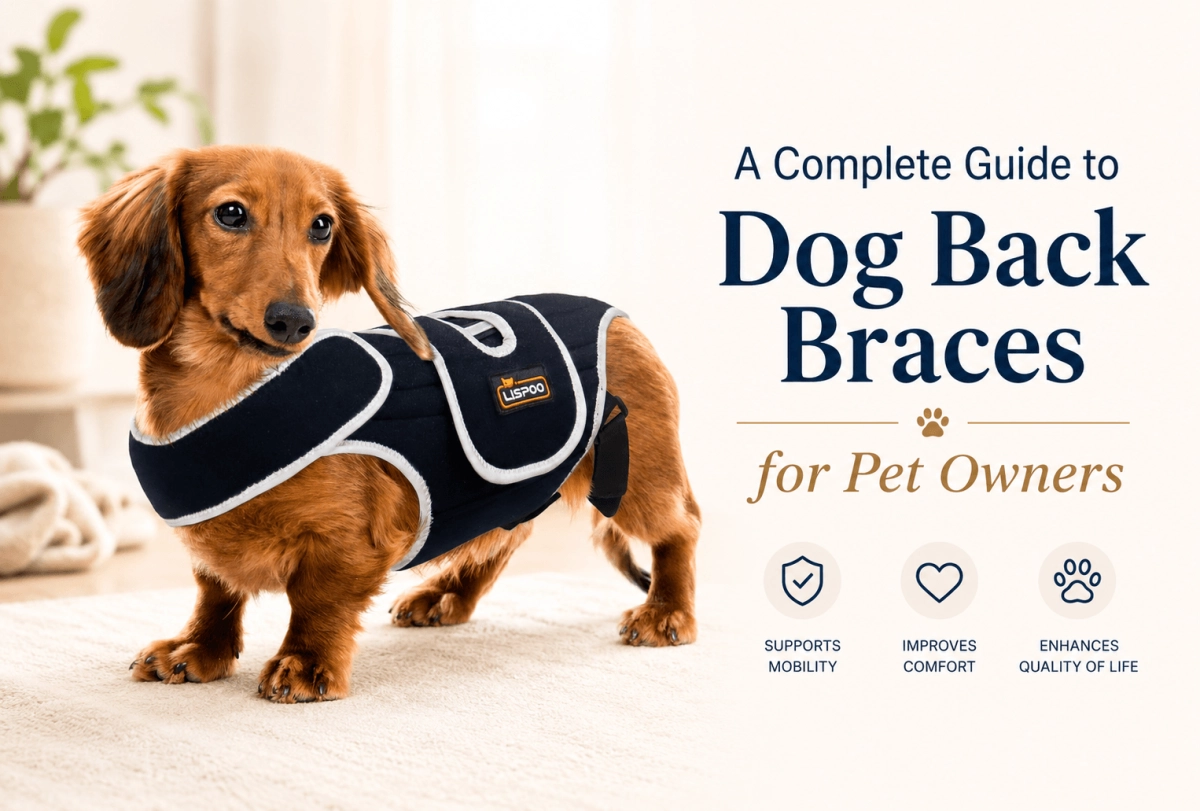
Many dogs have back problems like intervertebral disc disease. Dachshunds get this more often than other breeds. Their risk is 10 to 12 times higher. About one in five Dachshunds will have signs in their life. A dog back brace can help support your pet. New veterinary guidelines say back braces help healing and movement. Always talk to your veterinarian before using any brace.
Key Takeaways
Intervertebral disc disease, or IVDD, is a common cause of back pain and mobility problems in dogs. It can range from mild discomfort to serious neurological signs, including weakness or paralysis. A dog back brace may help provide external spinal support during controlled activity, but it should be used as part of a broader care plan, not as a stand-alone treatment.
A dog back brace may help keep the back more stable, limit excessive twisting, and support safer movement during short walks, standing, or daily recovery routines. However, current veterinary guidance is more cautious: braces can support comfort and controlled mobility, but they should not be described as a proven cure for IVDD or spinal injury.
Always talk to your veterinarian before using a back brace for a dog with IVDD, back pain, weakness, or trouble walking. Veterinary evaluation is important because IVDD severity can vary widely, and some dogs may need medication, strict rest, rehabilitation, imaging, or surgery depending on their symptoms.
Choose the right type of support based on your dog’s condition, size, body shape, and activity level. Soft braces may offer light support and comfort, while more structured or custom-fit braces may provide stronger stabilization. The right choice should balance support, comfort, breathability, and freedom of controlled movement.
Check the brace fit often. A poorly fitted brace may slip, rub the skin, restrict movement, or fail to support the spine properly. Watch for pressure marks, skin irritation, changes in walking, stress, or resistance to wearing the brace, and adjust or stop use if your dog appears uncomfortable.
For some dogs, conservative recovery can be successful when managed carefully. A 2024 University of Cambridge report on conservative IVDD treatment found that 96% of deep pain-positive dogs and 48% of deep pain-negative dogs regained the ability to walk within 12 weeks, showing why professional guidance and structured recovery plans matter. A brace may support daily management, but it should be paired with rest, activity control, weight management, and veterinary advice.
A well-fitted dog back brace may improve daily comfort and help your dog move more safely, especially during controlled recovery routines. The goal is not to “fix” IVDD, but to support safer movement, reduce unnecessary strain, and help your dog stay more comfortable under veterinary guidance.
Do Dog Back Braces Work?
Clinical Benefits of Dog Back Braces
You want your dog to walk and play without pain. Dog braces help dogs with intervertebral disc disease by giving support and keeping their backs steady. When you use a dog back brace, your dog cannot move as much. This stops more injury and keeps the spine straight. Veterinary guidelines from 2025–2026 show many good things about ivdd back braces:
-
The brace keeps the spine steady, which helps your dog heal and stops new injuries.
-
It stops quick movements that can make ivdd worse.
-
The brace lowers swelling and eases pain by holding the spine still.
-
You can pick up your dog safely with the brace, which gives extra support.
-
After surgery, the brace helps your dog move in a safe way sooner.
Dog braces squeeze the muscles around the spine. This squeezing gives your dog feedback, so the spine stays straight. Your dog moves better and has fewer muscle spasms. For daily support, you use a brace to protect your dog during normal activities. Wearing an ivdd back brace helps your dog heal faster, lowers the chance of getting hurt again, and makes your dog feel better.
Veterinary guidelines say back braces are good for dogs with ivdd, especially if surgery is not possible. You use the brace while your dog recovers to keep the spine steady and stop more injury. For dogs with long-term ivdd, braces help your dog move and keep the spine straight. You also use dog braces to protect breeds that often have back problems.
Limitations and When to Use
Dog braces help a lot, but they have limits. Some dogs may lose muscle if they do not move enough while wearing a brace. Owners must follow instructions and keep up with exercise to help their dogs get better. The table below shows common limits:
| Limitation Type |
Description |
|---|---|
| Muscle Atrophy |
Dogs may lose muscle strength if they do not stay active while wearing a brace. |
| Owner Compliance |
You must keep up with exercise and follow-up care for the best results. |
You use dog braces after surgery, for daily support, and for dogs with mild to moderate ivdd. For dogs with mild signs, you may use crate rest, pain medicine, anti-inflammatories, or muscle relaxants. These treatments help dogs that cannot have surgery. Most dogs with mild to moderate ivdd get better with non-surgical care. You use rest, pain medicine, and tools like dog braces to help your dog.
You need to talk to your veterinarian before using a dog back brace. Your vet will help you choose if a brace is right for your dog. You use the brace to keep the spine straight, help your dog move, and support healing. Wearing an ivdd back brace helps your dog recover faster, feel less pain, and get more support. You use dog braces to ease pain, stop more injury, and help your dog move safely.
What Is a Dog Back Brace?
A dog back brace is a special device that helps your dog’s spine stay straight and supported. You use it when your dog has back pain, spinal problems, or poor posture. The brace wraps around your dog’s body and fits snugly. Most braces use soft, medical-grade materials that feel comfortable on your dog’s skin. You can adjust the straps to make sure the brace fits just right. This helps your dog move more easily and reduces discomfort.
How Dog Back Braces Support Healing
You want your dog to heal and feel better. A back brace gives your dog’s spine the support it needs. When you use a brace, you help your dog in many ways:
-
The brace reduces pain by keeping the spine steady.
-
It prevents further injury by limiting harmful movements.
-
Your dog gains stability, which makes walking and standing easier.
-
The brace helps your dog heal faster after an injury or surgery.
Tip: Always check the brace for a good fit. A well-fitted brace works best and keeps your dog comfortable.
Dog back braces can treat spine problems like intervertebral disc disease. They also help dogs with chronic pain move better. You give your dog a better quality of life when you use the right brace.
Dog vs. Human Back Braces
Dog back braces are not the same as human back braces. You need a brace made for dogs because their bodies move differently. Dog braces focus on comfort and adjustability. They use soft, flexible materials that let your dog walk, sit, and lie down. Human braces often use rigid parts and may not fit a dog’s shape. If you use a human brace on your dog, it could cause pain or even harm.
You should always choose a brace designed for dogs. This keeps your pet safe and helps them heal the right way.
Types of IVDD Back Braces
When you look for ivdd back braces, you will see many choices. Each kind of brace helps dogs with intervertebral disc disease in its own way. You need to know which dog brace is best for your pet. Picking the right one gives your dog support and helps them heal.
Rigid, Semi-Rigid, and Flexible Braces
There are different types of ivdd back braces. Each type has a special design and job. The table below shows the main types of dog braces, how they work, and when to use them:
| Type of Brace |
Description |
Intended Use |
|---|---|---|
| Soft Brace |
Made from flexible materials, provides gentle compression and support. |
Recommended for mild cases or preventive use. |
| Rigid Brace |
Offers a rigid structure with metal or plastic components for stability. |
Used for moderate to severe cases requiring immobilization. |
| Custom-Fit Brace |
Tailored specifically to individual anatomical needs. |
Provides personalized fit and targeted support. |
| Combination Brace |
Combines soft and rigid elements for a balance of flexibility and stability. |
Suitable for varying degrees of support needed. |
You might wonder which dog brace is best for your pet. Soft braces are good for mild ivdd or to stop problems before they start. Rigid braces help dogs who need strong support after surgery or with bad ivdd. Custom-fit braces give the best fit and support for dogs with special needs. Combination braces give both flexibility and stability. You should always ask your veterinarian which dog brace is right for your dog.
Clinical Tiers of Dog Braces
Veterinarians use clinical tiers to pick which ivdd back brace to use. Each tier matches a different stage of ivdd or healing. You need to know these tiers to choose the right brace for your dog.
-
Post-operative braces help your dog after surgery. These braces stop too much movement and protect healing tissues.
-
Conservative management braces are for dogs who cannot have surgery. These braces give support and help your dog move safely.
-
Chronic management braces help older dogs or those with long-term ivdd. These braces are light and flexible, so your dog can stay active.
Sometimes, custom braces are used for special cases. Custom braces give extra support and fit your dog very well. If your dog has other health problems, your vet may suggest a custom brace for better results.
Breed-Specific Back Braces
Some breeds need special ivdd back braces. Dachshunds, Corgis, and French Bulldogs have long backs and short legs. These dogs need braces with extra thoracic coverage. This keeps their backs from arching and gives better support. You may need a custom brace for these breeds to get the best fit.
Deep-chested breeds like German Shepherds and Standard Poodles need different dog braces. Their braces should not press on the chest or make it hard to breathe. Custom-fit braces work well for these dogs. You can adjust the straps and plates to fit your dog's body shape.
Modern ivdd back braces use medical-grade materials. Many braces have antimicrobial treatments to keep your dog’s skin healthy. Some braces use carbon fiber or special plastics for strength and comfort. You will see new buckle systems instead of Velcro for a better fit and easier use.
Tip: Always measure your dog before you buy a brace. A good fit means better support and faster healing.
You can find many types of ivdd back braces for every need. You may pick a soft, rigid, or custom brace. You can ask your vet which dog brace is best for your dog’s breed and condition. With the right brace, you help your dog heal and stay active.
Choosing Dog Braces
Factors to Consider Before Choosing a Brace
When choosing a back brace for your dog, comfort and support should come first. A good dog back brace should help support the spine without stopping your dog from moving naturally. Your dog should still be able to walk, sit, lie down, and go to the bathroom while wearing it.
Look for these key features:
-
Comfortable, body-friendly fit
-
Support for spinal stability
-
Soft padding to reduce rubbing
-
Breathable materials for daily wear
-
Secure straps that do not slide easily
-
Easy on/off design
-
Multiple size options or adjustable fit
-
Enough flexibility for normal controlled movement
For dogs with IVDD or back weakness, the brace should help limit excessive twisting and support safer movement during daily routines. However, it should not be described as a tool that can “prevent or treat IVDD” by itself. A safer way to explain this is: a dog back brace may help support the spine and assist with controlled mobility as part of a veterinarian-guided care plan.
Custom Braces vs. Ready-Made Braces
Dog back braces usually fall into two types: custom-fit and ready-made.
Custom braces are designed around a dog’s specific body shape. They may offer more precise support for dogs with complex spinal or mobility needs, but they usually cost more and take longer to produce.
Ready-made braces are easier to buy and usually more affordable. They may work well for dogs that need general back support, mild stability assistance, or daily mobility support. The key is choosing the correct size and checking the fit carefully after your dog starts wearing it.
How to Work With Your Veterinarian
Before buying a dog back brace, talk to your veterinarian. Back pain, weakness, stiffness, and walking problems can have different causes, and not every dog needs the same type of support.
Your veterinarian may check:
-
Your dog’s walking pattern and posture
-
Pain response along the back or neck
-
Reflexes and nerve function
-
Muscle strength and limb coordination
-
Range of motion in the spine and legs
-
Whether the problem may involve IVDD, arthritis, injury, or another condition
In some cases, your vet may recommend X-rays, advanced imaging, medication, strict rest, rehabilitation, surgery, or a specific brace type. This helps make sure the brace supports your dog safely instead of delaying needed treatment.
Tip: Bring the product size chart, photos, or measurements to your vet visit. Your veterinarian can help confirm whether the brace style is suitable for your dog’s condition and body shape.
How to Evaluate Brace Quality
A good dog back brace should balance support, comfort, and daily usability. When comparing products, look beyond the appearance and check the details that affect real use.
Important quality standards include:
-
Stable support: The brace should help support the back without being too stiff for normal controlled movement.
-
Soft inner material: The inside should feel comfortable and reduce friction against the skin.
-
Breathability: Breathable fabric helps reduce overheating during daily wear.
-
Secure fastening: Straps should hold the brace in place without digging into the body.
-
Adjustability: Adjustable sections help improve fit as your dog moves or changes posture.
-
Anti-slip design: The brace should not slide, twist, or bunch up during walking.
-
Proper coverage: It should cover the intended back support area without blocking bathroom use.
-
Easy cleaning: Washable materials are important for long-term use.
After your dog wears the brace, check the skin and walking comfort often. Remove the brace if you notice rubbing, redness, swelling, stress, or unusual movement. A well-fitted brace should support your dog, not make movement harder.
Final Selection Advice
The best dog back brace is not simply the strongest one. It is the one that fits your dog’s body, supports the right area, feels comfortable, and matches your veterinarian’s care plan.
For dogs with IVDD, senior weakness, or back instability, a brace may help support safer daily movement. But it should always be used together with proper rest, controlled activity, weight management, and veterinary guidance.
Measuring and Fitting a Dog Back Brace
How to Measure Your Dog
You want your dog braces to work well, so you need to measure your dog the right way. Knowing how to measure and fit a dog brace helps you get the best support and comfort. Follow these steps to get accurate measurements for custom or ready-made dog braces:
-
Wrap a tape measure around the widest part of your dog’s chest, just behind the front legs. Make sure the tape is snug but leaves space for one finger underneath.
-
Measure from the base of the rear paw straight up to the highest point of the hip. Keep the tape straight for a true height.
-
Wrap the tape around the thigh, halfway between the knee bend and the groin. Again, the tape should be snug with room for one finger.
These steps show you how to measure and fit a dog brace so you can choose the right size. Custom-fit braces need exact numbers for the best results.
Fitting and Adjustment Steps
Getting the right fit for dog braces is important for your dog’s health. Start with short wear times, about 20 to 30 minutes. Each day, increase the time your dog wears the brace. Watch your dog’s movement and comfort. If your dog limps or avoids walking, check the fit. Adjust the straps so the brace is snug but not too tight. Muscles may change during recovery, so check the fit often. Inspect the brace every day for cleanliness and worn parts. Look at your dog’s skin under the brace for redness or sores. Clean the brace as needed. If you see any problems, talk to your veterinarian.
Introducing the Brace
When you first use dog braces, let your dog get used to the new feeling. Give treats and praise to help your dog feel safe. Put the brace on for short times at first. Watch how your dog moves and acts. If your dog seems uncomfortable, check the fit or try a custom adjustment. Custom dog braces may need extra time for your dog to adapt. Always make sure the brace gives the right support and does not cause pain. With patience, your dog will learn to wear the brace and enjoy better movement.
Tip: A good fit means better support and faster healing. Take your time with each step for the best results.
Daily Use and Care of Back Braces
Wear Schedules and Safety
When you start using dog braces, begin with short periods so your dog can adjust. Let your dog wear the brace for 20 to 30 minutes at first. Watch your dog closely and look for signs of comfort or discomfort. Each day, increase the time your dog wears the brace. Aim for a balance between support and comfort. Most dogs do well with 4 to 6 hours of wear, then a break. Never leave the brace on for more than 12 hours in one day. Always remove the brace at night. Check the fit every time you put it on. Make sure the brace does not block your dog’s ability to urinate or defecate. A good fit means your dog can move, rest, and go to the bathroom without trouble.
Tip: If you see redness or sores, take off the brace and let your dog’s skin rest. Clean and dry the area before putting the brace back on.
Cleaning and Maintenance
You want your dog braces to last and stay clean. Inspect the brace every few days for dirt, hair, or odors. Wash the brace with antibacterial soap and a washcloth if it looks dirty. For tough spots, use regular hand or dish soap. Check the Velcro or buckles for hair, as this can affect the fit. Use a wire brush for the coarse side and a lint roller for the fuzzy side. Dry the brace fully before putting it back on your dog. Keeping the brace clean helps prevent skin problems and keeps the fit secure. If you want to know how to care for your back brace, follow these steps each week.
Monitoring for Issues
You need to check your dog’s fit and comfort every day. Follow these steps to keep your dog safe:
-
Supervise your dog when trying new activities with the brace.
-
Look for signs of fatigue, soreness, or limping.
-
Make sure the brace stays in the right position and does not shift.
-
Secure the middle strap first, then the upper and lower straps, leaving space for two fingers.
-
Let your dog walk a few steps to check the fit.
-
Remove the brace during sleep.
-
Inspect your dog’s skin for redness, chafing, or moisture.
-
Work with your veterinarian or therapist to adjust the fit as your dog heals.
A proper fit gives your dog the best support and helps prevent problems. If you notice any changes in your dog’s movement or skin, talk to your veterinarian right away.
Note: Regular checks and cleaning keep your dog braces working well and your dog comfortable.
Cost, Alternatives, and Outcomes
Cost of Dog Back Braces
When you look for a dog back brace, you may notice a wide price range. Most braces cost between $2,000 and $5,000. The price depends on how long your dog needs treatment, the size of your dog, and the type of intervertebral disc disease. If your dog needs a custom brace, the cost may be higher. Custom braces take more time to make and must fit your dog perfectly. Your veterinarian can help you decide if a custom brace is the best choice. Some braces for ivdd are ready-made and cost less, but they may not fit every dog as well as a custom option.
Alternatives to Back Braces
You have several options if your dog has intervertebral disc disease or ivdd. Some dogs need more than just a brace to heal. Here are common alternatives:
-
Wiggleless back braces can support and stabilize dogs with spinal problems like ivdd or degenerative myelopathy.
-
Physical therapy helps improve your dog’s strength and movement.
-
Weight management lowers stress on your dog’s back and helps with overall health.
-
Controlled exercise keeps your dog’s muscles strong and aids recovery.
-
Conservative management with bracing and rehab works well for dogs who cannot have surgery.
-
Bracing can be a non-surgical way to support your dog during recovery.
-
Rehabilitation can work with braces to improve results, especially for senior dogs or those with arthritis.
Your veterinarian will help you choose the best plan for your dog. Sometimes, you may need to use more than one treatment to get the best outcome.
Expected Results
When you use a dog back brace for ivdd or intervertebral disc disease, you can expect several benefits:
-
The brace gives spinal support above and below the injury.
-
Your dog feels less back pain.
-
The brace helps stabilize the spine and keeps it straight.
-
You can safely limit your dog’s movement to prevent more injury.
-
The brace eases pressure on the spine and helps your dog heal.
A good fit is important for the brace to work well. Custom braces often fit better and give more support. Your veterinarian will check the fit and make sure your dog gets the right care. With the right brace and treatment, most dogs with ivdd can move better and feel more comfortable.
You want the best for your dog with ivdd. Choosing the right back brace and working with your veterinarian makes a big difference. Custom braces give your dog a better fit, more comfort, and less risk of rubbing or slipping. They also offer strong support for ivdd recovery.
-
Custom braces provide a better and more intimate fit.
-
They enhance comfort and tolerability for your pet.
-
They offer superior support.
-
They reduce the likelihood of the brace slipping or twisting.
-
They minimize the risk of rubbing and pressure sores from poorly fitting braces.
Modern dog back braces help many dogs with ivdd. Studies show that most dogs improve with bracing, especially for non-surgical ivdd cases. You can see the results in the table below:
| Study Reference |
Findings |
Limitations |
|---|---|---|
| Rosen et al., 2022 |
100% of stifle-braced dogs improved weight-bearing; 91% had mild complications |
Small cohort; short follow-up |
| Carr, 2016 |
Improved limb loading after 90 days |
No control group; retrospective |
| Muršec et al., 2025 |
Improved gait symmetry in 2 dogs |
Very small sample |
You should check your dog’s progress often and talk to your veterinarian about any changes. With the right support, you help your dog with ivdd move better and feel less pain. You give your pet a chance for a happier, more active life.
You are not alone on your ivdd journey. Stay positive and keep working with your care team to help your dog thrive.
FAQ
How do you know if your dog needs a back brace for ivdd?
You notice signs like pain, limping, or trouble walking. Your veterinarian checks your dog and confirms ivdd. You use a back brace to support healing and prevent more injury.
Can your dog wear a back brace all day with ivdd?
You should not let your dog wear the brace all day. Most dogs do well with 4 to 6 hours of wear. You remove the brace at night and check your dog’s skin often.
Will a back brace cure ivdd in your dog?
A back brace does not cure ivdd. You use it to support your dog’s spine, reduce pain, and help healing. Your veterinarian may suggest other treatments for ivdd.
How do you clean a back brace for ivdd?
You clean the brace with mild soap and water. You check for dirt, hair, or odors. Dry the brace fully before putting it back on your dog. Clean braces help prevent skin problems with ivdd.
What activities can your dog do with a back brace for ivdd?
Your dog can walk, stand, and rest with the brace. You avoid jumping or rough play. You follow your veterinarian’s advice for safe activities during ivdd recovery.
0 Comments