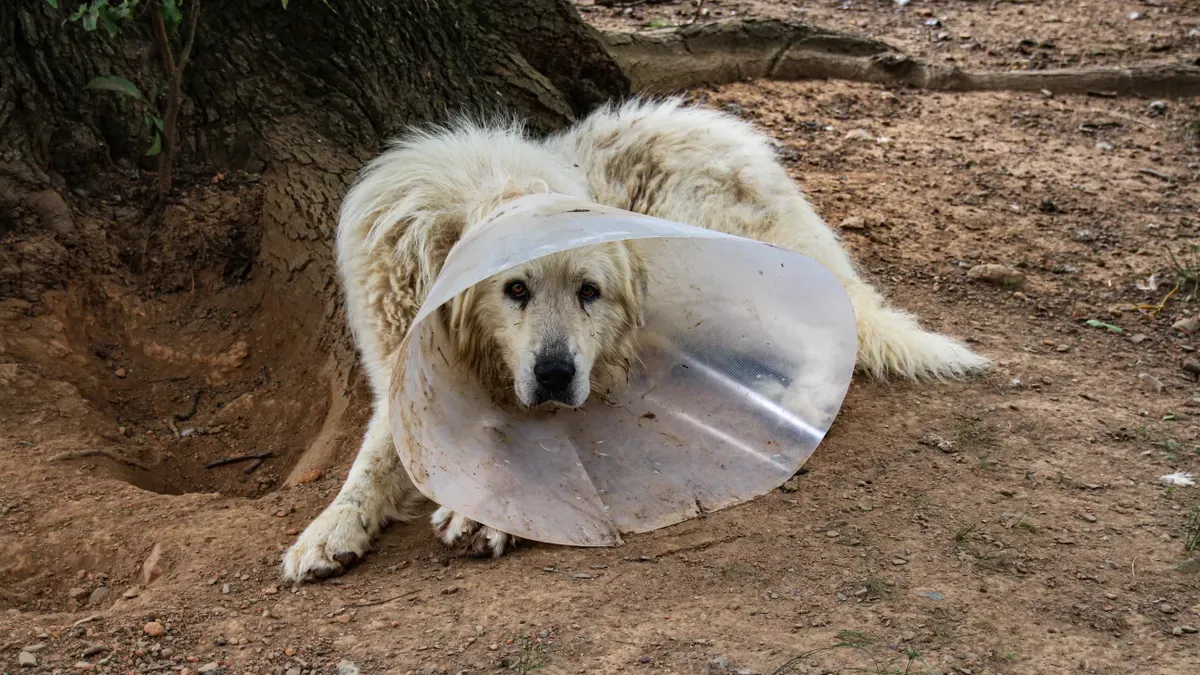
A dog with an ACL tear shifts weight off the leg. The knee drifts. The dog compensates, and the compensation itself starts wearing on other joints. A leg brace for dog ACL injury is not a cast. It does not immobilize the knee. What it does—when the design gets the details right—is resist the specific motion that stresses the torn ligament while leaving the rest of the leg free to move.
Two design details determine whether a brace does that job or becomes an expensive sleeve: hinge alignment and strap configuration. Everything else—padding, liner material, shell shape—is secondary to these two.
Hinge Alignment: Why Joint Axis Tracking Determines Whether Support Works
The hinge is the centerpiece. Not the straps. Not the padding. The hinge.
A dog's stifle does not flex on a simple door-hinge axis. The femoral condyles roll and slide on the tibial plateau through a changing center of rotation. A single-pivot hinge approximates that motion. How well it approximates it separates a brace that stabilizes from one the dog fights.
Here is the causal chain. The hinge sits lateral to the knee joint. When the dog flexes the stifle, if the hinge pivot aligns with the joint's instantaneous center of rotation, the brace frame moves with the leg. The force the brace applies travels along the mechanical axis of the limb—straight through the joint surfaces. The dog feels support, not resistance. Joint surfaces load evenly. Gait stays natural.
Shift that pivot a half-inch forward or back, and the arc the brace describes no longer matches the arc the joint describes. Every flexion cycle creates a shear force between the brace and the leg. The brace fights the dog's natural motion. The straps take that shear load. They stretch. The brace migrates down the leg within minutes. The dog limps—not from the injury, but from the brace.
This is why hinge placement, not strap tightness, determines whether a brace stays put during a walk. Tightening straps to compensate for a misaligned hinge concentrates pressure into narrow bands. The brace still migrates. It just leaves rub marks on its way down.
A brace hinge that tracks the joint axis transforms external support from a static constraint into a dynamic stabilizer—the brace moves with the leg through its range of motion, maintaining consistent support through every degree of flexion.
Hinge designs also differ in how they limit extension. Some use a rigid mechanical stop. Others use progressive dampening that increases resistance through the terminal range. The stop type matters less than whether the stop angle matches the injury stage. A brace that blocks the last 10 degrees of extension protects a healing partial tear by preventing tibial translation at full extension—the position where the CCL is under maximum tension. That same brace on a dog that needs full extension for quadriceps maintenance works against rehabilitation. Same design feature. Different condition. Opposite effect.
After a 10-minute walk, mark the brace's position relative to a bony landmark—the tibial tuberosity or the lateral fabella. Walk another 10 minutes. If the brace has shifted more than a quarter-inch, either the hinge axis is off relative to this dog's joint, or the strap configuration is failing to counter migration. Tightening is not the fix. Repositioning is.
Strap Layout: Force Distribution, Not Tightness, Decides Comfort and Fit
Most brace discomfort comes from how force enters the leg, not how much force is applied.
A single narrow strap above and below the knee concentrates the brace's stabilizing force into two thin bands. The pressure under those bands is high. Skin reddens. The dog licks. The owner loosens the straps. The brace slips. This cycle—tight, irritate, loosen, slip—is the most common reason braces fail in daily use.
A multi-strap configuration with broad contact patches changes the physics. The same total restraining force, spread over three to four times the surface area, cuts peak pressure proportionally. The skin tolerates it. The brace maintains functional tension without triggering the dog's impulse to chew it off. Dog knee braces built with this distributed-strap design tend to stay in service longer because the dog accepts them.
Strap angle matters too. A strap wrapped perpendicular to the limb resists longitudinal migration—the brace sliding down. A strap angled 15 to 20 degrees off perpendicular adds a rotational constraint, resisting the twist that occurs when a dog with a torn CCL pivots on the injured leg. Most off-the-shelf braces use perpendicular straps exclusively. The angled configuration is harder to execute in standardized sizing because the optimal angle depends on leg length and girth. But when it fits, it adds a control dimension perpendicular-only designs cannot match.
Choosing the strap configuration for a given dog means matching strap count and width to leg circumference and coat type. A thin-coated Greyhound needs wider straps to distribute pressure across less natural padding. A thick-coated Labrador can tolerate narrower straps but needs more frequent cleaning of the contact surfaces.
After 20 minutes of brace wear, remove it and run your hand over the skin where the straps sat. The skin should feel warm but not hot. There should be no indentations persisting more than 30 seconds after removal. If indentations linger, peak pressure under the straps is too high—either the strap width is insufficient for this dog's leg circumference, or the tension needs incremental reduction.
Where a Leg Brace Helps—and Where It Hits Its Limits
A leg brace for dog ACL injury works within a specific condition envelope. Outside that envelope, it becomes a management tool at best.
Partial tears, early-stage. The ligament is damaged but not severed. Enough intact fibers remain to maintain baseline joint stability. The brace offloads tension so the dog can bear weight without the tibia translating forward excessively. This is where external stabilization aligns best with natural healing—the remaining ligament fibers stay in tension, and the brace prevents the overload that would rupture them.
Dogs that cannot go under anesthesia. Age, cardiac conditions, or airway anatomy can make surgery too risky. A brace becomes the primary mechanical support. The expectation shifts: not “heal the ligament” but “stabilize the joint enough for the dog to walk without pain.” Dog ACL CCL braces designed for extended daily wear address this scenario with liners that prioritize skin tolerance over athletic performance.
Post-surgical protection. After a TPLO or TTA, the bone needs time to integrate. The implant handles internal stability. A brace adds external protection against the one wrong twist—the slip on a hardwood floor, the sudden pivot when a squirrel runs past—that could overload the healing osteotomy. Braces used post-surgically function as a guard rail, not a load-bearing structure.
Where a brace does not help mechanically: a complete rupture in a young, active, large-breed dog that sprints and cuts hard. The forces generated during high-speed turns exceed what external bracing can counteract. The brace becomes a proprioceptive cue—the dog feels it and moderates movement—but it is not mechanically restraining tibial translation under peak load. In this scenario, dog braces serve best as part of a broader management plan that includes strict activity restriction, not as a standalone solution.
Disclaimer: The checks described here assume a short-coated dog where skin and brace position are visible. Double-coated breeds—Huskies, Malamutes, Chow Chows—need hand-checking rather than visual inspection because the undercoat obscures rub marks and brace migration. Run your fingers under every strap edge after each wear session. What you cannot see can still cause a pressure sore that takes weeks to heal.
Daily Checks That Signal the Brace Is Working
Mechanical observations. Not medical judgments. Any owner can make them.
The dog places the foot flat rather than toe-touching. Weight-bearing symmetry improves—watch from behind as the dog walks; the hips rise and fall evenly, not dipping to one side. The dog transitions from sit to stand without the exaggerated rocking motion that signals avoidance of loading the bad leg. These are signs the brace is functioning.
The dog licks at one specific strap site repeatedly. The brace has rotated so the hinge no longer points at the joint line. A new limp appears that was absent before brace use—this often means the brace is pressing on a bony prominence the padding should protect. These are signs the brace needs adjustment.
Neoprene liners with perforations address a related problem: moisture. A solid sleeve traps heat and sweat against the skin. Over hours of wear, the skin macerates—softens, weakens, becomes prone to abrasion. Perforated neoprene lets vapor escape while the foam structure still cushions. The trade-off: perforations are initiation points for tears if the dog scratches at the brace. A well-designed liner uses denser foam at edge zones and more open perforation in the center panel. Different material behavior in different regions of the same liner. This is invisible in product photos. Obvious after a week of daily use. Daily monitoring of brace fit catches liner degradation before it becomes a skin problem.
When a mechanical observation repeats for two days, adjust the fit. When it persists after adjustment, the brace-leg match needs reassessment.
FAQ
Can a dog wear the brace during walks?
That is when the brace does its primary work. The stabilizing force counters anterior tibial translation during weight-bearing—the exact moment the torn ligament needs external help. Off-walk wear is supplementary and depends on the dog's resting posture and tendency to move around the house.
How long each day?
Start with 15-to-20-minute sessions. Increase by 10-minute increments every two to three days as long as the skin checks come back clean. Most dogs plateau at 4 to 6 hours of cumulative daily wear. The limiting factor is skin tolerance, not the dog's willingness to keep the brace on.
How do you clean the brace?
Wipe the liner with a damp cloth after each use. Sweat salts crystallize in the foam and become abrasive—that is what causes the gradual skin irritation that appears days after a seemingly good fit. Let the brace air-dry fully before the next session. Machine washing degrades the hinge mechanism and the adhesive bonds between Neoprene layers.
What tells you the brace is not the right solution?
Three signals. The dog refuses to stand with the brace on but walks willingly without it. Skin breakdown recurs at the same site after three fit adjustments. Lameness worsens week over week despite consistent brace use. These are not design failures. They are condition mismatches—the brace is mechanically sound but the use case is wrong.
0 Comments