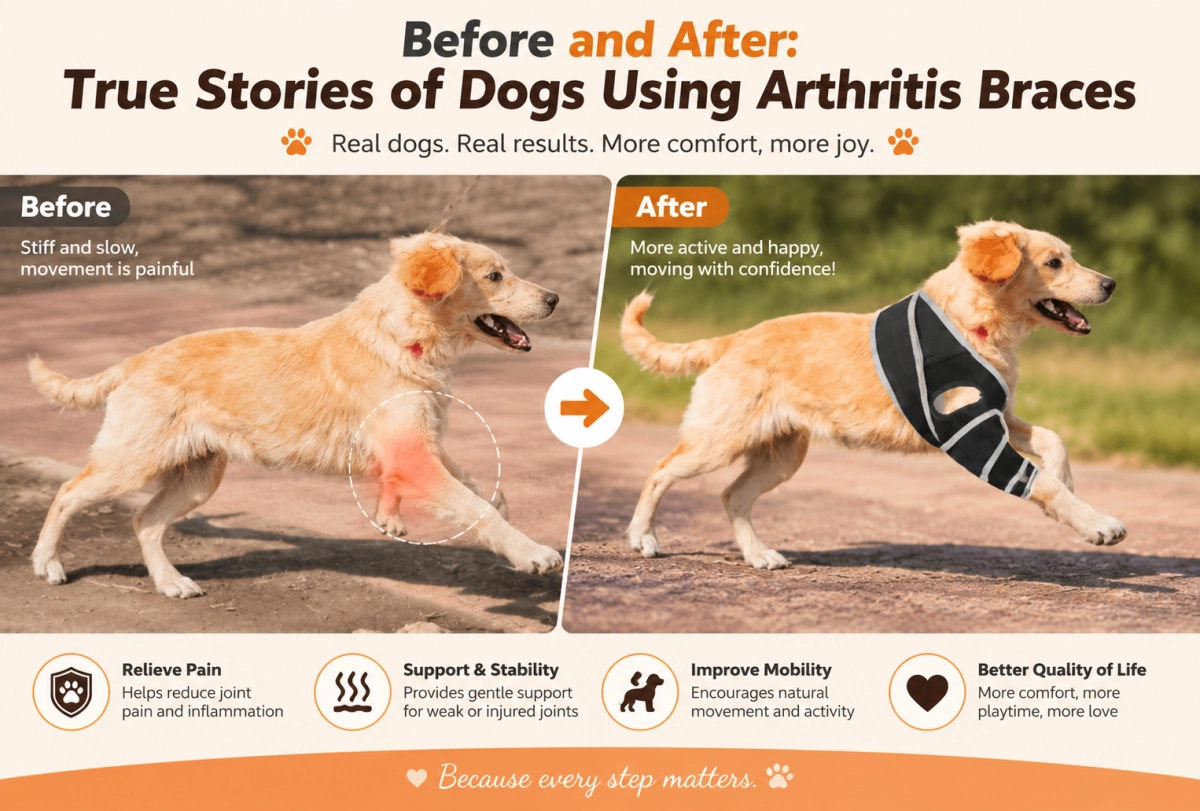
Have you ever wondered if dog braces for arthritis could give your best friend a new lease on life? You might feel unsure or even a little skeptical. Real stories from other pet owners can help you see what’s possible for your dog, no matter their age or breed.
Key Takeaways
-
Dog braces for arthritis can really help your dog feel better. They lower pain and help your dog move more easily.
-
Getting a custom brace is fast and simple. It usually takes only a few minutes. The brace will fit your dog very well.
-
To help your dog get used to the brace, start with short times wearing it. Give your dog treats to make it fun. Always check if the brace feels good and fits right.
How Dog Braces for Arthritis Help
What Are Dog Braces for Arthritis?
Dog braces for arthritis are special supports designed to help your dog’s joints work better. You can find different types for different needs. Some braces support the front legs, like the carpal or elbow. Others help the back legs, such as the knee or hock. There are also hip and back braces for dogs with hip or spine problems. These braces use advanced materials like memory foam, gel pads, and lightweight composites. They fit snugly and give your dog the support they need to walk, run, or even play again.
Tip: Braces don’t just help with pain—they also keep your dog’s joints stable and encourage healing.
Benefits for Senior and Arthritic Dogs
If your dog is older or has arthritis, you know how tough it can be to watch them slow down. Dog braces for arthritis can make a big difference. They reduce pain, improve stability, and help your dog move with more confidence. Many owners notice their dogs become more active and playful after getting a brace. Take a look at some of the main benefits:
| Benefit |
Description |
|---|---|
| Pain Reduction |
Many dogs experience decreased discomfort when wearing braces. |
| Enhanced Stability |
Braces support weakened joints, helping dogs maintain proper posture. |
| Healing Promotion |
Stabilizing injuries can accelerate recovery and reduce inflammation. |
| Improved Mobility |
Dogs walk and play more freely, even with arthritis. |
| Better Posture |
Braces help distribute weight evenly, easing strain on joints. |
Fitting and Customization Process
Getting a custom-made brace for your dog is easier than you might think. The process usually starts with a visit to your vet or a bracing specialist. They will take a quick cast of your dog’s leg while your dog enjoys some treats. The cast helps create a brace that fits perfectly. Most braces are ready in about two weeks. Once your dog tries it on, you’ll see them stand taller and move with less pain. Braces are a non-surgical option, which is great for senior dogs or those who can’t have surgery. You get to help your dog feel better without a long recovery time.
Real-Life Stories: Before and After
Dog Knee Braces: Dobermann’s Severe Arthritis Case
Imagine your dog struggling to stand up each morning. That was life for a 9-year-old Dobermann with severe arthritis in her knee. She limped, avoided stairs, and spent most days lying down. Her family tried everything, but nothing worked. The vet suggested a custom knee brace as a last hope.
The fitting process felt simple. The specialist took a quick cast of her leg, making sure she stayed comfortable with treats and gentle words. Two weeks later, the brace arrived. The Dobermann wore it with ease. You could see her confidence grow. She started using her leg again. After a few months, she walked farther and even played in the yard. Her owners said she seemed happier and more like her old self. This is one of those dog braces for arthritis stories that shows how much life can change.
Elbow Brace for Arthritis: Labrador’s Journey
Labradors love to run and play, but arthritis can slow them down. One Labrador struggled with pain in his front leg. He limped and avoided his favorite games. His family decided to try an elbow brace for arthritis.
The vet measured his leg and made a custom brace. When he first wore it, he moved slowly. After a few days, he adjusted. Soon, his family noticed big changes. Here’s what they saw:
| Improvement Type |
Description |
|---|---|
| Reduced Swelling |
Less inflammation in the joint, so he felt more comfortable. |
| Improved Mobility |
He wanted to walk, run, and play again. |
| Increased Confidence |
He showed more energy and joined in family activities. |
| Enhanced Stamina |
He played longer without getting tired. |
| Better Quality of Life |
He seemed happier and more active every day. |
His owners felt amazed by his progress. They said the brace gave him a second chance at a happy, active life.
Small Breeds: Matipoo and Sheltie Successes
Small dogs can struggle with arthritis, too. A Matipoo named Daisy started limping at age ten. She stopped jumping on the couch and needed help with stairs. Her vet recommended a lightweight brace. Daisy’s family watched her carefully as she tried it on. At first, she hesitated. After a week, she moved with more ease. She even chased her favorite ball again.
Franny, a Sheltie rescued from a puppy mill, faced even bigger challenges. Years of poor care left her with twisted front legs and painful arthritis. Her vet team created custom prosthetics for her. When Franny stood up in her new braces, she looked proud. She walked upright and explored her yard for the first time. Her family called it a miracle. These success stories remind you that dog braces for arthritis can help dogs of all sizes.
German Shepherd: Hinged Knee Brace Recovery
A German Shepherd named Max injured his knee while playing fetch. He limped and avoided putting weight on his leg. Surgery felt risky because of his age. His vet suggested a hinged knee brace. The fitting took only a few minutes. Max wore the brace during walks and playtime.
Within weeks, Max walked with less pain. He even started running short distances. His family felt relieved to see him happy again. They said the brace gave him back his freedom.
Owner Insights and Emotional Impact
You might wonder what other dog owners think about these braces. Many owners reported improved mobility in their dogs. They noticed a reduction in lameness. Dogs seemed more comfortable and eager to move. Here’s what you might hear from families:
-
“My dog walks farther than ever before.”
-
“He doesn’t limp anymore.”
-
“She seems so much happier and playful.”
Dog braces for arthritis do more than support joints. They bring hope and joy back to families. These success stories show that with the right support, your dog can enjoy life again.
Lessons and Tips from Owner Stories
Common Timelines for Improvement
You probably want to know how soon you’ll see changes after your dog starts using a brace. Many owners notice small improvements in the first few weeks. For example, an 11-year-old Beagle named Beans showed real progress within six weeks of wearing a hinged brace. Some dogs may take a little longer, but most families see their pets move easier and act happier within one to two months.
Improvement can depend on your dog’s age, breed, and weight:
-
Senior dogs often show faster progress because their joints have more damage.
-
Large breeds may take longer to adjust since their joints carry more weight.
-
Overweight dogs sometimes face more severe symptoms and need extra time to improve.
Tips for Success with Dog Braces
You can help your dog get the most out of their new brace by following a few simple steps:
-
Start slow. Let your dog wear the brace for 10-15 minutes at first, then add more time each day.
-
Use treats and praise. Make wearing the brace a fun experience.
-
Check your dog’s skin every day for redness or irritation.
-
Clean the brace weekly with mild soap and water.
-
Try gentle activities like swimming or walking on soft grass.
-
Ask your vet about joint supplements for extra support.
Daily routines matter, too. Always check the fit, keep the area clean, and watch for any signs of discomfort. Regular checkups help keep the brace working as a reliable mobility solution.
Challenges and Limitations
You might run into a few bumps along the way. Some dogs need several fittings to get the brace just right. Others may resist wearing it at first or feel uncomfortable. Sometimes, braces can slip or cause skin irritation. If this happens, try adding padding, adjusting the fit, or giving your dog more time to adjust. Always keep the area under the brace clean and dry. Remember, patience and encouragement go a long way.
You’ve seen how dog braces can bring real change—less pain, more play, and a happier spirit. These braces boost your dog’s quality of life, especially for seniors. Always talk with your vet or a specialist to find the best fit. You can give your dog hope and comfort.
FAQ
How long should my dog wear the arthritis brace each day?
Start with 10-15 minutes. Add more time daily. Most dogs wear their brace during walks and playtime.
Can my dog sleep with the brace on?
No, you should remove the brace at night. This gives your dog’s skin a break and keeps them comfortable.
Will my dog need time to get used to the brace?
Yes! Most dogs need a few days to adjust. Use treats and praise to help your dog feel good about wearing it.
0 Comments