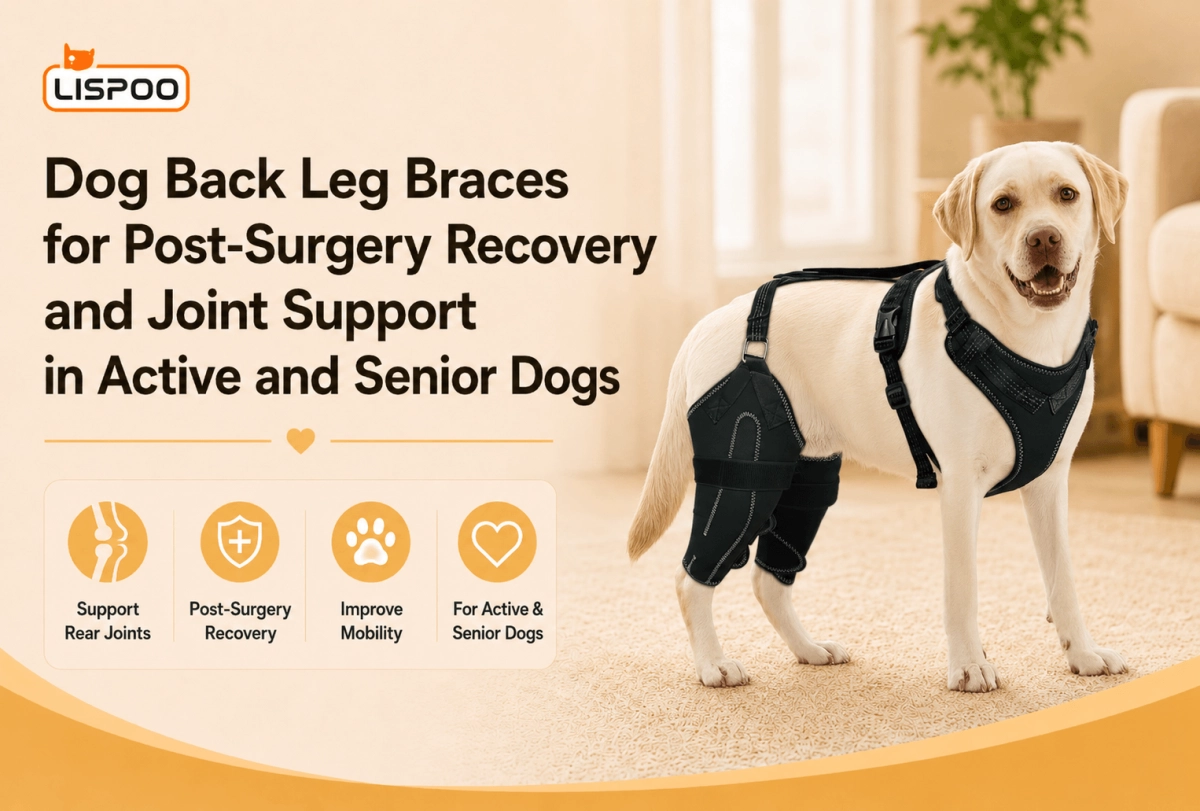
Dog back leg braces help your dog move with greater comfort and stability. You can use them to support joint health and assist your dog after surgery. Many clinical studies, including research from the University of Tennessee, show that these braces reduce pain and improve mobility.
-
Dogs with arthritis often experience enhanced stability.
-
Braces can promote healing and ease discomfort for joint issues.
Key Takeaways
-
Dog back leg braces provide essential support for recovery after surgery, helping your dog regain mobility and comfort.
-
Braces can reduce pain and improve stability for dogs with joint issues, allowing them to move with confidence.
-
Always consult your veterinarian before choosing a brace to ensure it fits your dog's specific needs and condition.
-
Monitor your dog's comfort and adjust the brace as needed to prevent irritation and ensure proper fit.
-
Gradually increase the time your dog wears the brace to help them adjust and improve their mobility safely.
What Are Dog Back Leg Braces?
Dog back leg braces are special supports that help your dog walk, run, and play with less pain. You use these braces to keep your dog’s joints steady and safe. They fit around the back legs and give extra help when your dog has trouble moving. Many owners choose these braces for dogs who have weak legs, joint pain, or need help after surgery.
How Dog Back Leg Braces Work
Dog back leg braces work by holding your dog’s joints in the right position. This support keeps the leg steady and helps your dog move without hurting more. The braces use different materials to make sure your dog feels comfortable and safe. Here is a table that shows some common materials and how they help:
| Material Type |
Effect on Comfort |
Effect on Durability |
|---|---|---|
| Carbon Fiber |
Lightweight, helps your dog move |
Very strong, does not wear out easily |
| Specialized Plastics |
Flexible, lowers pressure on the leg |
Tough, stands up to daily use |
| Advanced Composites |
Can be shaped for a better fit |
Gives support for a long time |
| Neoprene |
Stops skin irritation and keeps cool |
N/A |
| Breathable Fabric |
Keeps the dog cool |
N/A |
| Soft Padding |
Provides gentle support |
N/A |
| Rigid Materials |
Helps with serious injuries |
N/A |
You will notice that these braces do more than just hold the leg. They keep joints steady, reduce pain, and let your dog move with more confidence. Some braces allow a little movement, so your dog can walk and stretch without feeling stiff.
Common Conditions Supported by Dog Back Leg Braces
You can use dog back leg braces for many health problems. Here are some common reasons:
-
Cruciate ligament (CCL) injuries
-
Hip dysplasia
-
General back end weakness
-
Carpal and tarsal injuries
-
Knee sprains
-
Degenerative joint disease
-
Post-surgery recovery
If your dog has any of these problems, a brace can help make daily life easier. You should always talk to your veterinarian before choosing a brace for your dog.
Benefits of Dog Back Leg Braces for Post-Surgery Recovery
Supporting Healing and Rehabilitation
You want your dog to heal quickly and safely after surgery. Dog back leg braces help your pup recover by providing steady support to weak or injured joints. When you use a brace, your dog can move with less pain and more confidence. This support lets your dog regain mobility and comfort during the healing process.
-
Braces stabilize the leg and keep joints in the correct position.
-
Your dog experiences less discomfort and can walk more easily.
-
Braces help your dog return to normal activities faster.
Many owners notice improvements in their dog's movement and pain levels. Clinical studies show that braces increase the ability of the affected limb to bear weight. You can see this in the table below:
| Measurement |
Unaffected Limb TPI% |
Affected Limb TPI% |
|---|---|---|
| Baseline |
21.6% (range: 14.6%–25.7%) |
13.4% (range: 7.3%–18.8%) |
| Without Orthotic (90+ days) |
22.1% (range 19%-25.3%) |
15.5% (range 11.7%-18.9%) |
| With Orthotic |
21.3% (range 17.7%-24.9%) |
18.5% (range 13.9%-22.1%) |
Your dog’s affected limb shows a 5.1% increase in TPI% with a brace compared to the initial appointment. This means your dog can put more weight on the healing leg. Owners report that their dogs move better and feel less pain.
Tip: You should always follow your veterinarian’s advice when using a brace for post-surgery recovery. This ensures your dog gets the best support and avoids complications.
Reducing Strain and Preventing Re-Injury
You want to protect your dog from further injury during rehabilitation. Dog back leg braces limit harmful motion and keep the leg stable. This reduces strain on healing tissues and helps prevent setbacks.
-
Braces support the knee joint and control movement.
-
Your dog feels pain relief and can bear weight on the injured limb.
-
Braces help your dog avoid slips and falls during recovery.
When you use a brace, your dog gains confidence and stability. The brace acts as a shield, letting your dog move safely while healing. You can see your dog take steadier steps and enjoy short walks without fear of re-injury.
Note: You should monitor your dog’s progress and check for signs of discomfort. If you notice any problems, contact your veterinarian right away.
Dog back leg braces offer valuable support for healing and rehabilitation. You help your dog recover faster and reduce the risk of new injuries by using the right brace.
Dog Back Leg Braces for Joint Support in Active and Senior Dogs
Enhancing Mobility for Active Dogs
You want your active dog to enjoy walks, runs, and playtime without pain or risk of injury. Dog back leg braces help your dog stay strong and confident during movement. These braces support the joints and muscles, making each step safer and more comfortable. You can see your dog move with more energy and less hesitation.
Dog back leg braces offer several benefits for athletic or working dogs:
-
Limited range of motion prevents hyperextension and abnormal movements. Your dog can walk and run with normal flexion.
-
Stability during healing allows damaged tissues to recover without restricting all movement.
-
Support for weak structures helps dogs with chronic instability or arthritis stay active.
-
Pain reduction comes from compression and limiting painful movements. Your dog feels more willing to use the limb.
-
Many owners share stories about their dogs. Sabrina’s 12-year-old Shepherd/Husky mix uses multiple braces and enjoys long hikes and walks comfortably.
Tip: You should introduce the brace gradually. Start with short sessions and watch your dog’s response. If your dog shows more confidence and steadier steps, you know the brace is helping.
Improving Comfort and Stability for Senior Dogs
Senior dogs often struggle with joint pain, weakness, or arthritis. You want your older dog to feel comfortable and safe during daily activities. Dog back leg braces provide gentle support and stability, making it easier for your dog to stand, walk, or rest.
Studies show that braces help senior dogs in several ways. You can see the findings in the table below:
| Evidence Type |
Findings |
|---|---|
| Short-term benefits of braces |
Improved weight-bearing and reduced limp and pain while wearing the brace |
| Limitations |
Long-term stabilization without surgery is uncertain; improvements often decrease when the brace is removed |
| Size-related outcomes |
Conservative treatment tends to succeed more in small dogs than large dogs |
You notice your dog puts more weight on the affected leg and limps less when wearing the brace. Small dogs often respond well to conservative treatment with braces. Large dogs may need extra support or guidance from your veterinarian.
Note: You should check your dog’s skin and movement every day. Look for redness, swelling, or signs of discomfort. If you see any problems, contact your veterinarian for advice.
Dog back leg braces help both active and senior dogs enjoy better mobility and comfort. You give your dog the chance to move safely and confidently, whether your pup loves adventure or prefers gentle walks.
Types of Dog Back Leg Braces
You can find several types of dog back leg braces to help your dog move better and feel less pain. Each type supports a different part of the rear leg. Here are the most common types you will see:
-
Knee brace or stifle brace
-
Tarsal or hock brace
-
Hip brace
Knee Braces for Rear Leg Support
Knee braces give support to your dog's knee joint. You use these braces when your dog has injuries like ACL tears or ligament problems. The brace holds the knee steady but still lets your dog bend the leg a little. This helps your dog walk, stand, and play with less pain. Many dogs with knee injuries feel more confident when wearing a knee brace.
Tip: You should measure your dog's leg carefully to get the right fit for a knee brace.
Hock Braces for Ankle and Lower Leg Stability
Hock braces focus on the lower part of your dog's back leg. These braces help when your dog has problems like hock hyperextension or soft tissue injuries. The hock brace keeps the ankle joint steady and stops it from moving the wrong way. You will notice your dog walks with more balance and less wobble. Hock braces work well for dogs who drag their feet or have weak ankles.
| Brace Type |
Main Support Area |
Common Uses |
|---|---|---|
| Knee Brace |
Knee joint |
ACL tears, ligament injury |
| Hock Brace |
Ankle/hock joint |
Hyperextension, weakness |
Full Rear Leg Braces for Multi-Joint Support
Full rear leg braces cover more than one joint. You use these braces when your dog needs support for both the knee and hock, or even the hip. These braces help dogs with complex injuries or severe weakness. A full rear leg brace gives strong support and helps your dog stand and move safely. You may see your dog take steadier steps and show more interest in daily walks.
Dog back leg braces come in many shapes and sizes. You can choose the best type based on your dog's needs and your veterinarian's advice.
Custom vs. Off-the-Shelf Dog Back Leg Braces
You face an important choice when selecting a dog back leg brace. You can choose a custom brace or an off-the-shelf brace. Each option offers unique benefits for your dog’s recovery and comfort.
Custom Dog Back Leg Braces
Custom braces fit your dog’s leg exactly. You work with your veterinarian or a specialist to measure your dog’s limb. The brace is made just for your dog. Custom braces help dogs with unusual leg shapes, severe injuries, or complex joint problems. You see a better fit and more targeted support.
Off-the-Shelf Dog Back Leg Braces
Off-the-shelf braces come in standard sizes. You can buy these braces online or at pet stores. You measure your dog’s leg and pick the size that matches. Off-the-shelf braces work well for mild injuries, arthritis, or general weakness. You get quick access and easy use.
Here is a table to help you compare both options:
| Feature |
Custom Braces |
Off-the-Shelf Braces |
|---|---|---|
| Fit |
Exact, tailored |
Standard, adjustable |
| Support Level |
High, specific |
Moderate, general |
| Time to Receive |
Longer (weeks) |
Faster (days) |
| Cost |
Higher |
Lower |
| Best For |
Complex cases |
Mild to moderate cases |
Tip: You should ask your veterinarian which brace suits your dog’s needs. Custom braces help with severe injuries or unique leg shapes. Off-the-shelf braces work well for common conditions.
You want your dog to feel comfortable and safe. Custom braces offer the best fit, but off-the-shelf braces give you quick support. You can start with an off-the-shelf brace and switch to a custom brace if your dog needs more help.
You help your dog move better by choosing the right brace. You support healing, comfort, and confidence every step of the way.
Pros and Cons of Different Dog Back Leg Braces
Advantages and Drawbacks of Knee Braces
You can use knee braces to help your dog recover from injuries or surgery. These braces keep the knee steady and stop strange movement. They also lower swelling and help blood move better. Many dogs walk better and feel less pain when wearing a knee brace. Custom knee braces fit your dog’s leg shape, giving targeted support. Most owners see their dogs limp less and move easier after using a custom brace.
Here is a table showing the main advantages and drawbacks of knee braces:
| Advantages |
Disadvantages |
|---|---|
| Stabilization Features: The aluminum splint reduces movement, aiding in pain relief. |
Sizing Issues: Some users found the sizing chart confusing. |
| Ergonomic Design: Made from neoprene, ensuring comfort and flexibility. |
Color Limitations: No option to choose between the displayed colors. |
| Durability: Built to withstand the rigors of daily dog activities. |
Positional Issues: Some users reported that the brace tends to move or slide during activity. |
| Versatility: Suitable for a range of conditions beyond knee injuries. |
Positional Issues: Some users reported that the brace tends to move or slide. |
Tip: You should measure your dog’s leg carefully and check the brace often to make sure it stays in place.
Advantages and Drawbacks of Hock Braces
Hock braces support your dog’s ankle and lower leg. You use these braces for ligament and tendon injuries, arthritis, or after surgery. Hock braces help your dog walk with more balance and less pain. They also enhance mobility for chronic conditions.
Here is a table showing the pros and cons of hock braces:
| Pros of Hock Braces |
Cons of Hock Braces |
|---|---|
| Support for ligament and tendon injuries |
Need for proper fitting |
| Post-surgical support |
Potential discomfort if not fitted correctly |
| Relief for arthritis |
|
| Enhanced mobility for chronic conditions |
Note: You should make sure the hock brace fits well. If the brace feels uncomfortable, your dog may not want to walk.
Advantages and Drawbacks of Full Rear Leg Braces
Full rear leg braces cover both the knee and hock joints. You use these braces for dogs with severe weakness or complex injuries. These braces give strong support and help your dog stand and move safely.
Advantages:
-
Multi-joint support helps dogs with several leg problems.
-
Steadier steps and improved balance.
-
Useful for dogs with hip, knee, and ankle issues.
Drawbacks:
-
May feel bulky for some dogs.
-
Requires careful fitting and adjustment.
-
Dogs may need time to get used to wearing the brace.
You should watch your dog closely when using a full rear leg brace. If your dog moves better and feels comfortable, the brace is working well.
How to Choose the Right Dog Back Leg Brace
Factors to Consider: Size, Activity Level, and Condition
You want your dog to get the best support possible. Choosing the right brace starts with understanding your dog's needs. Look at these important factors:
-
Specific Injury or Condition: Pick a brace that matches your dog's problem, such as arthritis, ligament injury, or hip weakness.
-
Severity of the Injury: Dogs with serious injuries need stronger support. Mild cases may only need light bracing.
-
Dog's Size and Breed: Make sure the brace fits your dog's body shape and size. A proper fit prevents slipping and discomfort.
-
Age and Activity Level: Older dogs often benefit from braces to ease pain and avoid surgery. Active dogs may need braces that allow more movement.
Tip: Always measure your dog's leg while standing. Use a soft tape to check thigh, knee, and hock sizes for the best fit.
Custom Fit vs. Adjustable Options
You have two main choices: custom-fit braces or adjustable, off-the-shelf braces. Each option offers unique benefits.
-
Custom Braces: These braces are made from molds of your dog's leg. You get a tailored fit and superior support. Custom braces work well for complex injuries or long-term needs.
-
Off-the-Shelf Braces: These braces are easy to buy and cost less. They fit most dogs and help with mild injuries or general weakness. The effectiveness depends on proper fit and regular use.
| Brace Type |
Fit Quality |
Support Level |
Best For |
|---|---|---|---|
| Custom |
Precise |
High |
Complex conditions |
| Off-the-Shelf |
Adjustable |
Moderate |
Mild to moderate cases |
Note: Custom braces often deliver better long-term results. Off-the-shelf braces are great for quick support and mild issues.
Consulting Your Veterinarian
You should always talk to your veterinarian before choosing a brace. Veterinarians assess your dog's health and injury. They recommend the best brace for orthopedic issues like arthritis or hip dysplasia. Your vet ensures the brace fits well and provides the right balance of support and flexibility. Too much support can weaken muscles. Too little support may not stabilize the joint. Your veterinarian helps you find the best option for your dog's recovery and comfort.
Callout: Consulting your vet helps you avoid mistakes and gives your dog the safest path to healing.
Comfort, Fit, and Effectiveness of Dog Back Leg Braces
Ensuring Proper Fit and Adjustment
You want your dog’s brace to work well and feel comfortable. Proper fit makes a big difference in how your dog moves and heals. When you put the brace on, check that it stays in place. The brace should not slip or rotate as your dog walks. Your dog should move freely without signs of pain or restriction. You should not see any rubbing or irritation on the skin. The brace must avoid putting too much pressure on any area. You will notice improved stability during movement if the brace fits correctly.
-
The brace remains securely in place without slipping or rotating.
-
Your dog can move comfortably, showing no signs of pain or restriction.
-
There is no excess pressure on the skin, preventing rubbing or irritation.
-
You observe improved stability during movement.
Tip: Always measure your dog’s leg while standing. Use a soft tape to check thigh, knee, and hock sizes for the best fit.
Monitoring Your Dog’s Comfort and Response
You need to watch your dog closely after fitting a back leg brace. Start with a gradual break-in period. Let your dog wear the brace for short sessions at first. Increase the wear time as your dog adjusts. Check your dog’s skin every day for irritation, sores, or swelling. Look for signs of discomfort, such as persistent rubbing or reluctance to turn. If your dog shows bunny hopping or avoids certain movements, the brace may need adjustment.
-
Gradually increase the wear time of the brace as your dog adjusts.
-
Monitor for signs of discomfort such as persistent rubbing, sores, or swelling.
-
Assess the dog's mobility and behavior for improvements like more even weight bearing and increased confidence.
-
Conduct regular skin checks, especially in the early days of wearing the brace.
-
Look for compensation behaviors like bunny hopping or reluctance to turn, which may indicate issues with the brace fit.
-
Pair the brace with appropriate exercise to enhance its effectiveness.
Most dog owners report satisfaction with back leg braces. Many see improved mobility, reduced lameness, and greater comfort in their pets. Owners who follow fitting guidance and work with their veterinarian often express higher satisfaction. About 88% of owners in one group said their dog had little or no lameness after brace treatment. You help your dog move better and feel more comfortable by monitoring fit and response.
Note: If you notice any skin issues or changes in movement, contact your veterinarian for advice.
Dog back leg braces help your dog move with less pain and more confidence. You give your dog better support for recovery and daily activity. Veterinary research shows that custom braces can improve comfort and mobility, especially for partial injuries or rehabilitation. Always choose a brace that fits well and matches your dog’s needs.
-
Watch your dog’s walking, weight-bearing, and comfort.
-
Increase brace use slowly and check for skin issues.
-
Ask your veterinarian for advice and regular fit checks.
With the right care, you help your dog enjoy a safer, happier life.
FAQ
How do you know if your dog needs a back leg brace?
You notice limping, weakness, or pain in your dog's rear legs. Your veterinarian can confirm if a brace will help. Braces support recovery from injury, surgery, or arthritis.
How long should your dog wear a back leg brace each day?
Start with short sessions of 15–30 minutes. Gradually increase wear time as your dog adjusts. Your veterinarian will guide you based on your dog's condition.
Can your dog walk, run, or play while wearing a brace?
Most dogs can walk and play with a brace. You should monitor activity and avoid rough play. Braces help your dog move safely and confidently.
How do you clean and care for a dog back leg brace?
Tip: Use mild soap and water to clean the brace. Air dry before reuse. Check for damage or wear. Inspect straps and padding regularly to keep your dog comfortable.
0 Comments