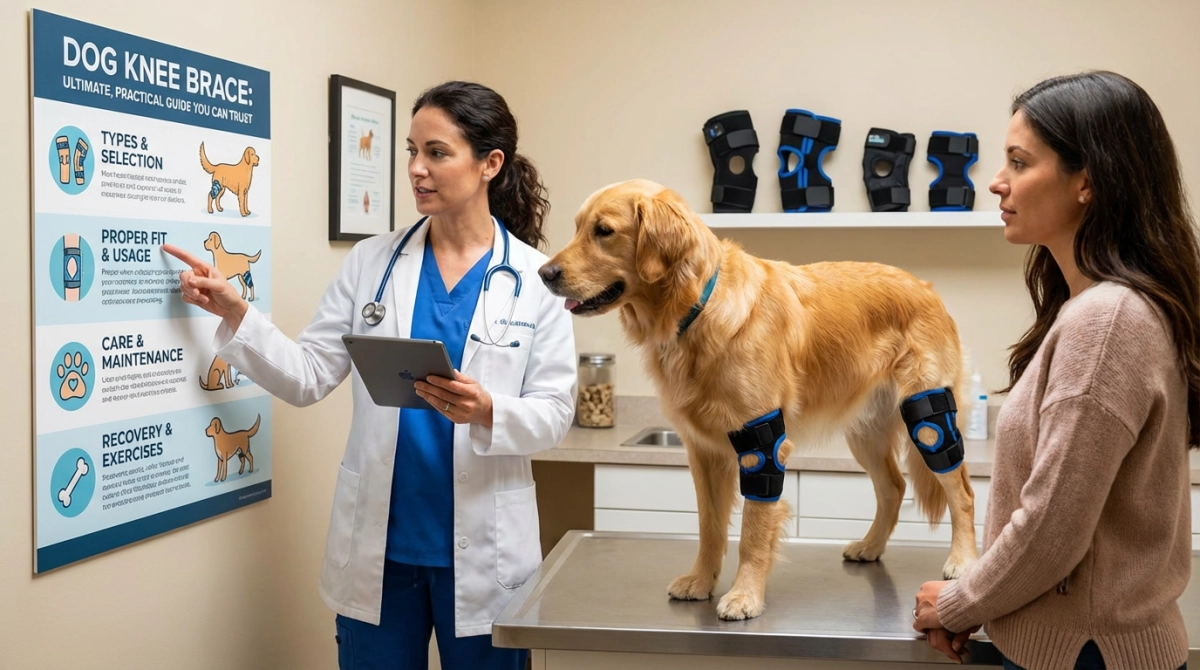
When a dog starts limping, avoiding stairs, or struggling to stand, knee pain is often the hidden cause. A dog knee brace can be a life-changing solution—offering stability, pain relief, and renewed mobility without immediately resorting to surgery. This guide is designed to help dog owners make confident, informed decisions using expert-backed, real-world knowledge.
Whether your dog is recovering from an injury, managing arthritis, or dealing with a torn ligament, this complete guide explains what dog knee braces are, how they work, and how to choose the right one—step by step.
What Is a Dog Knee Brace and How Does It Work?
A dog leg knee brace is an orthopedic support device designed to stabilize a dog’s stifle joint (the canine equivalent of the human knee). These braces are commonly used for dogs suffering from injuries such as cranial cruciate ligament (CCL) tears, patellar luxation, arthritis, or post-surgical recovery.
The brace works by:
-
Limiting excessive knee movement
-
Providing compression to reduce swelling
-
Supporting weakened ligaments and muscles
-
Encouraging proper joint alignment
Unlike medication, a dog knee brace addresses the mechanical cause of discomfort, not just the symptoms. When fitted correctly, it can significantly improve your dog’s quality of life.
Common Knee Problems in Dogs That Require a Brace
Understanding the condition helps you choose the right brace. The most common knee-related issues include:
Cranial Cruciate Ligament (CCL) Injury
Similar to an ACL tear in humans, this is one of the leading reasons dogs need knee support. Braces can help stabilize the joint, especially in partial tears or conservative (non-surgical) treatment plans.
Patellar Luxation
This condition causes the kneecap to slip out of place. Mild cases often benefit from consistent brace support to keep the joint aligned.
Arthritis and Degenerative Joint Disease
Senior dogs commonly experience stiffness and pain. A brace reduces strain during movement and helps maintain mobility.
Post-Surgical Recovery
After knee surgery, braces protect the joint while tissues heal, reducing the risk of reinjury.
Types of Dog Knee Braces Explained
Not all dog braces are created equal. Choosing the right type depends on your dog’s condition, size, and activity level.
Soft Support Knee Braces
-
Lightweight and flexible
-
Ideal for mild injuries and arthritis
-
Best for daily wear and comfort
Hinged Dog Knee Braces
-
Offer controlled range of motion
-
Recommended for ligament injuries
-
Provide stronger stabilization
Custom-Fit Orthopedic Braces
-
Tailored to your dog’s exact measurements
-
Higher cost but superior support
-
Often recommended by veterinarians
Wrap-Style Compression Braces
-
Easy to put on and remove
-
Good for swelling and mild instability
-
Less structural support than hinged options
Key Benefits of Using a Dog Knee Brace
Using a dog knee brace offers both immediate and long-term benefits:
-
�� Reduces pain and inflammation
-
�� Improves stability and balance
-
�� Prevents further joint damage
-
�� Supports healing without surgery
-
�� Enhances confidence and mobility
Many dogs show noticeable improvement within days when the brace is properly fitted and used consistently.
How to Choose the Right Dog Knee Brace
Selecting the correct brace is critical. Here’s what to consider:
1. Accurate Measurements
Measure your dog’s leg circumference, knee width, and thigh length. A poor fit can cause discomfort or worsen the injury.
2. Injury Severity
Mild strains may only need soft support, while ligament tears often require hinged or rigid braces.
3. Dog Size and Weight
Large breeds need durable materials and reinforced support, while smaller dogs benefit from lightweight designs.
4. Activity Level
Active dogs need braces that allow movement without slipping. Senior dogs may prioritize comfort over flexibility.
5. Vet Recommendation
Always consult your veterinarian before choosing a brace. Trusted veterinary guidance ensures safety and effectiveness. You can also learn more about canine joint health from authoritative resources.
How to Properly Fit and Use a Dog Knee Brace
A brace only works if it’s worn correctly.
Best practices include:
-
Introduce the brace gradually
-
Ensure snug but not tight fitting
-
Check for skin irritation daily
-
Remove the brace during rest unless advised otherwise
-
Clean the brace regularly
Consistency is key. Dogs typically adapt within a few days.
FAQs About Dog Knee Brace
1. Can a dog knee brace replace surgery?
In some cases, yes. For partial ligament tears or senior dogs, a brace may be an effective alternative. Severe injuries may still require surgery.
2. How long should my dog wear a knee brace each day?
Most dogs wear it during activity and remove it during rest. Follow your vet’s guidance.
3. Are dog knee braces comfortable for long-term use?
Yes, when properly fitted. High-quality materials and correct sizing prevent discomfort.
4. Can my dog run or play with a knee brace on?
Light activity is usually fine, but avoid high-impact play unless approved by your vet.
5. How long does it take to see results?
Many owners notice improvement within 1–2 weeks, depending on the condition.
6. Do dog knee braces work for arthritis?
Absolutely. They help reduce joint stress and improve daily mobility for arthritic dogs.
0 Comments