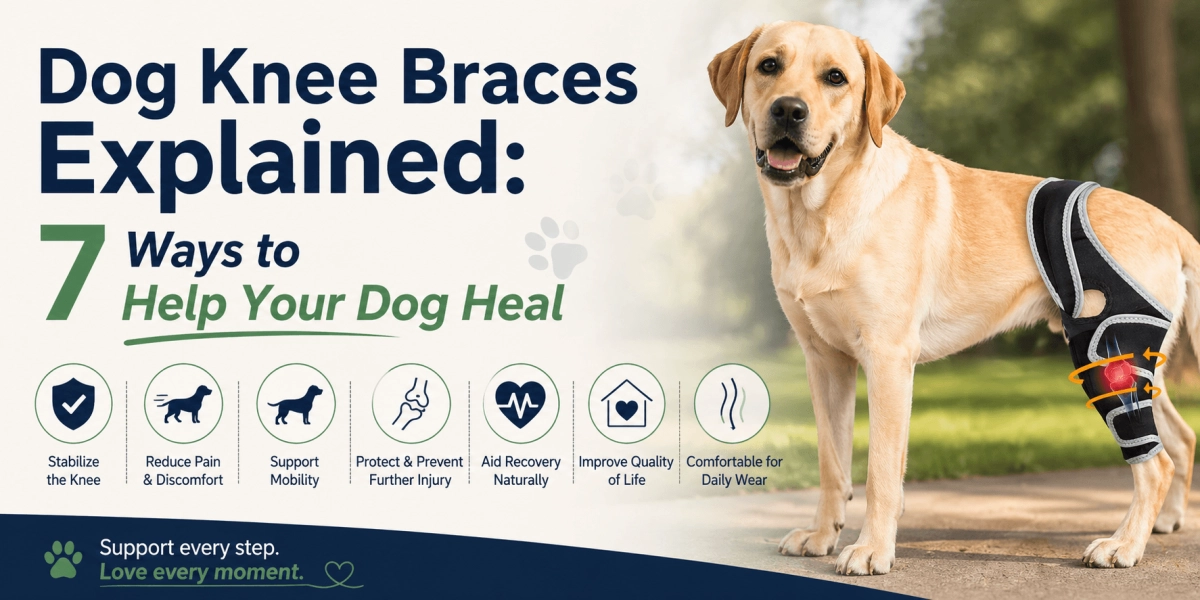
Dog knee braces can really help dogs with knee injuries. Your dog may not show signs right away. Most dog knee injuries happen slowly over time. Early support stops pain and keeps your dog active. Look at the table below. Vets say braces help healing and movement.
| Evidence Type |
Details |
|---|---|
| Expert Opinion |
"Braces can work well for healing and keeping movement," says Dr. Lisa Thompson, DVM. |
| Study Result |
Dogs with mild or moderate CCL injuries got braces and physiotherapy. They saw 82% better movement in 12 weeks. |
| Additional Findings |
Knee clicking and pain went down a lot. |
You have choices to help your dog heal.
Key Takeaways
-
Dog knee braces give important support to hurt dogs. They help dogs walk and play with less pain.
-
Dog braces for acl tear. They are a cheaper choice than surgery for older dogs.
-
Using a knee brace can stop more injuries. It keeps the joint steady and lowers stress on the knee.
-
Daily care and watching your dog's progress are very important. This helps your dog get better when using a knee brace.
-
Talk to your vet to pick the right brace. Make sure it fits your dog well and meets your dog's needs.
Can Dog Knee Braces Help?
Benefits for Injured Dogs
You want your dog to move without pain. Dog leg knee braces help your dog walk and play. Many dogs with knee injuries have trouble using their leg. Braces give support so your dog can stand and walk. You might see your dog limp less and look happier.
Here is what studies say about dog knee braces:
| Study |
Findings |
|---|---|
| Rosen et al. (2022) |
Dogs with custom stifle orthoses put more weight on their leg and moved better after a year. |
| Carr (2016) |
Braces helped dogs walk more evenly and stopped them from putting too much weight on one leg after three months. |
Braces do more than hold the knee. They stop other joints from getting hurt. Your dog can feel braver and enjoy walks again.
-
Many reports show braces help dogs use their leg and carry weight.
-
Custom braces often make a big difference in a few weeks or months.
-
Braces spread out pressure, so your dog does not hurt the other leg.
When Braces Are Effective
Dog knee braces work best in some cases. You might use a brace if your dog has a small ACL tear. Braces give support so the ligament can heal and stop more damage. Older dogs who cannot get surgery can still move with braces. If you want to skip surgery, braces cost less and do not need long healing.
Braces also help after surgery. They keep the knee steady and stop new injuries. You can use a dog knee brace to help your dog heal and keep the joint safe.
-
Small ACL tears: Braces help healing and stop more harm.
-
Older dogs: Braces help dogs move when surgery is not safe.
-
No surgery: Braces are safe and cost less.
-
After surgery: Braces keep the knee steady and stop new injuries.
Dog knee braces give weak joints the help they need. They lower stress and let your dog heal. You can see your dog move better and feel more comfortable.
Understanding CCL & ACL Injuries
What Causes Ligament Damage
You might wonder why your dog’s knee suddenly gives out or why they start limping. Ligament damage in dogs often happens for a few reasons. Sometimes, it’s a quick injury from running or turning too fast. Other times, the ligament gets weaker over months or years. Here are some common causes:
-
Sudden twists or turns while running or playing
-
Gradual wear and tear from repeated use
-
Aging of the ligament, which makes it less strong
-
Carrying extra weight, which puts more strain on the knee
-
Poor muscle tone or not enough exercise
-
Genetics—some dogs are just more likely to have problems
-
The shape of your dog’s legs and joints
-
Certain breeds, like Labradors or Rottweilers, have a higher risk
You can help your dog by keeping them at a healthy weight and making sure they get regular, gentle exercise. If you notice your dog slowing down, it could be the start of ligament trouble.
Signs and Risks
Dog knee injuries can sneak up on you. Your dog may act normal one day and limp the next. Watch for these signs:
-
Limping or using one leg less than the other
-
Not wanting to jump, run, or climb stairs
-
Stiffness after resting or lying down
-
Swelling or warmth around the knee
-
Clicking or popping sounds when your dog walks
-
Trouble getting up from sitting or lying down
-
Holding the leg up or not putting weight on it
-
Muscle shrinking in the sore leg over time
Some dogs sit with their leg stretched out to the side or shift their weight away from the sore leg. If you see any of these signs, your dog may have a knee injury. Dogs who are overweight, older, or very active have a higher chance of hurting their ligaments. Neutering before one year old can also raise the risk in some breeds.
Tip: Keep your dog’s living space safe. Use rugs or mats to help with traction and avoid slippery floors. This can lower the risk of knee injuries.
If you spot these signs early, you can get your dog the help they need before things get worse.
Dog Knee Braces in Recovery
How Braces Stabilize the Joint
If your dog hurts their knee, you want to help them move safely. Dog knee braces give extra support to the joint. They keep the knee steady and stop bad movements. This helps your dog walk and stand with less pain. Your dog may limp less and feel braver.
Here’s how dog knee braces help your dog heal:
| Benefit |
Description |
|---|---|
| Enhanced Stability |
Stops too much movement and helps healing. |
| Reduced Inflammation |
Keeps the knee lined up and lowers swelling. |
| Improved Mobility |
Makes walking and exercise easier and less painful. |
Braces do more than just hold the knee still. They help lower pain by keeping the joint in the right spot. This lets your dog move without hurting the knee more. Your dog gets a better chance to heal and stay active.
Role in Conservative Management
Not all dogs need surgery for a knee injury. Sometimes, your vet may suggest a dog knee brace as part of a plan. This means you use braces, rest, and gentle exercise to help your dog get better. Many families pick this for older dogs or dogs with health issues.
-
Braces can be part of a plan to help your dog heal.
-
They protect the knee during walks and play.
-
There is a risk of problems if your dog gets too active.
-
Jumping and turning can put more stress on the knee.
Dog knee braces help with stability and pain relief. They also stop new injuries and help after surgery. If your dog has knee pain, braces can make life safer and easier.
Tip: Always ask your vet before starting any new treatment. Your vet can help you choose if a brace is right for your dog.
7 Ways Dog Knee Braces Support Healing
Pain Relief
You want your dog to feel better fast. Best dog knee braces help with pain relief by giving steady support to the sore joint. When your dog wears a brace, it keeps the knee from moving in ways that hurt. This means less swelling and less limping. Many dogs start to walk easier and show less dog knee pain after using a brace.
-
A study found that dogs with custom braces put more weight on their leg and moved better.
-
Research shows that braces help dogs feel less discomfort and recover faster.
-
Dog knee braces provide adaptive support to the knee joint, which leads to pain relief and improved mobility.
You may notice your dog seems happier and more willing to play. That’s a big win for both of you.
Joint Stabilization
Dog knee braces do a great job at keeping the knee steady. When your dog has a ligament injury, the knee can slide or twist in ways that cause pain. Braces stop this by holding the bones in place. This helps your dog walk with more confidence.
-
Braces limit abnormal motion and reduce strain on damaged tissues.
-
They stabilize the tibia and femur, stopping the knee from sliding forward.
-
Braces lower joint loading and help your dog return to normal activity.
You give your dog targeted support tailored to the dog's needs. This makes healing safer and faster.
Post-Surgery Support
If your dog has surgery, you want the best recovery. Dog knee braces help after surgery by keeping the knee stable. This lets the body heal without extra stress.
-
Dogs using braces after surgery show better weight-bearing and less swelling.
-
Many dogs return to gentle walks sooner with a brace.
“Controlled stability after knee surgery significantly reduces stress on healing ligaments and cartilage, allowing the body to repair itself more efficiently.” – Dr. James Cook, DVM, PhD
Your dog gets back to normal life with less risk of hurting the knee again.
Non-Surgical Management
Not every dog can have surgery. Some dogs are older or have other health problems. Dog knee braces give you another way to help your dog heal. Custom-made braces work well for dogs who need a non-surgical plan. They give strong support, ease pain, and help your dog move better. Many vets now suggest braces for dogs who cannot have surgery or as part of a full recovery plan.
You can feel good knowing you have a safe option for your canine friend.
Improved Mobility
Dog knee braces help your dog walk, run, and play again. You may see your dog move with more energy and less fear. Braces make the knee steady, so your dog can use the leg without pain.
| Improvement Observed |
Description |
|---|---|
| Stabilization of the stifle |
Braces limit abnormal motion of the tibia, reducing strain on the CCL. |
| Improved limb function |
Studies show enhanced weight-bearing and functionality in dogs with braces. |
| Increased confidence |
Many dogs exhibit less limping and improved confidence in movement. |
| Measurable gait improvements |
Assessments over 4-12 weeks show significant gait improvements in brace-treated dogs. |
You help your dog enjoy walks and playtime again.
Preventing Further Injury
You want to keep your dog safe during healing. Dog knee braces protect the knee from more damage. They give support to weak joints and help stop small tears from getting worse.
-
Braces provide essential support to an unstable joint, reducing pain and helping your dog move better.
-
They take pressure off the injured area, making movement more comfortable.
-
Braces help prevent further damage, which can sometimes mean your dog does not need surgery.
-
They support a natural gait during recovery.
You lower the risk of new injuries and help your dog heal strong.
Comfort During Recovery
Comfort matters for your dog. Dog knee braces help your dog feel better during recovery. Many owners say their dogs walk better and limp less with a brace. Dogs often seem more relaxed and happy.
-
Owners report improved mobility and less lameness after using braces.
-
Many mention greater comfort for their dogs.
-
Short-term improvements are common in dogs wearing braces.
You give your dog a gentle, caring way to heal from dog knee pain. Your canine companion can rest and recover with less stress.
Choosing a Dog Knee Brace
Types of Braces
When you start looking for dog knee braces, you’ll see a few main types. Each one helps in a different way. Here’s a quick look:
| Type of Brace |
Description |
|---|---|
| Single knee braces |
Support one injured stifle; ideal for isolated partial tears, arthritis, or short-term post-op support. |
| Double dog knee braces |
Used for both knees needing support or to protect the healthy leg from compensatory overload. |
| Hinged knee braces |
Stabilize abnormal motion while allowing functional flexion/extension; favored for CCL recovery. |
You might choose a single brace for a mild injury or a double brace if your dog needs support on both sides. Hinged braces work well for dogs who need stability but still want to move naturally.
Getting the Right Fit
Getting the right fit matters a lot. A brace that’s too tight can cut off blood flow. One that’s too loose won’t help your dog. You should measure your dog’s leg carefully and check the size guide from the company. Every brand is a little different. If you want a custom brace, you’ll need to follow special measuring steps.
Look for a high-quality brace with soft padding and breathable material. This keeps your dog comfortable and helps prevent rubbing. Velcro straps or buckles make it easy to put on and take off. You want a brace that stays in place but doesn’t bother your dog.
Tip: Try the brace on your dog before you buy, if you can. Watch how your dog walks and moves. Make sure the brace doesn’t slip or twist.
Veterinary Advice
You don’t have to figure this out alone. Your vet can help you with choosing the right knee brace for your dog. Vets often suggest a hinged design for canine knee support. They know how to match the brace to your dog’s size and weight. They also check that the brace lines up with your dog’s knee joint.
Here’s what to look for in a good brace:
-
Padding and breathable fabric for comfort
-
Adjustable straps for a snug fit
-
Secure anchoring so the brace doesn’t slip
-
The right weight for your dog’s build
Your vet can show you how to put the brace on and make sure it works well. With the right advice, you’ll feel confident about knee bracing for your canine friend.
Supporting Recovery at Home
Daily Care
You play a big role in your dog's healing journey. Daily care helps your dog feel comfortable and safe while wearing a knee brace. Start each morning by putting the brace on after breakfast. Let your dog wear it during gentle activity. Take it off midday for a short break and check your dog's skin. Put the brace back on for afternoon walks or rehab. Remove it in the evening so your dog can relax.
| Time of Day |
Action |
Notes |
|---|---|---|
| Morning |
Put on the brace |
After breakfast |
| Midday |
Remove for 15 minutes |
Check skin, let rest |
| Afternoon |
Put the brace back on |
For gentle activity |
| Evening |
Remove the brace |
Relax and check skin |
Keep walks short and controlled. Try leash walks on flat ground. As your dog gets stronger, add gentle hills or stairs. Clean the brace with a damp cloth after walks. Dry it fully before putting it back on. Always check your dog's skin for redness or sores. Remove the brace at night to let the skin breathe. Give your dog praise and treats for wearing the brace.
Tip: Praise your canine friend for every step forward. Small rewards make the process easier.
Monitoring Progress
You want to see your dog improve each day. Watch for changes in limping, swelling, appetite, and mood. Use a simple table to track progress:
| Day |
Limping |
Brace Time (min) |
Swelling |
Appetite |
Mood |
|---|---|---|---|---|---|
| 1 |
Mild |
30 |
None |
Normal |
Happy |
| 2 |
None |
60 |
Slight |
Good |
Calm |
| 3 |
Mild |
90 |
None |
Normal |
Playful |
Check your dog's skin every day. Look for swelling, redness, or sores under the brace. Adjust the brace if needed for comfort. Watch your dog's activity level and mood. Regular vet visits help catch problems early.
When to Seek Help
Sometimes, your dog needs extra support. Call your vet if you notice:
-
Persistent lameness
-
Swelling that does not go away
-
Changes in movement
-
Refusal to use a leg
-
Signs of pain after exercise
-
Worsening lameness over time
You know your dog best. If something feels wrong, reach out to your vet. Quick action keeps your dog safe and helps healing.
Dog Knee Brace Myths
Common Misconceptions
You might hear a lot of things about dog knee braces. Some of them just aren’t true. Let’s clear up a few myths so you know what to expect.
-
Myth #1: Braces cause muscle wasting.
Truth: Braces help your dog use the injured leg. This lets thigh muscles stay strong and even get stronger. -
Myth #2: Bracing leads to arthritis.
Truth: Movement without support can cause arthritis. Braces keep the knee stable so it heals the right way. -
Myth #3: Braces always slip down.
Truth: If you adjust the brace correctly and use all the straps, it stays in place. -
Myth #4: Braces guarantee full recovery.
Truth: No brace or surgery can promise perfect healing. Most dogs get better, but some may still limp a little. -
Myth #5: Bracing is forever.
Truth: Most dogs wear a brace for 9–12 months. After that, many can stop using it.
�� Tip: Ask your vet about any worries you have. They can help you sort fact from fiction.
What Owners Should Expect
You want your dog to feel better and move with ease. Knee braces can help, but you need to know what’s realistic.
-
Braces give support and comfort for dogs with ACL injuries.
-
You should not expect braces to replace surgery for severe injuries.
-
Getting the right fit matters. A well-fitted brace helps your dog feel good and heal faster.
-
Your vet will guide you on the best plan for your dog.
-
Braces can ease pain and help your dog walk better.
-
Start with short periods of brace use. Slowly increase the time as your dog gets used to it.
-
Watch for signs of pain or discomfort. If you see anything wrong, call your vet.
-
Consistent use and proper care help your dog stay active during recovery.
-
Braces are non-invasive and can support healing, but they may not work for every dog.
Remember, every dog is different. You give your dog the best chance by working with your vet and staying patient.
You want your dog to walk and play without worry. Dog knee braces can really help with CCL and ACL injuries. Look at the table below to see how they help:
| Key Benefits of Dog Knee Braces for CCL/ACL Injuries |
|---|
| Making the joint more steady |
| Taking pressure off hurt ligaments |
| Helping with rehab exercises |
| Giving your dog more courage to move |
| Adding gentle pressure for comfort |
Helping your dog early means they heal quicker and may not get arthritis. Always ask your vet for help and to make sure the brace fits right. With good support, your dog can have fun and feel happy again.
FAQ
How long should my dog wear a knee brace each day?
Start with short periods, like 30 minutes. Watch your dog’s comfort. Slowly increase the time as your dog gets used to the brace. Most dogs wear it during walks and active times. Take it off at night.
Can my dog go outside with a knee brace?
Yes! Your dog can walk, play, and go outside with the brace on. Just avoid rough play or jumping. Clean the brace if it gets dirty. Always check your dog’s skin after outdoor time.
Will my dog need a custom brace?
Some dogs do best with a custom brace, especially for unique leg shapes or severe injuries. Many dogs do well with adjustable, ready-made braces. Ask your vet which type fits your dog’s needs.
How do I clean my dog’s knee brace?
Wipe the brace with a damp cloth after walks. Let it air dry before using it again. For deeper cleaning, follow the instructions from the brace company. Keeping the brace clean helps your dog stay comfortable.
0 Comments