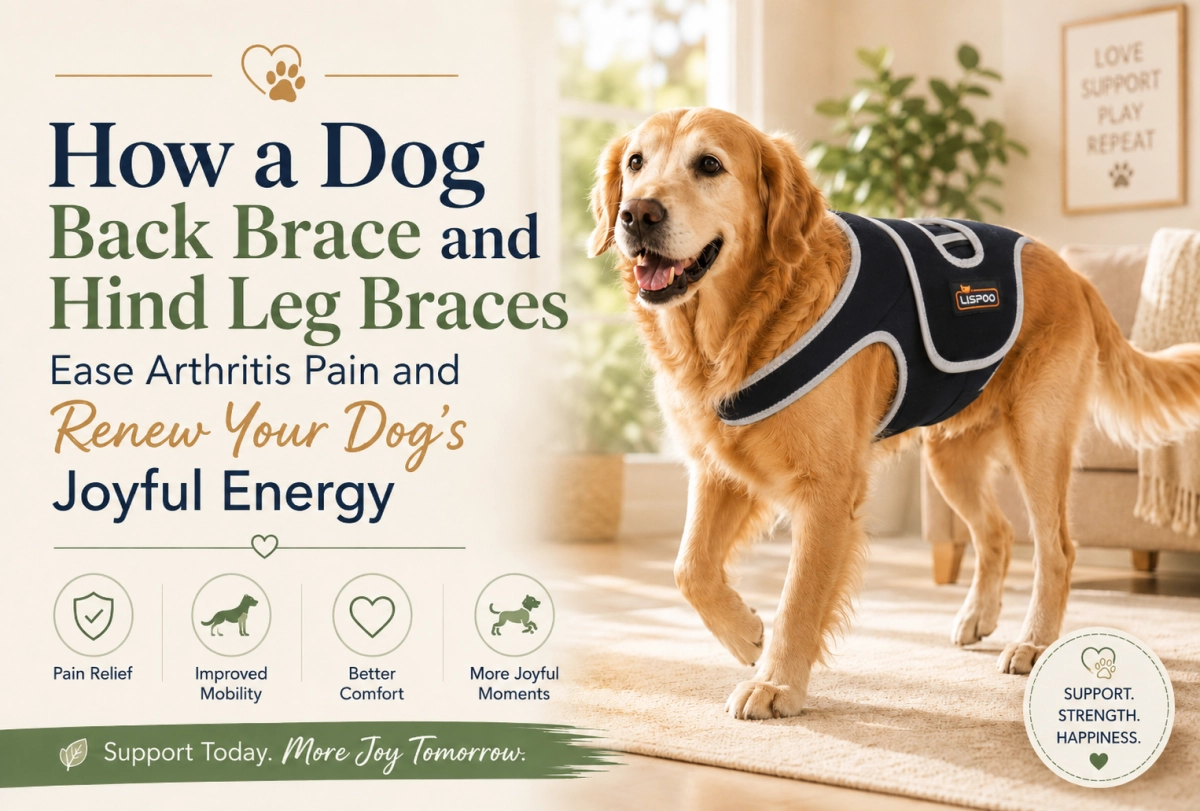
Watching your dog struggle with arthritis pain can break your heart. You see them slow down, lose interest in play, and sometimes even avoid you. A dog back brace or hind leg brace can change everything. These braces help reduce pain, give better stability, and support healing. You might notice your dog stands taller, walks steadier, and even wags their tail again. With the right support, your dog can rediscover joy and independence.
Key Takeaways
-
Dog back braces and hind leg braces can help lower arthritis pain. They let your dog move with less discomfort.
-
These dog braces give better stability and support. Your dog can feel more confident. They can enjoy walking and playing again.
-
Using a brace can make your dog's life better. Your dog can feel happier and be more friendly with family and friends.
-
Always talk to your vet to pick the right brace. Make sure it fits your dog's needs.
-
Go slow when you start using a brace. Let your dog get used to it. This helps your dog use it well for a long time.
Dog Back Brace and Hind Leg Braces: Support for Mobility and Pain Relief
How Dog Back Brace Stabilizes Spine and Joints
If your dog has back problems, you want to help them feel better. A dog back brace gives support and comfort. It wraps around your dog’s body gently. The brace helps keep the spine straight and takes pressure off sore spots. Your dog may stand taller and move with less pain. The brace stops too much movement, so joints and muscles stay safe. Many braces are made with materials that let air through, so your dog stays cool.
"A brace gives outside support like surgery does inside," says Dr. Amanda Hensley, DVM, an orthopedic specialist.
Here’s how a dog back brace helps with back problems:
| Function |
Description |
|---|---|
| Stabilization |
Braces keep the joint steady and stop extra movement that causes pain and swelling. |
| Weight Distribution |
They spread weight across all legs, so no leg has too much strain. |
| Proprioception |
Braces help balance and stability, so your dog moves more easily. |
| Pain Reduction |
The brace helps with arthritis pain, so your dog can walk and play more. |
Hind Leg Braces for Improved Movement and Comfort
Hind leg braces help dogs with arthritis or back problems move better. These braces give weak legs extra support. Walking and standing become easier. Your dog may walk farther or go up stairs again. Hind leg braces also help with pain by lowering swelling. They work for hip dysplasia, weak backs, and after surgery.
-
Hind leg braces support weak legs and stop more injuries.
-
They make moving smoother and less painful.
-
Dogs with hip or knee problems often walk better and seem happier.
Enhancing Proprioception and Posture
A support brace does more than just hold things in place. It helps your dog know where their legs and back are. This feeling, called proprioception, helps balance and posture. The brace’s gentle pressure makes muscles work together. Your dog feels more confident with each step. Over time, this can slow muscle loss and keep your dog active.
-
Braces give important support to sore legs, lower pain, and stop injuries.
-
They help dogs with back problems heal faster and stay steady.
-
Better stability means your dog moves with confidence and builds stronger muscles.
With the right dog back brace or hind leg brace, your dog can enjoy life again.
Quality of Life Improvements with Dog Back Brace and Hind Leg Braces
Pain Reduction and Increased Activity
You want your dog to feel good again. When you use a dog back brace or hind leg braces, you help your dog move with less pain. Many owners notice changes in just a few weeks. Your dog may stand up straighter, walk farther, and even play more. These braces give support that helps reduce swelling and pain. You might see your dog wagging their tail and joining family walks again.
Here’s what you can expect when your dog starts using a brace:
-
You may see visible improvements in walking and standing.
-
Swelling and pain often go down, so your dog moves better.
-
Your dog may show more interest in activities and playtime.
-
Pain relief lets your dog enjoy daily routines again.
-
Activity levels can go up, which helps your dog stay healthy.
Studies show that orthopedic braces help dogs with hip dysplasia and arthritis. Dogs feel less pain and move more easily. A 2020 study found that many dogs with hinged braces improved their limb function in just 12 weeks. Some dogs even avoided surgery and got back to their normal lives. Another review found that bracing, along with weight control and therapy, made a big difference in quality of life for dogs with knee injuries.
Emotional and Social Benefits for Dogs and Owners
When your dog feels better, you feel better too. Braces do more than help with movement. They bring back your dog’s happy spirit. You may notice your dog greeting you at the door, wagging their tail, or asking for belly rubs again. These small moments mean a lot.
Let’s look at what owners say about braces:
| Study |
Owner Satisfaction |
Improvement in Mobility |
|---|---|---|
| Wendland et al. |
96% would choose prosthesis again |
N/A |
| Phillips et al. |
N/A |
10/12 dogs had good/excellent quality of life |
| Carr et al. |
N/A |
50% reported improved mobility |
Most owners see their dogs become more social and active. You may see your dog return to favorite activities, like playing fetch or going for walks. This change can lift your mood and bring your family closer together. Owners often say their dogs seem happier and more confident after using a brace.
Preventing Secondary Complications
Braces do more than help with pain. They protect your dog from other problems that can come with less movement. When your dog moves better, muscles stay strong. This helps prevent muscle loss, which can happen if your dog avoids walking. Braces also lower the risk of falls and injuries. Your dog feels steadier and safer with each step.
Here’s how braces help prevent problems:
-
They give support to joints, which keeps muscles from getting weak.
-
Braces help your dog walk with better balance, so falls happen less often.
-
They reduce swelling and stop other limbs from getting hurt.
Clinical reports show that braces can reduce pain, improve movement, and help dogs recover faster. Owners often notice fewer behavior changes, like sadness or frustration, when their dogs use braces. Many say their dogs have a better quality of life and seem more like themselves.
| Evidence Type |
Description |
|---|---|
| Pain Reduction |
Braces can reduce pain, increase activity, and improve function during recovery. |
| Improved Mobility |
Clinical reports show lameness reduction and improved mobility with stifle braces. |
| Stabilization |
Braces help stabilize and improve function, particularly with partial tears. |
You want your dog to enjoy every day. With the right support, you can help your dog stay active, happy, and safe. Braces give your dog a chance to live life to the fullest, with better quality and more joyful moments.
Choosing and Using Dog Back Brace and Hind Leg Braces Safely
Custom-Fitted vs. Off-the-Shelf Braces
When you look for a brace for your dog, you will see two main types: custom-fitted and off-the-shelf. Each has its own benefits. Custom-fitted braces match your dog’s body shape. They give better support and help with long-term problems. Off-the-shelf braces work well for quick support or short-term injuries.
Here’s a quick comparison to help you decide:
| Feature/Benefit |
Custom-Fitted Braces |
Off-the-Shelf Braces |
|---|---|---|
| Fit |
Tailored to your dog, reducing discomfort |
Generic fit, may cause rubbing or chafing |
| Support |
Best for chronic or severe injuries |
Good for sudden injuries |
| Durability |
Lasts longer, fewer replacements needed |
May wear out faster |
| Cost |
More expensive |
More affordable |
| Ideal for |
Long-term recovery, surgery support |
Short-term healing |
A good fit matters. If a brace fits poorly, it can slip, rub, or fail to support your dog. This can limit movement and cause discomfort. Always check the sizing guide and adjust as needed.
Veterinary Guidance and Proper Fitting
You should always talk to your vet before choosing a dog brace. Your vet knows how much support your dog needs. They can help you pick the right type and make sure it fits well. Here’s why this step is so important:
-
The brace must give just enough support—not too much or too little.
-
It should cover the right area for your dog’s needs.
-
The brace must match your dog’s leg shape to work well.
Your vet may suggest a custom cast or a 3D scan for the best fit. They will also check for skin problems, swelling, or slipping. A good brace, chosen with your vet’s help, supports your dog’s health and well-being.
Acclimatization, Monitoring, and Latest Trends
Getting used to a new brace takes time. Start slow. Let your dog sniff the brace. Put it on for short periods at first. Take your dog for a gentle walk. Use treats and praise to help your dog feel safe and happy. Every dog is different, so be patient.
Keep an eye on your dog’s skin every day. Look for redness or swelling. Give your dog breaks to let the skin breathe. Your vet may suggest a rehab plan with exercise or swimming.
New trends make braces even better. 3D-printed braces fit with amazing accuracy. Smart braces use sensors to track movement and healing. These tools help you and your vet make the best choices for your dog’s comfort and recovery.
Tip: A calm, positive approach helps your dog adjust to a brace and enjoy more active days.
Dog back braces and hind leg braces can truly change your dog’s life. You’ll notice these benefits:
-
Less pain and more comfort during daily activities
-
Better stability and confidence when walking or playing
-
Happier mood and more energy for family time
Many owners say their dogs seem more relaxed and eager to move again. If you want to help your dog feel their best, talk to your vet. You can give your dog the support they need to enjoy every day. ��
FAQ
How long should my dog wear a brace each day?
Start with short sessions, like 15–30 minutes. Watch your dog’s comfort. Slowly increase the time as your dog gets used to the brace. Your vet can give you the best schedule for your dog’s needs.
Can my dog sleep with the brace on?
Most dogs should not sleep with the brace on. Take it off at night to let your dog’s skin breathe and prevent rubbing. Always follow your vet’s advice.
How do I clean my dog’s brace?
Use mild soap and warm water. Wipe the brace with a soft cloth. Let it air dry before putting it back on your dog. Avoid harsh cleaners or soaking the brace.
What signs show the brace is helping my dog?
| Sign |
What You Might Notice |
|---|---|
| More activity |
Longer walks, more play |
| Less pain |
Easier standing, less limping |
| Happier mood |
More tail wags, bright eyes |
If you see these changes, the brace is working!
0 Comments