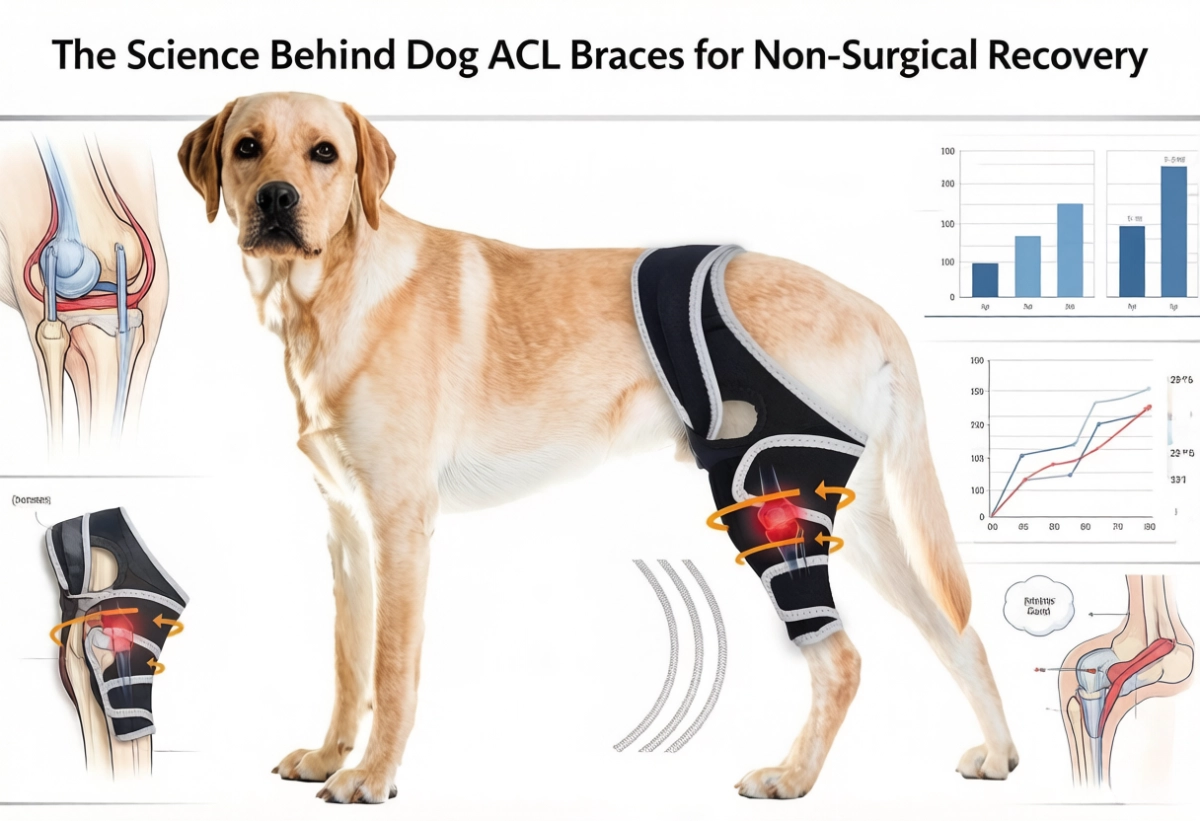
You want your dog to get better from an ACL injury without surgery. Dog ACL braces are a good way to help dogs heal and feel better. Non-surgical treatment helps about 63% of dogs get better after one year. Owners say their dogs move better in 85% of cases.
| Evidence Type |
Success Rate |
|---|---|
| Non-surgical treatment (including braces) |
≈63% successful outcome |
| Owner satisfaction with orthotic devices |
~85% improved ambulatory function |
Braces keep the knee steady, lower pain, and help your dog move again. Good dog ACL braces are comfortable and help dogs heal. With the right brace and care, you can see your dog walk and play again.
Key Takeaways
-
Best dog ACL braces can help dogs heal from an ACL injury without surgery. About 63% of dogs get better after one year. Braces give support and lessen pain. This lets dogs move easier and get back to normal. Non-surgical choices, like braces, work well for many dogs. They are good for dogs with partial tears or health problems. The brace must fit right and be checked often. This is important for your dog's comfort and healing. Ask your vet for help and advice. Keeping your dog at a healthy weight helps a lot. Following a rehab plan also helps your dog recover faster.
Dog ACL Injuries Explained
What Is an ACL Tear?
You may hear your veterinarian talk about a torn acl in your dog. The acl is a ligament inside the knee. It helps keep the knee stable when your dog walks, runs, or jumps. When your dog has a torn acl, the ligament stretches or breaks. This injury causes pain and makes it hard for your dog to move. Most acl injuries in dogs happen slowly. The ligament wears down over time. Obesity, breed, and age increase the risk. Dogs like Labradors and Rottweilers often get acl injuries. Middle-aged and older dogs are more likely to have a torn acl. Extra weight puts more strain on the knee, making the ligament weaker.
-
Obesity increases the risk of acl rupture in dogs.
-
Certain breeds like Labradors and Rottweilers have a higher chance of acl injuries.
-
Middle-aged and older dogs are more likely to suffer from a torn acl.
-
Most acl injuries result from gradual wear and tear, not a single accident.
Signs Your Dog May Have an ACL Injury
You can spot a torn acl in your dog by watching for changes in movement and behavior. Dogs with a torn acl often limp or avoid using the injured leg. You may notice your dog struggles to rise or climb stairs. Some dogs stop playing or exercising. Stiffness, especially after rest, is common. You might hear popping or clicking sounds from the knee. Dogs sometimes lick the area near the injured knee.
| Symptoms |
Description |
|---|---|
| Stiffness |
After rest or exercise. |
| Difficulty rising |
Trouble getting up from the floor. |
| Struggling to jump |
Hard time jumping onto furniture or stairs. |
| Hind leg lameness |
Limping in the hind leg. |
-
Reluctance to play or exercise
-
Audible sounds from the knee
-
Excessive licking near the knee
Why Non-Surgical Options Matter
You want your dog to heal and feel comfortable. Many dogs, especially smaller ones with partial tears, recover well with non-surgical care. Conservative management includes rest, weight control, pain relief, and therapies like physical therapy or hydrotherapy. These steps help your dog's knee heal naturally. Non-surgical options let your dog regain stability and comfort without surgery. Your dog's body can repair the torn ligament with the right support and care.
Tip: Strict rest and weight management help your dog recover from a torn acl. Physical therapy can improve knee strength and movement.
How Dog ACL Braces Work
Stabilization and Load-Sharing
When your dog has a torn acl, the knee becomes unstable. A dog acl brace helps by holding the knee steady. This brace acts like a strong hand that keeps the bones in place. It limits how much the tibia can move compared to the femur. This action mimics what the torn ligament used to do. The brace also controls how much your dog can bend or twist the knee. This control keeps the knee safe while still letting your dog move a little.
You will see that a dog acl brace uses several mechanical principles to help your dog heal. Here is a table that explains these principles:
| Mechanical Principle |
Description |
|---|---|
| Joint Stabilization |
Limits excessive movement of the tibia relative to the femur, mimicking the role of the torn ligament. |
| Controlled Immobilization |
Restricts harmful motion while allowing safe, limited range of motion for optimal healing. |
| Compression Therapy |
Applies gentle pressure to reduce swelling and improve circulation, aiding in tissue repair. |
| Pain Reduction |
Reduces joint instability and inflammation, leading to decreased pain for the dog. |
A dog acl brace uses straps, hinges, and support panels. These parts work together to keep the knee from moving in ways that could hurt the torn acl more. The brace spreads your dog's weight across the leg. This load-sharing means the injured ligament does not have to handle all the force. Your dog can walk with less pain and more confidence.
Preventing Early Failure
A torn acl can get worse if your dog moves too much or too soon. The dog acl brace helps prevent this problem. The brace keeps the knee from slipping or twisting in a way that could damage the healing ligament. This protection is very important during the first weeks after injury.
Dog acl braces, like the DonJoy 4-point-of-leverage brace, can cut acl strain by at least half. This big drop in strain helps the ligament heal. When your dog wears a brace, you lower the risk of early failure. The brace gives your dog a better chance to recover without more injury.
-
The brace reduces acl strain, which is key for healing.
-
A well-fitted dog acl brace helps your dog regain function and move with less pain.
-
The brace supports your dog's knee during both walking and resting.
-
Custom-made plastic braces can give extra comfort and stability for your dog.
Creating a Healing Environment
A dog acl brace does more than just hold the knee still. It creates the best setting for your dog's body to heal. The brace keeps the knee in the right position. This support helps the torn acl heal in a straight line. Your dog feels less pain because the brace stops the knee from moving the wrong way.
Dog knee braces also help with swelling. The gentle pressure from the brace improves blood flow. Better blood flow means faster healing for your dog's knee. Studies show that dogs using a dog knee brace often have less lameness. Some dogs even recover as well as those who have surgery.
-
The brace gives stability and support to the injured knee.
-
Your dog feels less pain and can rest more comfortably.
-
The brace helps the torn acl heal in the right position.
-
Many dogs with a dog acl brace show mild or no lameness after recovery.
-
Knee braces for dogs help your dog return to normal activities.
You want your dog to heal and move again. A dog acl brace gives your dog the support needed for a strong recovery. With the right brace, your dog can walk, play, and enjoy life again.
Evidence for Dog ACL Braces
Research and Expert Opinions
You want the best treatment for your dog. Veterinary orthopedic specialists agree that braces can help your dog recover from a torn acl. Braces work as a non-surgical option or as extra support after surgery. Specialists say that surgery is often the best treatment for acl injuries in dogs. Some dogs cannot have surgery because of age or health problems. Braces give these dogs a safe way to heal and regain movement. You can choose braces as part of your dog's treatment plan if surgery is not possible.
-
Veterinary orthopedic specialists recognize braces as a valuable option for dogs needing non-surgical treatment.
-
Braces offer support for dogs after surgery or for those who cannot undergo surgery.
-
You can use braces to help your dog recover from a torn acl when surgery is not an option.
Success Rates and Limitations
You want to know how well dog acl brace treatment works. Studies show that many dogs improve with braces. Owners report that their dogs move better and feel less pain. You can see the success rates in the table below:
| Intervention Type |
Success Rate |
|---|---|
| ACL Brace |
85–90% |
| Surgical |
60–75% |
You may find that about 63% of dogs treated without surgery have a good outcome after one year. Most owners, around 85%, say their dogs walk better after using a dog acl brace. Non-surgical options, including braces, show a success rate of 60–70% at some follow-ups. Many dogs get meaningful improvement with braces. Surgical treatment often has higher short-term success, but braces still help many dogs.
-
About 63% of dogs treated non-surgically have a successful outcome after one year.
-
Around 85% of owners report improved function after using braces.
-
Non-surgical options show a success rate of 60–70% at certain follow-ups.
When a Dog Knee Brace Is Most Effective
You want to know when a dog knee brace works best. Braces help dogs with torn acl injuries who cannot have surgery. Older dogs or dogs with health issues benefit from braces as a main treatment option. You can use a dog knee brace for dogs with partial tears or mild injuries. Braces also support dogs after surgery, helping them heal faster. You should choose knee brace options for dogs needing extra support during recovery. Braces give your dog stability and comfort. You can help your dog return to normal activities with the right brace and treatment options.
Tip: You should talk to your veterinarian about treatment options for your dog. Braces can be part of a plan that includes rest, weight control, and physical therapy.
Conservative Management With a Dog ACL Brace
Rest and Weight Control
You play a big role in your dog's rehabilitation after a torn knee ligament. Rest is the first step. You should limit your dog's movement to help the knee heal. Crate rest works well for most dogs. It keeps your dog safe and stops sudden jumps or runs that could hurt the torn ligament. Along with rest, weight control is key. Extra weight puts more stress on your dog's knee and slows down rehabilitation. You can help by feeding the right amount and choosing healthy treats. A lighter dog has a better chance for a strong recovery.
Here are some important steps for rehabilitation with a dog brace for torn acl:
-
Crate rest to limit movement and protect the knee.
-
Use NSAIDs if your veterinarian recommends them for pain and swelling.
-
Keep your dog's weight in a healthy range.
-
Try cold laser therapy to reduce swelling and improve healing.
-
Hydrotherapy helps build muscle without stressing the torn knee.
| Treatment Group |
Successful Outcome Rate at 52 Weeks |
|---|---|
| Surgical |
75% |
| Nonsurgical (with weight loss) |
63.6% |
Fitting and Monitoring Progress
A good fit is important for every dog acl brace. You want the brace snug but not too tight. This keeps your dog's knee stable and allows for comfortable movement. Add extra padding if you see any spots that rub or cause irritation. Check the fit often, especially as your dog moves or changes activity. Small adjustments help keep the brace working well. A custom-made fit gives the best results for supporting a dog's torn acl. Watch for signs of discomfort or slipping. If you notice problems, talk to your veterinarian.
-
Make sure the brace is snug but not too tight.
-
Add padding to prevent chafing.
-
Check the fit often and adjust as needed.
Recovery Expectations
Rehabilitation with a dog acl brace takes time. Most dogs go through several phases during rehab. In the first month, your dog may have pain, swelling, and need strict rest. By weeks five to eight, you should see less pain and better weight bearing. The brace gives support during this time. Between three and six months, your dog gains strength and moves better, but running and stairs may still be hard. After six months, most dogs reach their best improvement, though some may need ongoing management for arthritis.
| Phase |
Timeline |
Key Observations |
|---|---|---|
| Acute Phase |
Weeks 1–4 |
Pain, limping, swelling, strict rest needed. |
| Early Stabilization |
Weeks 5–8 |
Less pain, better weight bearing, brace support important. |
| Functional Recovery |
Months 3–6 |
More strength and mobility, less pain, running/stairs still hard. |
| Long-Term Adaptation |
6–12 Months |
Maximum improvement, possible arthritis, ongoing rehab needed. |
You help your dog by following the rehab plan and using the brace as directed. With patience and care, your dog can enjoy a better quality of life during rehabilitation.
Is a Dog ACL Brace Right for Your Dog?
Candidacy and Consultation
You want the best for your dog after an ACL injury. Not every dog will need surgery. Many dogs do well with a brace, especially if you catch the injury early. You should always talk to your veterinarian before choosing a brace. Your vet will check if your dog has a partial or complete tear. Some dogs with partial tears or early knee instability can recover with a brace.
Here are steps to help you decide if a brace is right for your dog:
-
Ask your vet for a full exam. Your vet will tell you if your dog has a partial or complete tear.
-
Think about your dog’s age, health, and activity. Older dogs, overweight dogs, or those with other joint problems may benefit from a brace.
-
Measure your dog’s leg carefully. A good fit helps the brace work well and keeps your dog comfortable.
-
Choose braces made from strong, non-slip materials. Read reviews and ask your vet for advice.
Veterinarians use several criteria to decide if a dog should use a brace instead of surgery. You can see these in the table below:
| Criteria |
Description |
|---|---|
| Type of CCL Tear |
Dogs with partial tears or early instability may use a brace. |
| Overall Health and Age |
Dogs not fit for surgery due to age or health can use a brace. |
| Owner's Preferences |
Some owners prefer a brace over surgery. |
| Temporary Support |
Braces can help before or after surgery. |
A brace gives your dog a less invasive option for healing. Many owners choose a brace because it costs less than surgery. The cost of surgery can range from $3,000 to $6,000 or more. A brace usually costs between $500 and $1,200.
When Surgery May Be Needed
Some dogs need surgery to heal. If your dog has a complete ligament rupture, your vet may recommend surgery. Dogs that do not improve with a brace or have severe knee instability may also need surgery. You should know the main differences in surgery vs. bracing.
| Factor |
Description |
|---|---|
| Severity of the injury |
Surgery is best for complete ruptures needing strong correction. |
| Dog's age and health status |
Older or sick dogs may not be good for surgery. |
| Financial implications |
Surgery can cost over $5,000. |
| Response to treatment |
Some dogs with mild tears do well with rest and a brace. |
You should always ask your vet about the best plan for your dog. Some dogs heal with a brace and rest. Others need surgery for the best outcome. Your vet will help you choose the safest and most effective path for your dog.
You want your dog to walk and feel strong again. Dog ACL braces help support your dog without surgery. With a good plan, you help your dog heal and slow down joint problems. Many owners notice their dogs walk better and seem happier. You should listen to your veterinarian and check on your dog often. Use the brace the way your vet tells you. Keep your dog at a healthy weight. Most dogs get better with good care and regular visits. Your dog can move well and feel happy again.
| Treatment Type |
Success Rate (Return to Function) |
Long-Term Joint Health |
|---|---|---|
| Surgery |
85–90% |
Higher structural correction |
| Bracing |
60–75% (varies by size/activity) |
Reduces arthritis progression, slows joint degeneration |
-
Let your dog rest without the brace when you can.
-
Keep your dog calm and limit activity early on.
-
Watch your dog’s weight and feed healthy food.
-
Take your dog to the vet for regular checkups.
Many dogs get back comfort and movement with the right care. Always talk to your veterinarian to find the best plan for your dog.
FAQ
How long should my dog wear an ACL brace each day?
You should follow your veterinarian’s advice. Most dogs wear the brace during all waking hours, especially when active. Remove the brace at night or when your dog rests, unless your vet says otherwise.
Can my dog go for walks while wearing the brace?
Yes, you can take your dog for short, controlled walks. The brace supports the knee and helps prevent further injury. Avoid running, jumping, or rough play until your vet approves.
How do I clean and care for the dog ACL brace?
Wipe the brace with a damp cloth after each use. Let it air dry. Check for dirt or hair buildup. Inspect straps and padding often. Replace worn parts as needed to keep your dog comfortable.
Will my dog need physical therapy with the brace?
Physical therapy helps your dog regain strength and movement. Your veterinarian may suggest gentle exercises or hydrotherapy. These activities support healing and improve your dog’s recovery with the brace.
What signs show the brace fits correctly?
A good fit means the brace stays in place and does not rub or cause sores. Your dog should walk comfortably. If you see redness, swelling, or slipping, adjust the brace or contact your veterinarian.
0 Comments